
Every watch box we produce lives or dies on one component most buyers never think to specify: the cushion. We’ve seen stunning lacquered boxes arrive at luxury boutiques only to have the watch rattling around because the cushion diameter was 2mm too narrow. We’ve seen velvet pillows that looked perfect in the sample but compressed permanently after six months on a retail shelf. This guide covers what we’ve learned building watch box cushions for OEM clients across jewelry retail, corporate gifting, and e-commerce — the engineering decisions, the materials tradeoffs, and the mistakes that cost real money.
—
Table of Contents
For a broader perspective, see our watch box guide.
What Is a Watch Box Cushion, and Why Does It Matter?
A watch box cushion — sometimes called a watch pillow — is the padded form inside a watch box that holds the timepiece at a display angle, protects it during shipping, and communicates quality the moment the lid opens. It’s not decoration. It’s a functional retention system.
As detailed in the watch box cushion design.
[FS-Bait] A watch box cushion is the padded insert that supports and displays a timepiece inside its packaging. It serves three functions: shock absorption during transit, secure retention to prevent movement, and visual presentation at the point of unboxing. Cushion diameter, firmness, and cover material all directly affect perceived product quality.
The cushion interacts with the watch at the most sensitive point — the case back and the bracelet/strap — and it’s the first surface the buyer touches. In our factory, we treat cushion specification as a structural decision, not a cosmetic one. Get it wrong and you’re absorbing returns, remaking samples, and losing brand trust.
This connects directly to our watch pillow material selection.
—
Watch Cushion Materials: Foam, Velvet, and What’s Inside
The two layers of a watch cushion are the core (the fill) and the cover (the outer skin). They behave independently and need to be specified separately.
Core Fill Options
Polyurethane (PU) foam is the most common fill we use. Density is the critical variable — not thickness. We spec foam in kg/m³:
> Formula: Firmness Load = Density (kg/m³) × ILD factor
>
> For watch cushions: 28–35 kg/m³ gives the right balance of support and conformability. Below 22 kg/m³ and the cushion compresses permanently after the first week in a display case.
EVA (ethylene-vinyl acetate) foam is denser and more resistant to permanent compression. We use it for travel watch cases where the cushion will be compressed repeatedly under a lid. The tradeoff: it’s less conformable and can mark soft case backs on very high-end timepieces.
Memory foam looks appealing on paper — it conforms to the watch case shape. In practice, it’s difficult to cover with velvet without visible surface wrinkling, and it off-gasses at higher temperatures (shipping containers in summer). We’ve phased it out for most watch cushion applications.
Polyester fiberfill is used in pillow-style cushions — the soft, puffy rectangular type common in women’s watch gift boxes. It’s inexpensive and compresses predictably, but it doesn’t provide structural retention. Use it for presentation, not protection.
Cover Materials
Cover Material Feel Durability Lint Risk Cost Index Best Application Short-pile velvet (polyester) Soft, premium High Medium 1.0× Most retail watch boxes Microfiber suede Ultra-soft Medium-High Low 1.3× Luxury OEM, white-label PU leather Firm, structured Very High None 0.9× Corporate gifting, travel cases Linen/cotton blend Matte, natural Medium Low 1.1× Artisan/boutique positioning Satin Glossy, delicate Low Low 0.8× Budget gift boxes, short-lifecycle SKUs
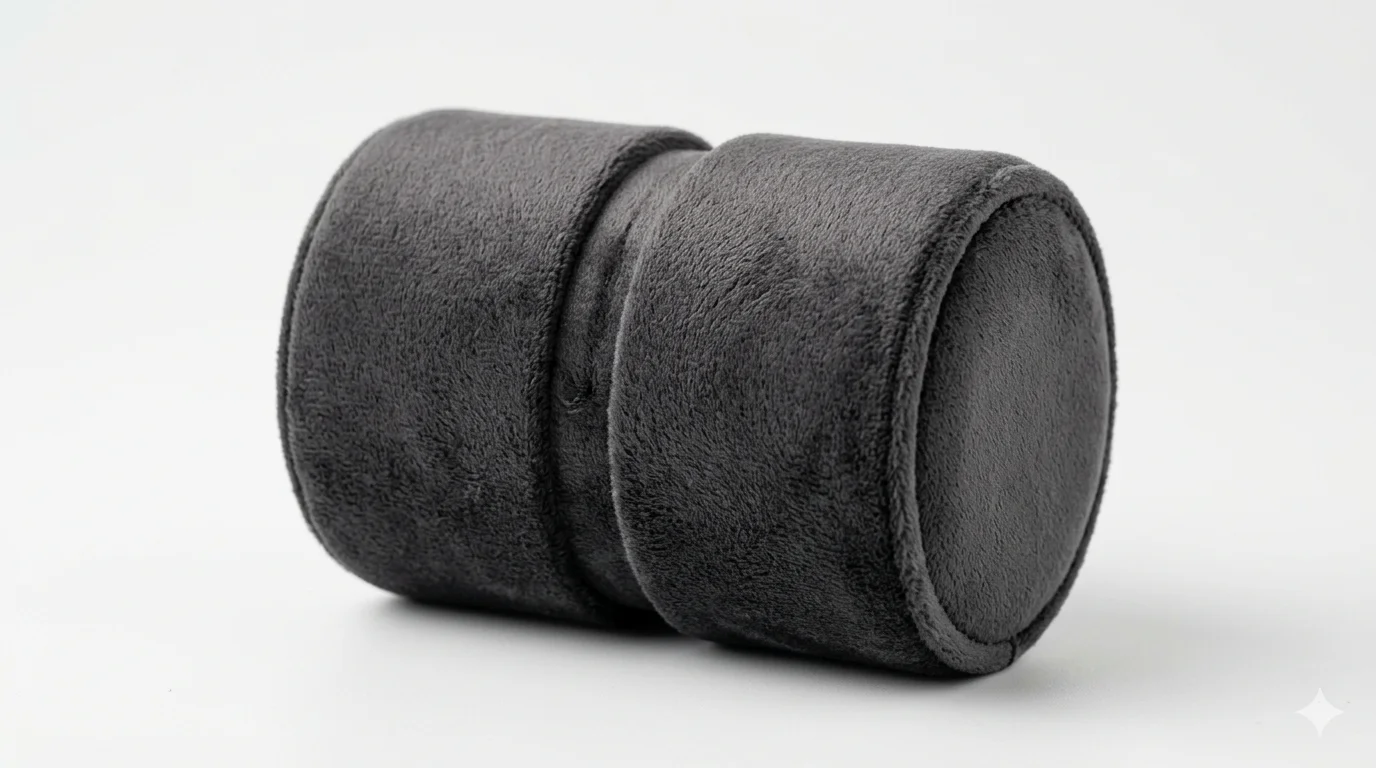
Engineering Note: Velvet nap direction matters. When we cut velvet for cushion covers, the nap runs top-to-bottom on the cushion face, so when the watch is lifted out, the velvet strokes back to its natural direction. Reverse this and the cover looks worn after 10 insertion/removal cycles.
—
Cushion Sizing: How to Get the Fit Right
This is where most OEM buyers make expensive mistakes. “Standard” watch cushion dimensions don’t exist in any useful sense. Watch case diameters range from 28mm dress watches to 50mm dive watches, and strap/bracelet widths run 14mm to 26mm. A cushion spec that works for a 40mm men’s watch will swallow a 32mm ladies’ piece.
The Sizing Formula We Use
For cylindrical/barrel cushions (the most common type):
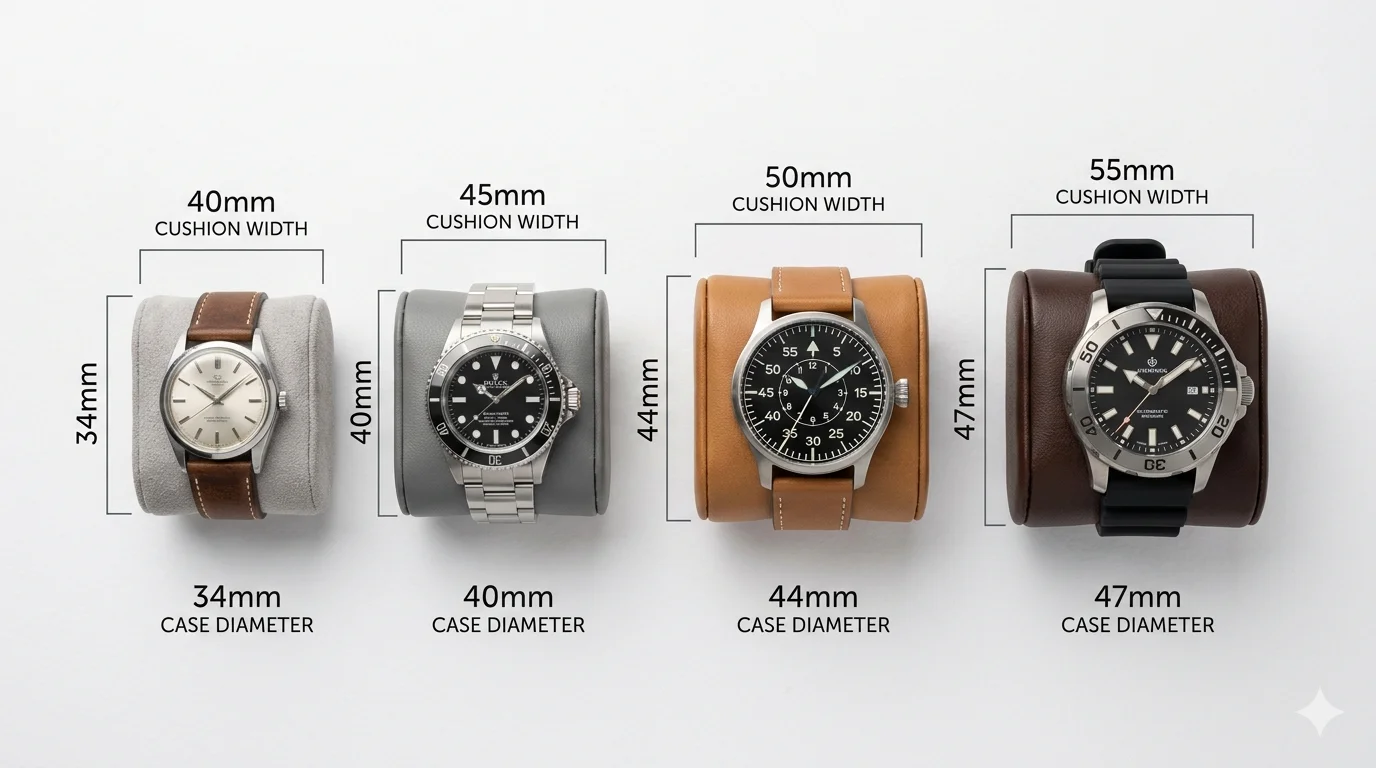
> Cushion Outer Diameter (OD) = Watch Case Diameter + 8mm to 12mm
>
> This gives enough pillow surface to cradle the case back while letting the crown and pushers clear the sides.
For the strap channel (the groove or valley that the strap/bracelet runs through):
> Channel Width = Lug Width + 2mm to 3mm
>
> Tighter than this and metal bracelets scratch against the channel edges. Wider and the watch tips sideways under the cushion.
Common Mistake: Specifying cushion diameter based on the dial diameter, not the case diameter. The case is always larger than the dial. We’ve resampled entire production runs because a buyer’s design brief said “36mm dial” and they meant the case — two different dimensions, 4–6mm apart on most watches.
Watch Category Sizing Reference
Watch Category Typical Case Diameter Recommended Cushion OD Strap Channel Width Ladies’ dress watch 28–34mm 36–44mm 14–16mm Unisex/mid-size 36–40mm 44–50mm 18–20mm Standard men’s 40–44mm 50–54mm 20–22mm Oversized/sport 45–50mm 55–60mm 22–26mm Pocket watch (round) 45–55mm 58–68mm N/A
Pro Tip: Always request the watch’s technical data sheet from your client before finalizing cushion tooling. The three numbers you need are: case diameter, case thickness (height), and lug width. If the client can’t provide these, ask for the reference number — we can usually pull specs from brand documentation.
—
Foam vs. Velvet: The Comparison Buyers Get Wrong
We hear this framing constantly: “foam or velvet?” It’s the wrong question. Foam is the core. Velvet is the cover. You’re almost always getting both — the question is what foam density and what cover material to combine.
But if the question is about pillow style — meaning a foam-core covered cushion vs. a loose fiberfill pillow — here’s what we’ve found in practice:
[FS-Bait] Foam-core watch cushions provide structured retention and consistent shape retention over time. Fiberfill pillows offer a softer, more gift-oriented aesthetic but compress permanently under repeated use. For watches stored or displayed long-term, foam-core with velvet cover is the industry standard choice for OEM packaging.
When to choose foam-core: Any watch that will sit in a display case, be sold through retail, or be photographed for e-commerce. The shape holds. The watch sits at a consistent angle. The photography looks clean.
When to choose fiberfill pillow: Single-use gift packaging where the watch will be removed immediately, or lower price-point gift sets where the soft, plush aesthetic is part of the brand story. This doesn’t apply when the watch is being stored in the box long-term — fiberfill compresses and the watch will eventually contact the bottom of the box.
—
Cushion Construction: What’s Inside the Seam
One thing that surprises most buyers: the way the cover attaches to the foam core determines how the cushion ages. We use three construction methods:
Slip-cover with base card: The foam core sits in a card tray, and a sewn velvet cover slips over the top. Easy to replace, easy to rework if you want to change cover material. The seam sits at the bottom and never shows. This is our recommended construction for retail OEM.
Glued cover (direct adhesion): The cover is stretched over the foam and glued at the base. Lower cost, but if the adhesive migrates (common in high-temperature shipping), it can cause staining on the foam that telegraphs through lighter velvet colors. Common Mistake: Using solvent-based contact cement on light grey or cream velvet — yellowing shows through within 6 months. We switched to water-based EVA adhesive for all light-color cushions.
Injection-molded base with fabric insert: Higher tooling cost, but the cushion snaps into the box base with precise alignment every time. Worth the investment for quantities above 5,000 units per SKU.
Engineering Note: Cushion height (how far the cushion projects above the box floor) determines how much of the watch is visible when the lid is closed. Our standard spec is: cushion top surface to lid interior = 3–5mm clearance. Less than 3mm and the watch crown contacts the lid. More than 8mm and the watch looks sunken in a deep box, which photographs poorly.
—
Customization Options for OEM Orders
The cushion is one of the highest-impact customization points in watch box manufacturing. Small changes here create big perceived-quality differences.
Color Matching
We can match cushion cover color to Pantone or RAL references, but velvet has a metamerism problem — the color shifts significantly between warm incandescent retail lighting and daylight or LED. For critical color matching, request physical samples under your intended display lighting before approving. Don’t approve color from a screen or a PDF.
Embossed or Printed Branding
For cushions with a flatter face (rectangular pillow style), we can hot-stamp logos in gold, silver, or blind emboss. For cylindrical cushions, surface area is limited — we generally recommend keeping branding to the box base card or interior lid panel rather than the cushion itself.
Custom Shapes
Beyond the standard cylinder, we produce:
– Kidney/contoured cushions — follows the case back curvature of specific watch models
– Double cushions — for two-watch boxes, with divider
– Angled display cushions — 15° tilt for retail display cases
This doesn’t apply when a client needs a sample in under three weeks — custom-shaped foam requires new cutting dies, which typically adds 10–15 working days.
Material Upgrades That Actually Matter
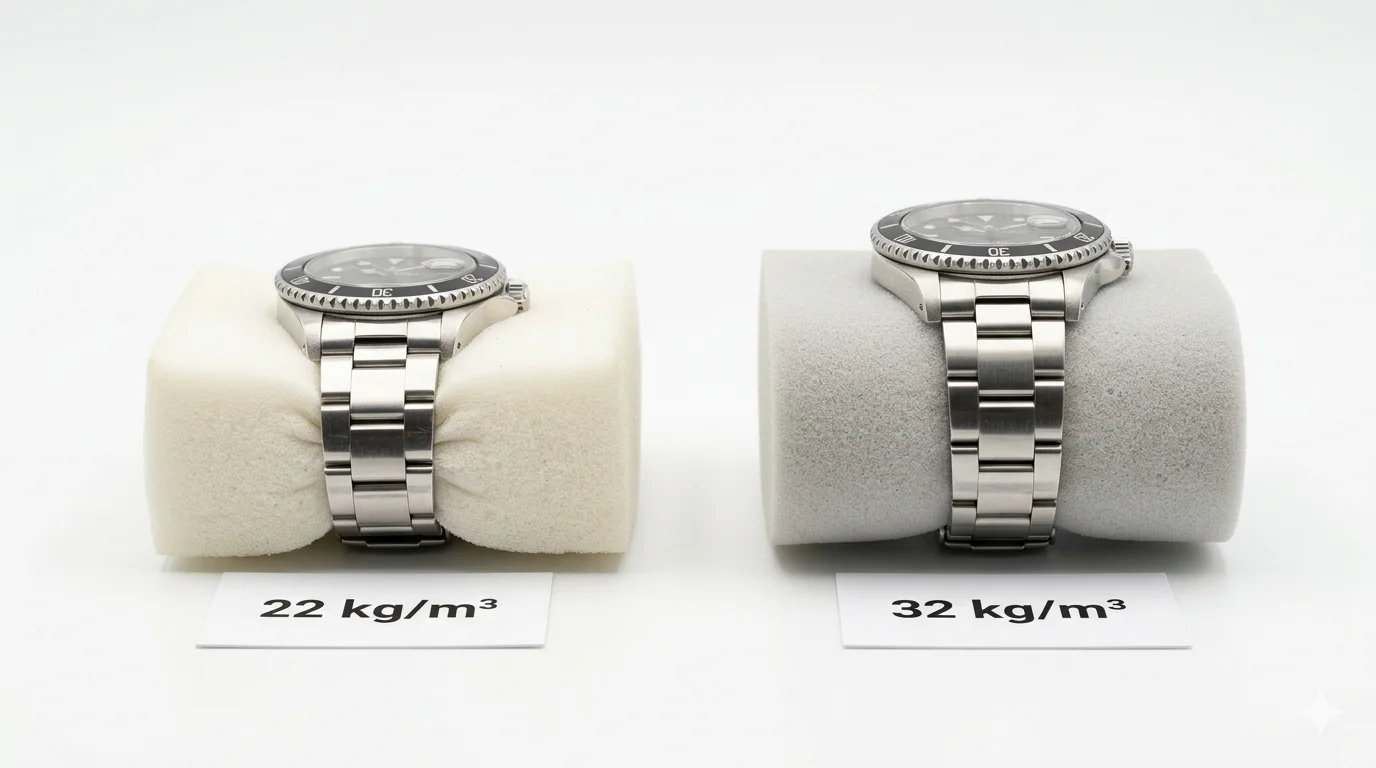
One thing that surprises most buyers is that the single highest-impact upgrade isn’t the cover material — it’s foam density. Upgrading from 22 kg/m³ to 32 kg/m³ foam costs roughly 8–12% more but eliminates the #1 quality complaint we see in the field: compressed, flattened cushions after six months of shelf life. Cover material upgrades (velvet to microfiber suede) are more visible but less functionally significant.
—
Compliance and Safety Considerations
Watch box cushions shipped to EU and North American markets have to meet several compliance requirements that buyers sometimes overlook until the shipment is held at customs.
RoHS 2 Directive (2011/65/EU) restricts hazardous substances in electrical and electronic equipment — but it also catches some packaging components when the watch box is sold bundled with the watch. Dyes in velvet covers and adhesives in foam bonding need to be RoHS-compliant. We maintain material declarations for all our standard cushion materials; request them if you’re shipping to the EU.
REACH Regulation (EC 1907/2006) restricts certain substances in articles, including formaldehyde content in textiles. Short-pile polyester velvet from certified suppliers is generally compliant; imported velvet from unverified sources is where we see failures.
ISTA 3A Transit Testing is the packaging performance standard most major retail buyers require. The cushion is the primary shock-absorption element — if it’s under-specified, the watch slides and impacts the box interior during the drop and vibration sequences. We’ve found that 32 kg/m³ foam passes 3A testing for most watch weights up to 200g; heavier sport watches sometimes need a secondary retention strap.
Engineering Note: If your watch has a winding crown that projects significantly from the case, always test cushion fit with the crown in the fully wound/extended position — not the neutral position. Crowns that screw down flush are fine. Crowns on stems that project 3–4mm will contact the box interior if the cushion-to-lid clearance isn’t calculated with this in mind.
—
FAQ: Watch Box Cushion Questions We Get Every Week
Q: What’s the standard watch cushion diameter?
Short answer: there isn’t one. But 45–50mm outer diameter covers the majority of 38–44mm men’s watches, which is the most common OEM request range. Always confirm against the actual watch spec.
Q: Can we use the same cushion for watches and bracelets?
We can, but the ergonomics are different. A watch cushion is a round or oval form that cradles a case back. A bracelet display cushion is typically a rectangular bar or T-bar shape. Trying to use one form for both usually results in neither looking quite right. Our recommendation: separate SKUs if your product range includes both.
Q: How do we prevent the watch from sliding off the cushion during shipping?
Three options, in order of cost: (1) add a velcro or snap strap over the cushion, (2) increase foam density so the watch sinks slightly into the cushion, (3) add a die-cut foam recess in the cushion top that matches the case back profile. Option 3 requires the client to provide accurate case back geometry.
Q: What’s the minimum order quantity for custom cushion sizes?
This depends on the construction method. For standard cylinder sizes with custom cover color, we can work with 500 units. For custom-shaped foam dies, we typically need 2,000+ units to amortize the tooling cost. Exact quantities vary by factory and season.
Q: How long do watch cushions last?
With 30+ kg/m³ foam and a quality polyester velvet cover: 3–5 years in display conditions. The foam outlasts the velvet cover in most cases — the velvet surface wears and pills before the foam loses its structure. PU leather covers last significantly longer.
Q: Can you match a specific watch brand’s existing cushion style?
We can match geometry and material category. We can’t reproduce branded proprietary textiles or patented forms. If the style is based on standard materials (velvet over foam), we can match it closely from a physical reference sample.
Q: What’s the lead time for a custom cushion order?
For standard materials with custom color: 15–20 working days after sample approval. For new foam shapes with custom covers: 25–35 working days. These timelines assume material availability — specialty velvet colors can add 5–10 days if not in stock.
—
—
FAQ
Q: What size should a watch cushion be?
A: The cushion outer diameter should be 8-12mm larger than the watch case diameter. For example, a 40mm watch needs a 48-52mm cushion. Oversized watches (45-50mm) need 55-60mm cushions. Always leave 4-6mm clearance on each side to prevent strap pressure.
Q: What material is best for watch pillows?
A: Velvet-covered PU foam (22-25 kg/m³ density) is the most popular for luxury watch boxes. Microfiber offers better scratch resistance. Silicone works for waterproof/outdoor applications. For ultra-premium, use memory foam wrapped in suede.
Q: Can watch cushions damage leather straps?
A: Yes — cushions that are too wide or too firm create pressure points that can leave permanent creases on leather straps. Always size the cushion 8-12mm wider than the watch case, and use medium-density foam (22-25D) for leather strap watches.
Q: How firm should a watch pillow be?
A: 20-25 kg/m³ (20-25D) is ideal for most applications. Below 18D feels cheap and doesn’t hold shape. Above 30D creates excessive pressure on straps. Heavy metal bracelet watches can use 28-32D for extra support.
Q: Can I customize watch box cushions for my brand?
A: Absolutely. We offer OEM cushion customization including size, shape (round/rectangular/contoured), material (velvet/microfiber/suede/silicone), color matching to your brand Pantone, debossed logo, and custom foam density. MOQ starts at 100 pcs for fully custom cushions.
—
About the Author: Selene Gong, Senior Packaging Engineer at YodiaBox. 10+ years in watch and jewelry packaging manufacturing. Developed cushion specifications for 2,000+ OEM projects. Specializes in cushion ergonomics, foam material science, and production QC.
*Technical review by YodiaBox Packaging Engineering Team, June 2026.*
Need a custom cushion specification? Get free engineering advice within 24 hours — send us your watch dimensions.
—
References & Sources
1. RoHS 2 Directive 2011/65/EU — European Parliament and Council
2. REACH Regulation (EC) No 1907/2006 — European Chemicals Agency (ECHA)
3. ISTA 3A Packaged-Product Test Procedure — International Safe Transit Association (ISTA)
4. ISO 2859-1: Sampling Procedures for Inspection by Attributes — International Organization for Standardization
5. EN 71-3 Safety of Toys — Migration of Certain Elements — European Committee for Standardization (CEN) — relevant for watch boxes marketed as gift sets with juvenile products
6. Oeko-Tex Standard 100 — Oeko-Tex Association — textile certification relevant for velvet and microfiber cushion covers shipped to EU and North American markets
Written by: Sarah Jenkins
Senior Content Specialist
Seasoned Industry Editor with 5 years of experience, dedicated to delivering in-depth technical and market reports.
Reviewed by: Dr. Eric Shao
Chief Technical Director
With 12 years of experience in material science and custom manufacturing, ensures the scientific accuracy and technical compliance of all published content.
Recommended Reads
Gift packaging
10 产品
Jewelry display
12 产品
Jewelry Organizer
12 产品
Jewelry pouch
7 产品
Jewelry suitcase
6 产品
Leather jewelry box
13 产品
LED Jewelry box
8 产品
Paper jewelry box
10 产品
Velvet Jewelry box
11 产品
Watch box
7 产品
Wood jewelry box
6 产品
Custom Watch Box MOQ, Pricing, and Lead Time FAQ for Wholesale Buyers
If you are sourcing a custom watch box for retail, gifting, or OEM packaging, the [...]
Jun
Best Watch Winder for Rolex: What Retail Buyers and Private Label Brands Should Look For
If you are sourcing the best watch winder for Rolex for retail shelves, ecommerce bundles, [...]
Jun
Large Velvet Jewelry Box: The Complete B2B Sourcing & Selection Guide
Large Velvet Jewelry Box: The Complete B2B Sourcing & Selection Guide Sourcing a large velvet [...]
Automatic Watch Winder Box: Features, Materials, and OEM Customization Options
If you are developing an automatic watch winder box for your brand, the hard part [...]
Jun
Box Hoop Earrings Packaging: The Complete B2B Sourcing & Selection Guide
Box Hoop Earrings Packaging: The Complete B2B Sourcing & Selection Guide Choosing the right box [...]
Box for Watches and Jewelry: The Complete B2B Buyer’s Guide to Types, Materials, Customization & Supplier Sourcing
Box for Watches and Jewelry: The Complete B2B Buyer’s Guide to Types, Materials, Customization & [...]