
Why Watch Box Engineering Matters for OEM/ODM Buyers
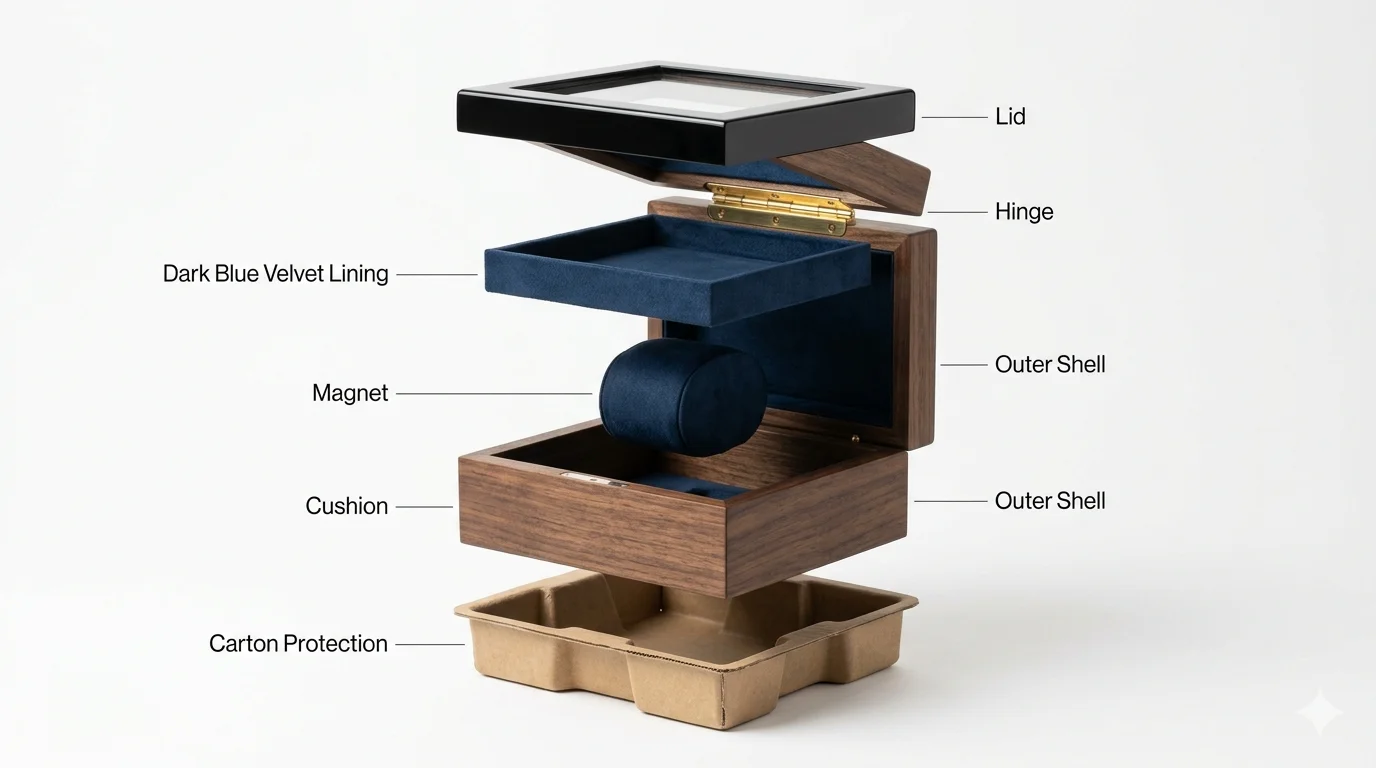
A good watch box protects the product, supports brand positioning, and reduces returns before the customer ever opens it. In our workshop, we see the same pattern every season: buyers spend months refining the watch, then rush the box in the last three weeks. That’s where problems start — loose cushions, weak hinges, color mismatch, crushed corners, LED failure, and carton damage after air shipment.
Short answer: a watch box is not only a “display item.” It’s a mechanical structure, a branding surface, a transit protector, and sometimes an electrical product.
The basic engineering formula we use first is simple:
Box performance = structure strength + surface durability + insert fit + transit packaging
If one part is weak, the whole experience feels cheap. A lacquer wooden box with a poor cushion still gives a bad unboxing. A nice PU leather box with a weak magnet still feels wrong. And a rigid paperboard box with bad outer cartons may arrive dented before retail staff even touch it.
One thing that surprises most buyers is how much the box affects perceived watch value. The same watch placed in a thin paperboard tray and then in a weighted hinged box will feel like two different price tiers.
Engineering Note: For premium watches, we test the box as a system — watch, cushion, inner box, sleeve, polybag, master carton, and drop direction. Testing only the empty box gives a false sense of safety.
A common mistake is choosing the box only by product photo. Photos hide hinge play, fabric lint, magnet strength, and edge glue quality. Actual samples tell the truth.
This doesn’t apply when you’re selling ultra-low-cost promotional watches where packaging is intentionally disposable. For gift, retail, wedding, or luxury channels, engineering matters.
OEM vs ODM Watch Boxes: Which Sourcing Model Fits Your Brand?
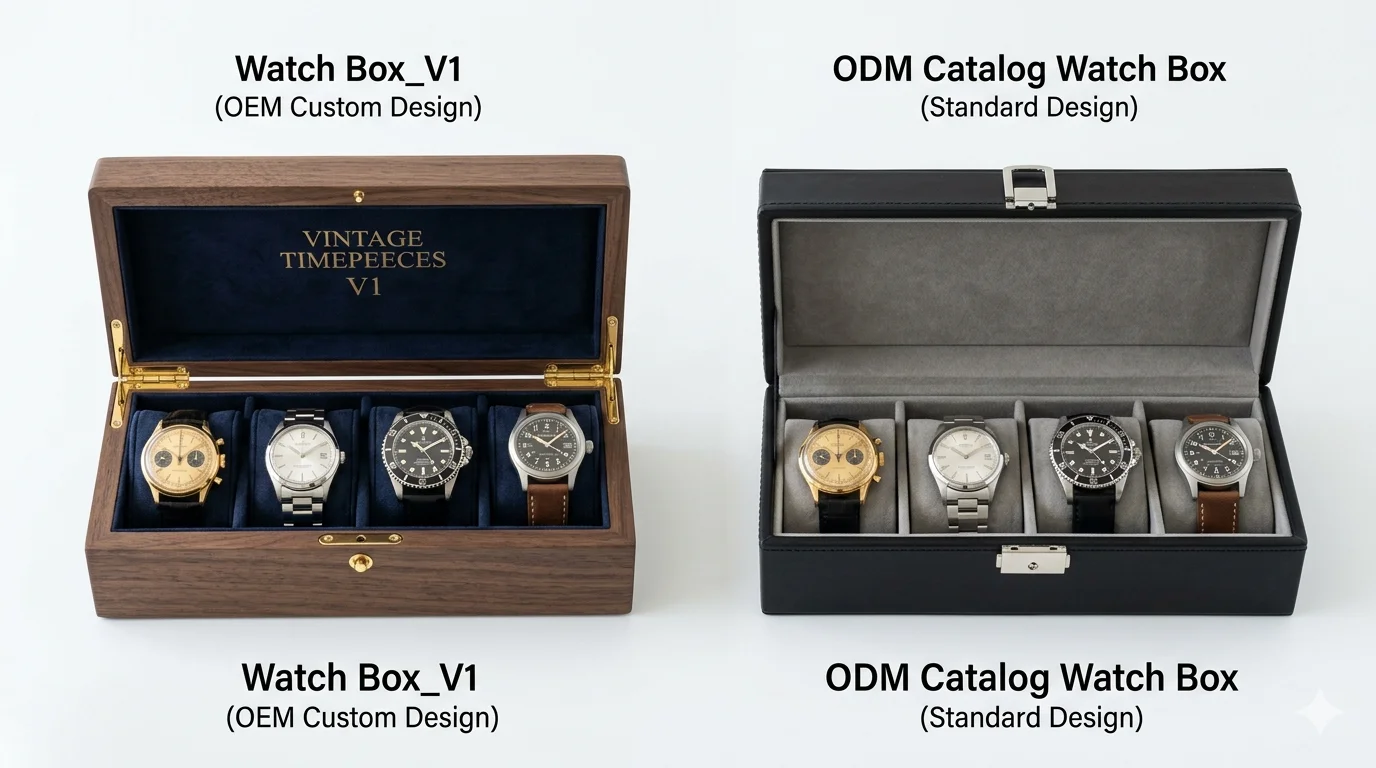
Choosing OEM or ODM affects tooling cost, lead time, uniqueness, and how much control you have over the final box. In our workshop, OEM buyers usually come with drawings, brand guidelines, Pantone colors, logo positions, and size requirements. ODM buyers usually start from our existing box structure and ask for logo, color, lining, cushion, and packaging changes.
FS-Bait] OEM watch boxes are custom-built around your brand’s design, size, material, and structure — similar to how we build [custom jewelry box solutions. ODM watch boxes use an existing supplier design with lighter customization. OEM gives stronger uniqueness but higher development cost and longer lead time. ODM is faster, lower risk, and better for testing new markets.
A practical way to decide:
Total launch risk = tooling cost + sample rounds + MOQ pressure + delivery deadline
If your brand has stable annual demand, OEM makes sense. If you’re testing a new watch line, ODM is usually safer. What we’ve found in practice is that many buyers start with ODM for the first order, then shift to OEM after sales data becomes clear.
For MOQ, this depends on material and process. Paperboard ODM boxes may start lower. Lacquer wood, molded plastic, or custom metal fittings usually need higher MOQ because setup time and component sourcing are heavier.
Pro Tip: If you want OEM uniqueness without full tooling risk, customize the “touch points” first — logo plate, cushion shape, lining color, closure feel, and outer sleeve.
A common mistake is thinking ODM means “no customization.” Not true. ODM can still look very branded when color, lining, logo method, insert, and sleeve are controlled well.
This doesn’t apply when your design has patented structure, unusual dimensions, or licensed brand assets. Then you need OEM control and clear ownership terms.
Core Watch Box Materials: Wood, MDF, Leatherette, Paperboard, Plastic, and Metal
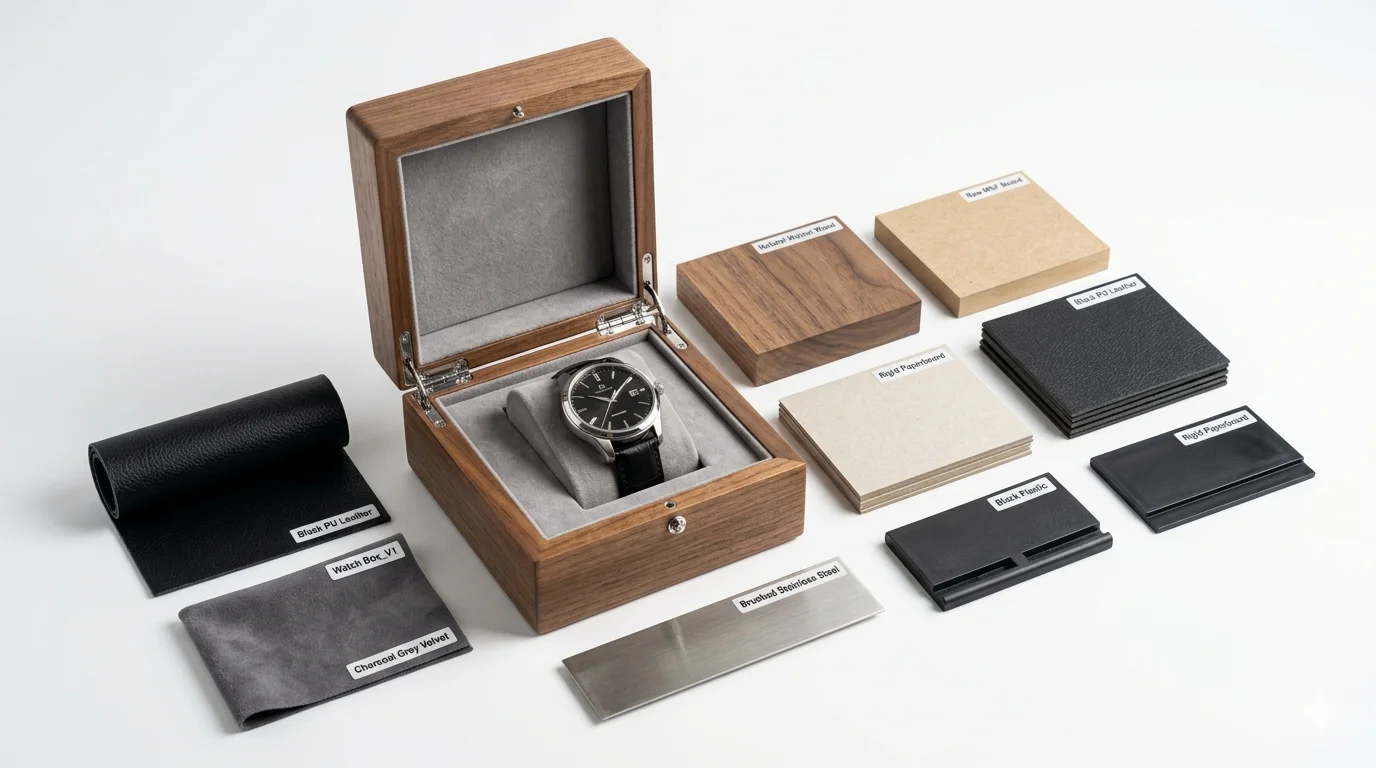
Material selection drives perceived value, durability, weight, freight cost, and sustainability claims. Buyers often ask, “Which material is best?” The honest answer is: it depends on retail price, shipping method, storage condition, and brand positioning.
In our workshop, MDF with veneer or lacquer is common for premium display boxes because it gives weight, flatness, and a luxury feel. Solid wood looks beautiful, but it’s more sensitive to moisture and cost variation. PU leather over MDF or greyboard is flexible for fashion brands. Paperboard is excellent for lightweight retail and e-commerce when engineered correctly. Plastic can work for travel or sports watches. Metal gives a strong premium signal, but scratches and fingerprints must be controlled.
A simple freight calculation helps:
Chargeable weight = max(actual gross weight, volumetric weight)
Volumetric weight by air = carton length × width × height cm ÷ 6000
So if a master carton is 60 × 45 × 40 cm, volumetric weight = 60 × 45 × 40 ÷ 6000 = 18 kg. If actual weight is 14 kg, you pay based on 18 kg. That’s why heavy luxury boxes can quietly damage margin.
A common mistake is asking for “real wood” without considering climate. Wood movement can cause gaps, lid misalignment, or lacquer cracking.
Engineering Note: For overseas shipping, we care about moisture content, glue stability, edge protection, and carton compression more than the material name alone.
This doesn’t apply when the box is for local boutique handover only and not shipped in bulk through parcel networks.
For restricted substances, buyers commonly ask about RoHS when electronics or LED parts are included, and also for coatings, inks, and metal fittings when selling into stricter retail channels.
Exterior Finishes That Change the Perceived Value
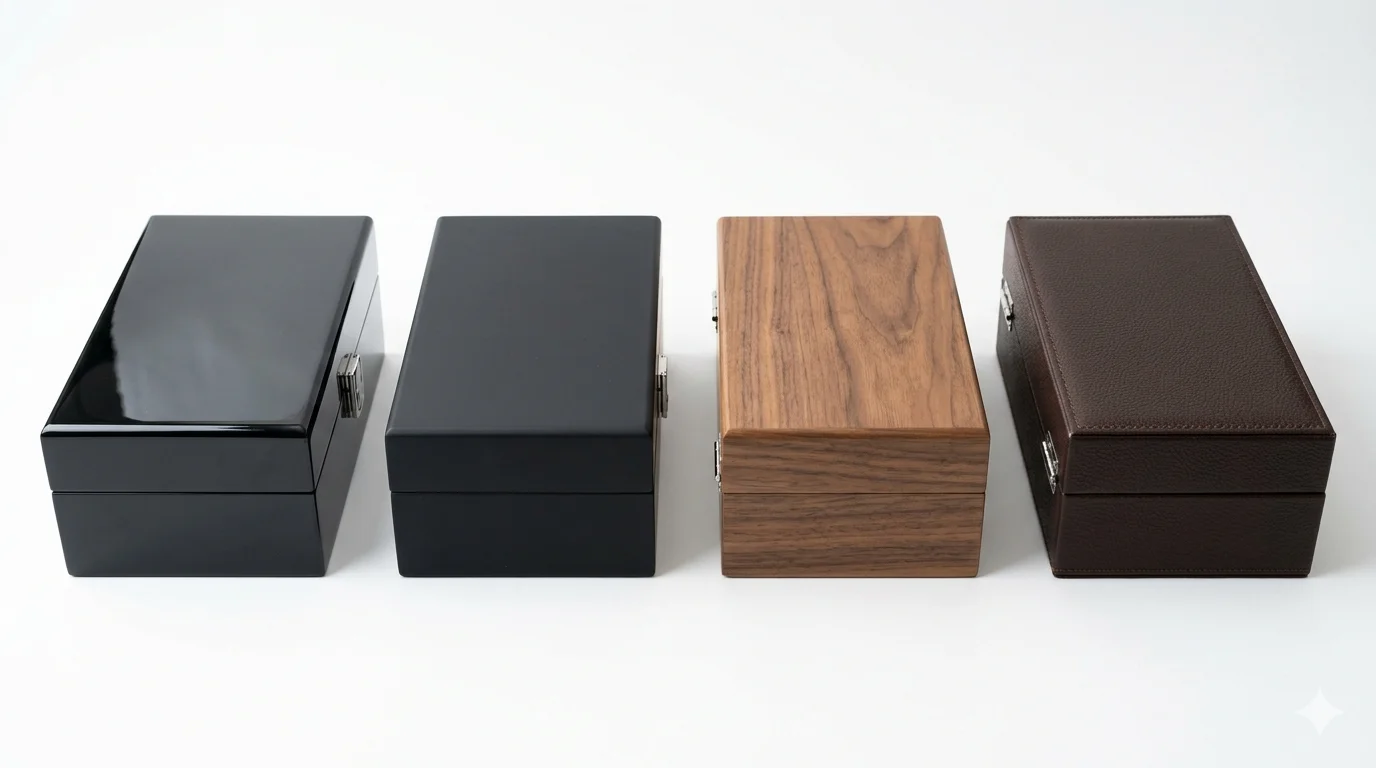
Lacquer, veneer, PU leather, microfiber, matte paper, and soft-touch coatings can shift a box from entry-level to luxury. The pain point is that buyers often approve a finish by photo, then reject the bulk goods because the hand feel is different. Finish is tactile. You can’t judge it fully from a screen.
In our workshop, glossy lacquer gives strong visual depth, especially for black, piano white, and dark walnut designs. But it shows fingerprints and scratches easily. Matte lacquer feels modern and hides fingerprints better, but surface consistency is harder. PU leather gives a warmer hand feel and works well for jewelry-and-watch gift sets. Soft-touch paper looks clean, but abrasion resistance must be checked.
The surface risk formula we use is:
Finish risk = scratch visibility × handling frequency × color darkness × packing friction
Black glossy boxes are high risk because every tiny rub mark is visible. Light textured PU is more forgiving. This is why sample handling matters. We rub the surface, open and close the lid, pack it into sleeves, and check corners after movement.
One thing that surprises most buyers is that premium doesn’t always mean glossy. Many luxury brands now prefer quiet matte textures because they photograph well and feel less “mass market.”
Pro Tip: If your box goes into retail drawers or stockrooms, choose a finish that survives friction, not just one that looks good under studio light.
A common mistake is using soft-touch coating on tight sleeves. The coating can scuff during insertion.
This doesn’t apply when each box is protected by a rigid outer gift carton and handled only once at final presentation.
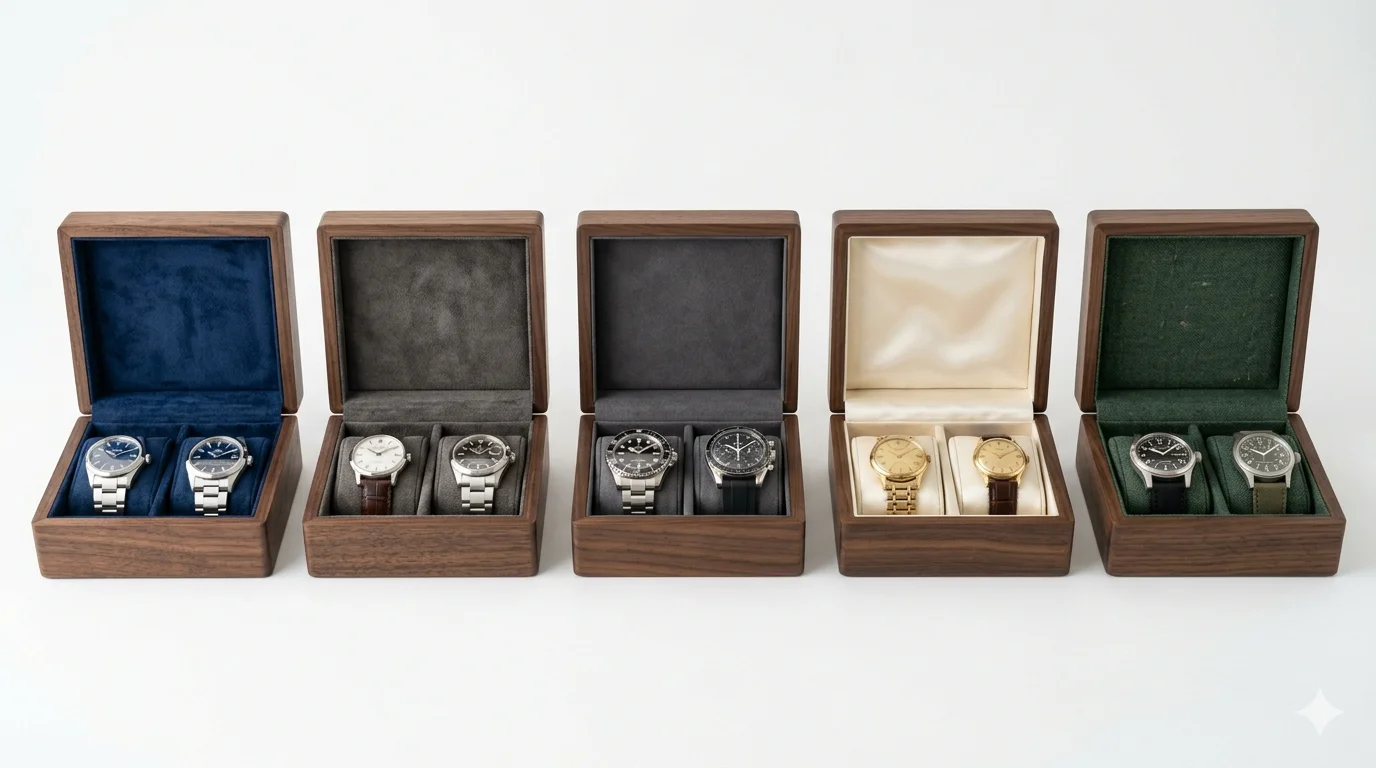
Interior Linings: Velvet, Suede, Microfiber, Satin, and Recycled Fabrics
The interior is where the watch touches the box, so lining choice affects scratch resistance and luxury feel. Many buyers focus on the outside first. In our workshop, we look inside early because the lining touches the case, bracelet, clasp, and sometimes the crystal.
Velvet gives a classic jewelry feeling and strong color depth. Microfiber is cleaner and often better for watches with polished metal surfaces. Suede-like fabrics feel premium but need colorfastness checks. Satin looks elegant, especially for wedding and gift sets, but it can snag and wrinkle. Recycled fabrics can support sustainability claims, but the texture and batch color must be controlled carefully.
A basic contact-risk formula is:
Scratch risk = surface hardness of watch finish + lining roughness + movement during transit
If the watch is tightly fixed and the lining is soft, risk drops. If the watch can move, even a good lining may cause marks over long transport.
Engineering Note: We don’t only touch the fabric by hand. We check lint transfer on black watch surfaces, color migration after humidity exposure, and glue marks near folded corners.
A common mistake is choosing deep black velvet without checking lint. Black velvet can look rich, but lint on stainless steel or sapphire crystal is very visible during unboxing.
One thing that surprises most buyers is that the neatest lining often costs more in labor than in fabric. Folding, trimming, and corner wrapping decide whether it looks luxury or cheap.
This doesn’t apply when the watch is sealed in a separate pouch before placing into the box. In that case, lining contact risk is lower, though visual quality still matters.
Watch Cushions and Inserts: Fit, Compression, and Size Tolerance
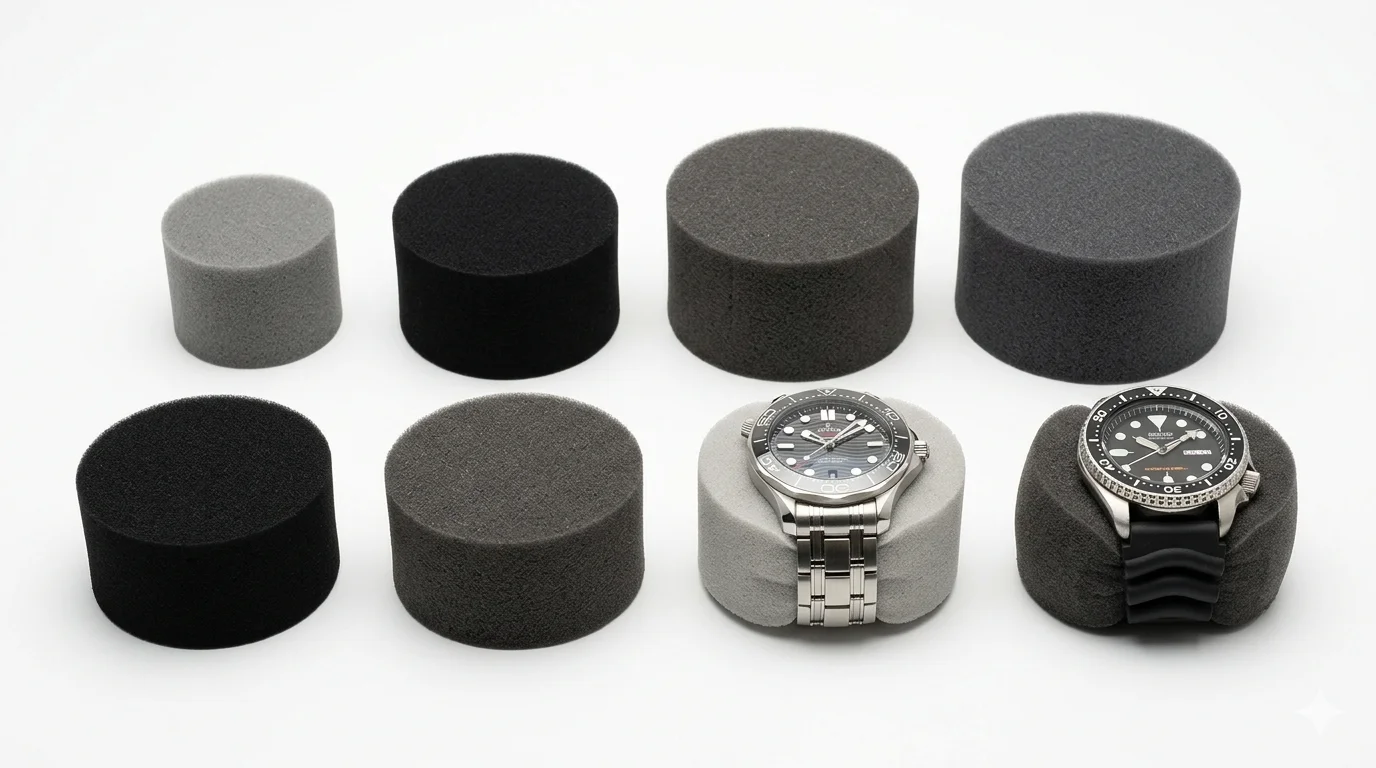
A poorly sized cushion can deform straps, loosen bracelets, or make the watch look unstable in transit. This is one of the most common real-world problems we see. The buyer approves the box. The watch arrives later. Then the cushion is too fat for women’s straps or too loose for heavy men’s bracelets.
[FS-Bait] For most men’s watches, cushion outer width often falls around 45–55 mm. For women’s watches, 35–45 mm is more common. The right size depends on case size, strap length, bracelet stiffness, and target wrist size. Always test with the actual watch, not only drawings.
The compression formula is:
Compression rate = (cushion free size – watch closed size) ÷ cushion free size × 100%
If a cushion is 50 mm wide and compresses to 44 mm inside the watch, compression rate = (50 – 44) ÷ 50 × 100% = 12%. In practice, that’s usually comfortable for many leather straps. Metal bracelets may need less compression because they don’t stretch like leather.
A common mistake is using one cushion for every SKU. It saves tooling and inventory, but it can make small watches look lost and large watches look forced.
Pro Tip: Ask for 2–3 cushion firmness options during sampling. Foam density changes the whole feeling, even when the size is the same.
One thing that surprises most buyers is how much cushion height affects perceived value. A watch sitting too low looks discounted. A watch sitting centered and slightly raised looks premium.
This doesn’t apply when the watch box is only for loose storage after sale, not for shipping with the watch mounted.
For inspection sampling, many buyers use ISO 2859-1 as a reference for acceptance sampling plans, especially when checking fit, cosmetic defects, and functional issues across bulk production.
Closure Systems: Hinges, Magnets, Snaps, Locks, Sleeves, and Lift-Off Lids
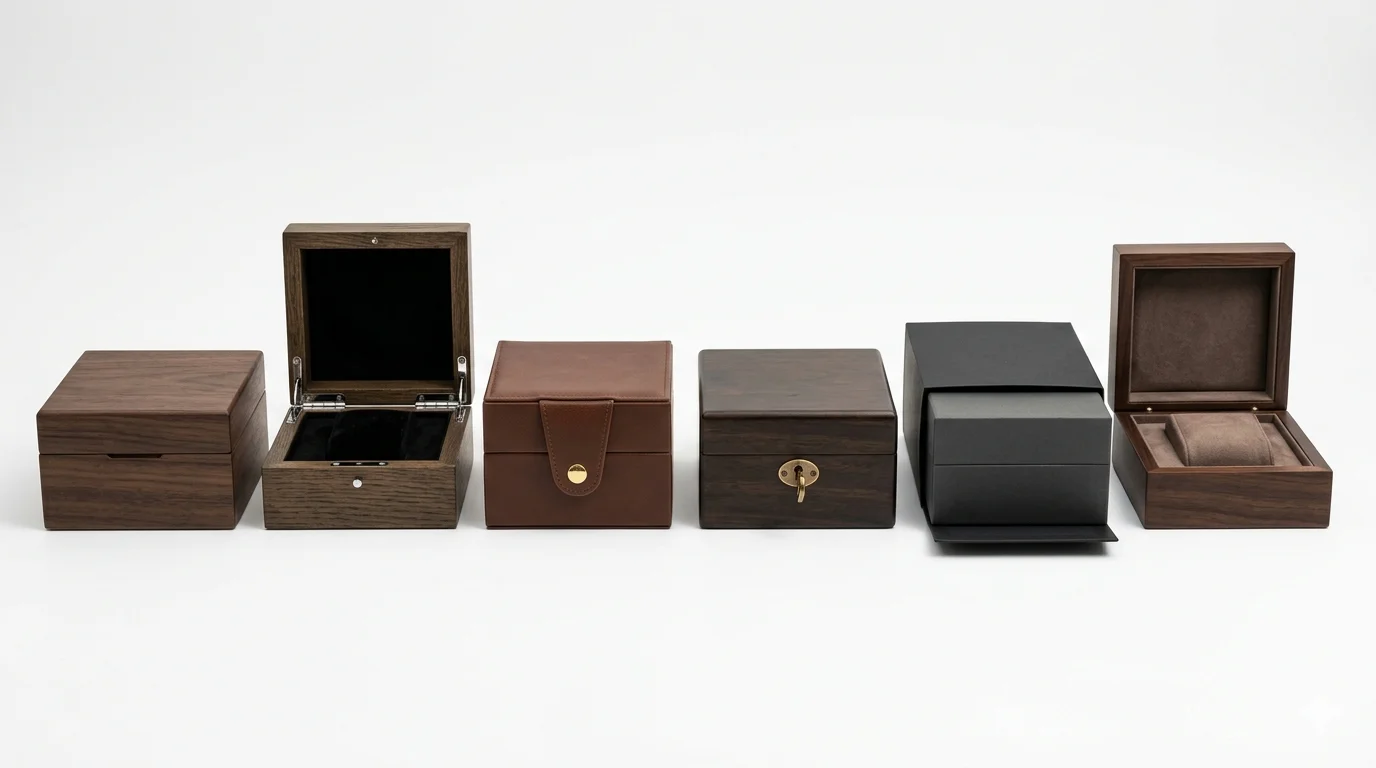
Closures influence usability, safety, luxury perception, and failure rates during repeated opening. A box can look perfect, but if the lid feels loose or the magnet is too strong, the customer notices immediately. Small hardware creates big emotion.
Hinges are classic for luxury watch box designs. They give a ceremony-like opening, but hinge alignment and screw holding strength must be controlled. Magnets are clean and modern, especially for paperboard, PU, and compact gift boxes. Snaps feel secure but can sound cheap if the material is thin. Locks add perceived value for collectors, though they raise cost and after-sales risk. Sleeves are economical and ship well, but tightness must be tested. Lift-off lids are simple and elegant for luxury paper boxes.
The opening-force check is basic:
User comfort = opening force + lid angle control + sound + repeatability
In our workshop, we open and close sample boxes many times because first opening is not enough. A hinge can feel fine at cycle 1 and loose at cycle 50.
A common mistake is choosing oversized magnets. Stronger isn’t always better. If the customer has to fight the lid, it feels clumsy, not premium.
Engineering Note: For magnetic closures, we check magnet polarity, glue bonding, lid gap, and whether the magnet affects nearby accessories. Normal watch boxes rarely create an issue, but electronics and cards should be considered.
One thing that surprises most buyers is that the “click” sound matters. A soft, aligned closure feels expensive.
This doesn’t apply when the box is designed only for shelf display and rarely opened by end users.
LED Watch Boxes: When Lighting Adds Value and When It Adds Risk
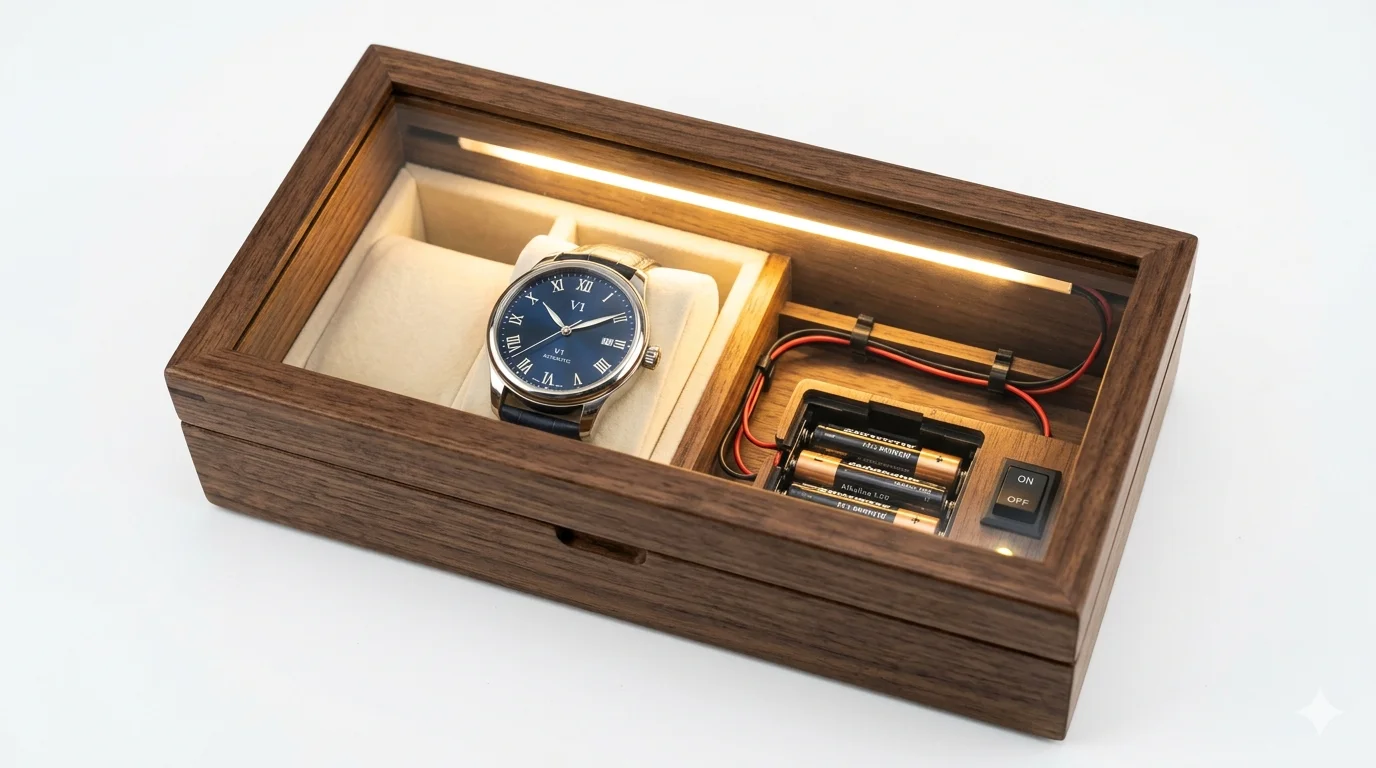
LED lighting can create a premium reveal, but it adds battery, wiring, compliance, and quality-control requirements. As a jewelry box manufacturer in China, we also work on LED jewelry packaging and are very direct with buyers: lighting sells the moment, but it also creates failure points.
[FS-Bait] Free LED watch box QC checklist for buyers: confirm LED color temperature, switch trigger position, battery type, wire routing, solder strength, light angle, heat feel, battery isolation tab, carton drop performance, and compliance documents before mass production approval.
For watches, common LED color temperatures are:
Warm white: about 2700–3500K
Neutral white: about 4000–4500K
Cool white: about 6000–6500K
Formula first:
Battery life hours = battery capacity mAh ÷ LED current mA
If a coin battery is 220 mAh and the LED circuit draws 20 mA, estimated life = 220 ÷ 20 = 11 hours. The conclusion: don’t promise “long life” without current measurement. Real life also depends on battery quality, switch leakage, storage time, and temperature.
A common mistake is placing the LED too close to polished metal. You get a harsh reflection instead of a premium glow. We usually angle the light toward the dial or inner lid, not directly into the buyer’s eyes.
Pro Tip: For luxury watch presentation, softer warm or neutral LEDs usually feel better than cold blue-white light.
One thing that surprises most buyers is that LED boxes may fall under electrical compliance expectations. For EU markets, buyers often ask about CE marking. For the United States, radio or electronic products may involve FCC review depending on the circuit. Lithium battery shipping can require UN38.3 testing when rechargeable lithium cells are used.
This doesn’t apply when the box uses no electronics, no battery, and no powered lighting. And if the LED box ships with simple replaceable coin cells, requirements may differ from rechargeable lithium packs — it depends on battery chemistry, destination, and transport mode.
For transit validation, many buyers reference ISTA 3A for packaged products moving through parcel delivery systems.
References & Sources
1. RoHS Directive — European Commission
2. ISO 2859-1 Sampling Procedures — International Organization for Standardization
3. CE Marking — European Commission
4. FCC Equipment Authorization — Federal Communications Commission
5. UN Manual of Tests and Criteria, UN38.3 — United Nations Economic Commission for Europe
6. ISTA Test Procedures — International Safe Transit Association
—
About the Author: Selene Gong, Senior Packaging Engineer at YodiaBox. 10+ years in luxury watch box OEM/ODM manufacturing. Developed 2,000+ custom packaging samples for brands across 30+ countries. Hands-on experience from material selection through mass production QC.
*Technical review by YodiaBox Packaging Engineering Team, June 2026.*
—
FAQ
Q: What is the MOQ for custom watch boxes?
A: Minimum order quantities vary by material: paperboard boxes start at 50-100 pcs, PU leather boxes typically need 100-300 pcs, and lacquered wooden boxes usually require 200-500 pcs for full OEM customization. ODM orders with lighter customization can start lower.
Q: OEM or ODM — which option is better for my brand?
A: OEM gives you full design control and unique tooling, but requires higher MOQ and longer lead time (25-35 days). ODM uses existing supplier designs with lighter customization — faster (15-20 days), lower risk, and better for testing new markets. We recommend starting ODM and transitioning to OEM once you validate demand.
Q: How long does custom watch box production take?
A: Typical timeline: sampling 5-7 days, sample approval 2-3 days, mass production 20-25 days, QC and shipping preparation 3-5 days. Total: approximately 30-40 days from confirmed order to dispatch.
Q: How much does a custom watch box cost?
A: Unit cost depends on material, complexity, and quantity. Approximate OEM pricing: 100 pcs ≈ $10-15/unit, 500 pcs ≈ $7-10/unit, 1000+ pcs ≈ $5-8/unit. ODM pricing is typically 20-30% lower. These are reference ranges — actual quotes vary by design complexity.
Q: Can I customize logos, inserts, and packaging?
A: Yes — we offer full customization including debossed/foil-stamped logos, custom-sized watch cushions, multi-compartment inserts, branded sleeves, magnetic closures, LED lighting, and custom outer cartons. All customization is included in our OEM service.
Q: Do you provide samples before mass production?
A: Yes, we provide pre-production samples within 5-7 days. You can review materials, color accuracy, logo placement, and structural quality before approving mass production. Sample shipping is available worldwide.
—
Custom Watch Box OEM Pricing Reference
Order Quantity Paperboard PU Leather Solid Wood + Lacquer 100 pcs $5.50-8.00 $10.00-15.00 $18.00-28.00 500 pcs $3.80-5.50 $7.00-10.00 $12.00-18.00 1000 pcs $2.80-4.00 $5.00-8.00 $8.00-14.00 3000+ pcs Contact us $3.50-6.00 $6.00-10.00
*Prices are EXW Shenzhen, USD per unit. Does not include tooling fees, shipping, or customs duties.*
—
Typical Production Timeline
Stage Duration Details Design & Sampling 5-7 days Material swatches, color proof, structural sample Sample Approval 2-3 days Client review and modification Mass Production 20-25 days Cutting, assembly, QC inspection Shipping Preparation 3-5 days Packaging, palletizing, documentation Total 30-40 days From order confirmation to dispatch
Mid-Article CTA: Need a custom quotation? Get a free watch box proposal within 24 hours — send us your logo and quantity requirement.
—
Next Step: Get a quote for your custom watch box project — including free material samples and MOQ consultation.
Written by: Sarah Jenkins
Senior Content Specialist
Seasoned Industry Editor with 5 years of experience, dedicated to delivering in-depth technical and market reports.
Reviewed by: Dr. Eric Shao
Chief Technical Director
With 12 years of experience in material science and custom manufacturing, ensures the scientific accuracy and technical compliance of all published content.
Recommended Reads
Gift packaging
10 产品
Jewelry display
12 产品
Jewelry Organizer
12 产品
Jewelry pouch
7 产品
Jewelry suitcase
6 产品
Leather jewelry box
13 产品
LED Jewelry box
8 产品
Paper jewelry box
10 产品
Velvet Jewelry box
11 产品
Watch box
7 产品
Wood jewelry box
6 产品
Best Watch Winder Box for Private Label Brands: How to Evaluate Quality, Noise, Motors, and Finish
If you are sourcing the best watch winder box for a private label line, we [...]
Jun
Watch Box Price Tiers: A Factory Engineer’s OEM Pricing Guide
Every week, buyers send us inquiry emails that start the same way: "Can you give [...]
Jun
Watch Winder Box Single: Design Standards, Target Users, and OEM Production Considerations
If you are developing a watch winder box single SKU, the hard part is usually [...]
Jun
Best Watch Winder for Rolex: What Retail Buyers and Private Label Brands Should Look For
If you are sourcing the best watch winder for Rolex for retail shelves, ecommerce bundles, [...]
Jun
Custom Watch Box MOQ, Pricing, and Lead Time FAQ for Wholesale Buyers
If you are sourcing a custom watch box for retail, gifting, or OEM packaging, the [...]
Jun
Large Velvet Jewelry Box: The Complete B2B Sourcing & Selection Guide
Large Velvet Jewelry Box: The Complete B2B Sourcing & Selection Guide Sourcing a large velvet [...]