
Grande boîte à bijoux en velours : le guide complet d'approvisionnement et de sélection B2B
Sourcing a large velvet jewelry box means balancing structural strength, velvet pile quality, and precise insert layout so high-value jewelry stays protected while the brand still feels premium. For B2B buyers, choosing the right box usually comes down to board thickness (minimum 2.0 mm), hinge durability, and custom layout configurations that make better use of shipping space. Get those design specs aligned with your target retail price, and you can secure packaging that lifts perceived value and cuts down on shipping damage.
Key Sourcing Takeaways
- Material Standards: Insist on high-density 2.0–2.5 mm grayboard wrapped in premium velvet to prevent warping and crushing.
- Insert Precision: Match slot depths and spacing to specific jewelry profiles (e.g., necklaces, rings, bracelets) to avoid movement during transit.
- Cost Control: Account for total landed cost, including dimensional weight shipping fees, which can quickly exceed the unit cost of large boxes.
- Customization Logistics: Confirm minimum order quantities (MOQs) and lead times, particularly for custom colors and custom-branded hardware.
- Supplier Vetting: Conduct drop tests and structural alignment checks on physical samples before approving bulk production.
Choosing the right large velvet jewelry box matters—a lot. For luxury brands, high-end retailers, and wholesale distributors, packaging isn’t just there to protect the product anymore. It’s part of the brand identity, and it shapes the unboxing experience from the first touch. The right velvet jewelry box sizes help multi-piece collections feel organized and intentional, while luxury velvet packaging tells the customer they’re looking at something premium. If you’re trying to sharpen presentation, adding custom jewelry packaging solutions can noticeably improve retail performance. According to recent global packaging trade reports, demand for high-end rigid boxes has grown by 6.4% annually, driven by the expansion of direct-to-consumer premium jewelry segments.
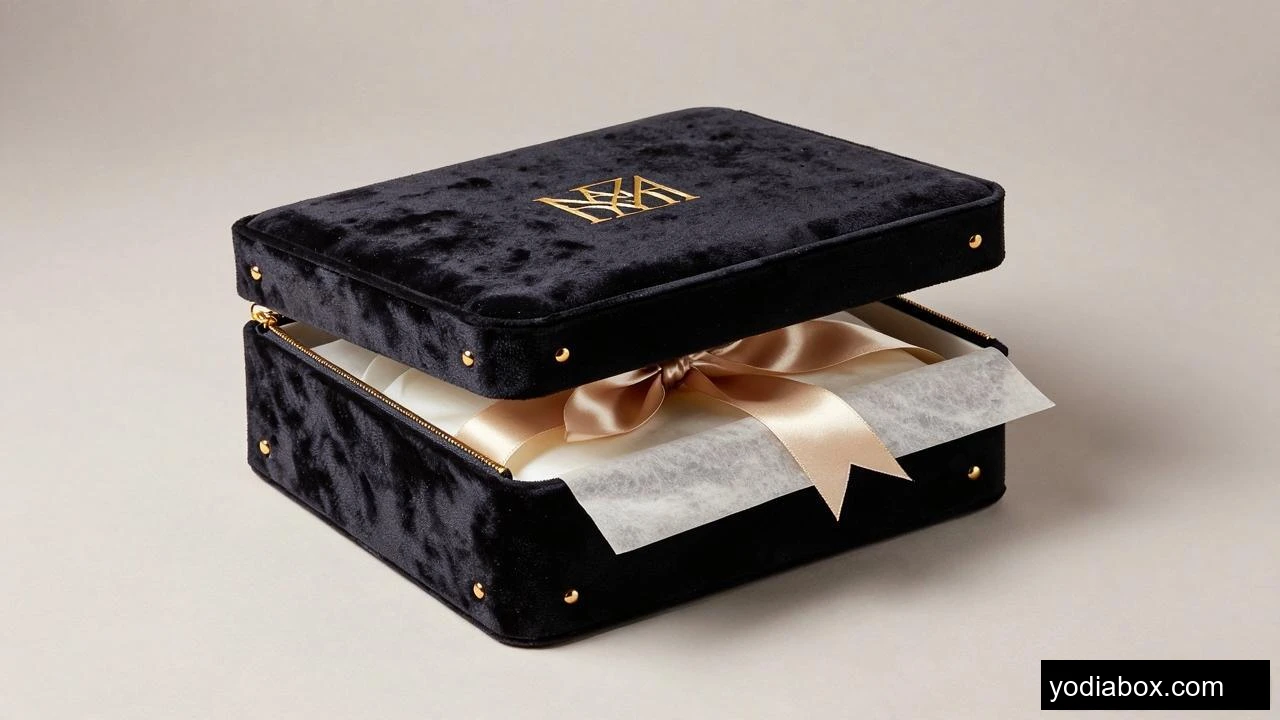
Is a Large Velvet Jewelry Box Actually Right for Your Business? (Scenario Fit Assessment)
RBefore you commit to a large-format packaging run, it’s worth looking closely at how the box will be used from start to finish. A large velvet jewelry box can play very different roles depending on whether it’s meant for retail display, gifting, or multi-piece set presentation.ant for retail display, gifting, or multi-piece set presentation.
For retail displays, the box needs strong structure and real visual presence under harsh store lighting. Velvet naturally absorbs light, which creates a rich backdrop that helps diamonds, gemstones, and polished metals stand out. But there’s a tradeoff. If staff are opening and closing the display box all day, the hinge mechanism and velvet edges will wear fast.
For gifting, the tactile experience matters most. The weight of the box, the smooth velvet surface, and the soft-close resistance of the lid all create an emotional response before the jewelry even appears.
For multi-piece sets—say a matching necklace, bracelet, earrings, and ring—a large format isn’t optional. It gives each piece room to sit as part of one curated collection, which can encourage upsells and raise average transaction value.
→
Requires high hinge durability & light-absorbing velvet
Requires premium weight, soft-close feel & rich tactile texture
Requires custom-molded inserts to prevent transit damage
When a large jewelry organizer box velvet format makes sense for B2B buyers
A large jewelry organizer box velvet format works very well for certain business models. For others, not so much. If your brand focuses on delicate, minimalist jewelry sold one piece at a time, a large box can make the item look smaller than it is—and push your shipping costs up at the same time.
On the other hand, the large format is a strong fit for:
- Bridal and Fine Jewelry Brands: High-ticket items need substantial packaging that supports the price point.
- Subscription Box Services: Curated monthly sets benefit from a single, impressive container that keeps different items organized.
- Corporate Gifting Programs: High-end corporate clients often value large, multi-functional boxes the recipient may keep on a dresser.
If you’re weighing these options, exploring custom jewelry packaging for retail brands can give you a clearer sense of market positioning. It also helps to review a full gift box packaging guide so the structural differences between presentation boxes and long-term storage organizers are easier to spot.
Size, Compartment & Capacity Guide — Matching the Box to Bracelets, Necklaces & Multi-Piece Sets
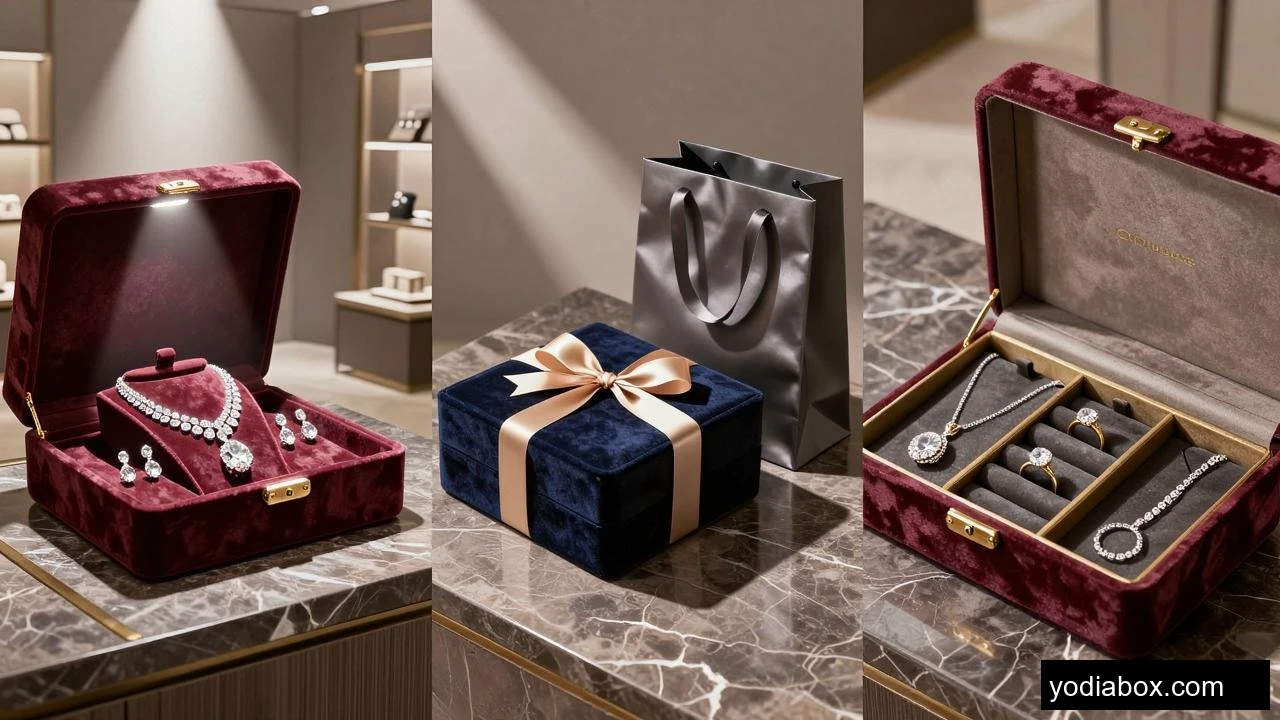
How velvet jewelry box sizes affect fit, visual presentation, and carton efficiency
Choosing the right velvet jewelry box sizes is always a balancing act between presentation and logistics. Too large, and shipping costs jump because of volumetric weight. Too small, and the jewelry feels cramped, which cheapens the whole presentation.
I remember one large velvet jewelry box program for a European luxury brand that looked simple on paper and turned into a full engineering job. The box size was 312 x 228 x 78 mm, built to hold a necklace, bracelet, earrings, and a ring set in one presentation format. The client wanted deep midnight-blue polyester velvet over a 2.2 mm rigid board shell, plus a brass-finish hinge, a soft-close lid feel, and a tolerance of less than 1.5 mm on all visible alignment points.
Then the first transit tests hit. We found that the box’s volumetric weight was so high it pushed their air freight costs up by 35% compared to their previous packaging. So we trimmed 12 mm off the width and 8 mm off the depth, then reworked the internal layout to keep the jewelry separated safely while fitting more units into a standard master carton. That one adjustment saved the client more than $42,000 in shipping costs on their initial 10,000-unit run.
Choosing a velvet jewelry box with compartments for bracelets, necklaces, rings, and sets
When you’re designing a velvet jewelry box with compartments, the layout needs to match the actual dimensions of the jewelry pieces. Sounds obvious, right? But this is where a lot of projects go wrong.
- Necklaces: Require a wide, shallow recess or a series of hooks with an elastic security strap. A large jewelry box for necklaces must prevent the chain from sliding around and scratching the pendant.
- Bracelets: Need either a long, flat compartment or a central C-ring pillow. The pillow format is preferred for rigid bangles, while flat compartments work best for delicate chain bracelets.
- Bagues: Require high-density foam slots wrapped in velvet. The slots must be tight enough to hold heavy signet rings upright but flexible enough for thin bands.
- Boucles d'oreilles: Require custom-punched tabs or a removable velvet card that sits at an angle for optimal display.
| Jewelry Type | Recommended Compartment Style | Minimum Depth | Key Protection Feature |
|---|---|---|---|
| Necklace | Recessed channel with elastic strap | 15 mm | Prevents chain tangling and pendant scratching |
| Bangle/Bracelet | Removable C-ring pillow | 45 mm | Maintains shape and prevents crushing |
| Bagues | High-density foam slots | 25 mm | Keeps rings upright during transit |
| Boucles d'oreilles | Angled velvet card with pre-punched holes | 20 mm | Prevents posts from bending |
Insert depth, slot spacing, and jewelry box inserts compatibility
The engineering behind jewelry box inserts is where many B2B buyers don’t do enough due diligence. The insert has to be designed with the right depth and spacing for the actual height of the jewelry. A cocktail ring with a high-set gemstone, for example, needs a deeper slot and more vertical clearance in the lid than a simple wedding band.
Insert density matters too. Cheap polyurethane (PU) foam breaks down over time and can release gases that tarnish silver and low-karat gold. High-density ethylene-vinyl acetate (EVA) foam wrapped in velvet remains the industry standard for premium packaging. It absorbs shock well, holds its shape, and doesn’t chemically react with precious metals.
If you want the technical specs behind these materials, see our jewelry box inserts guide and our dedicated necklace packaging solutions.
Quality Indicators & Brand Presentation — What Separates a Premium Velvet Box from a Generic One
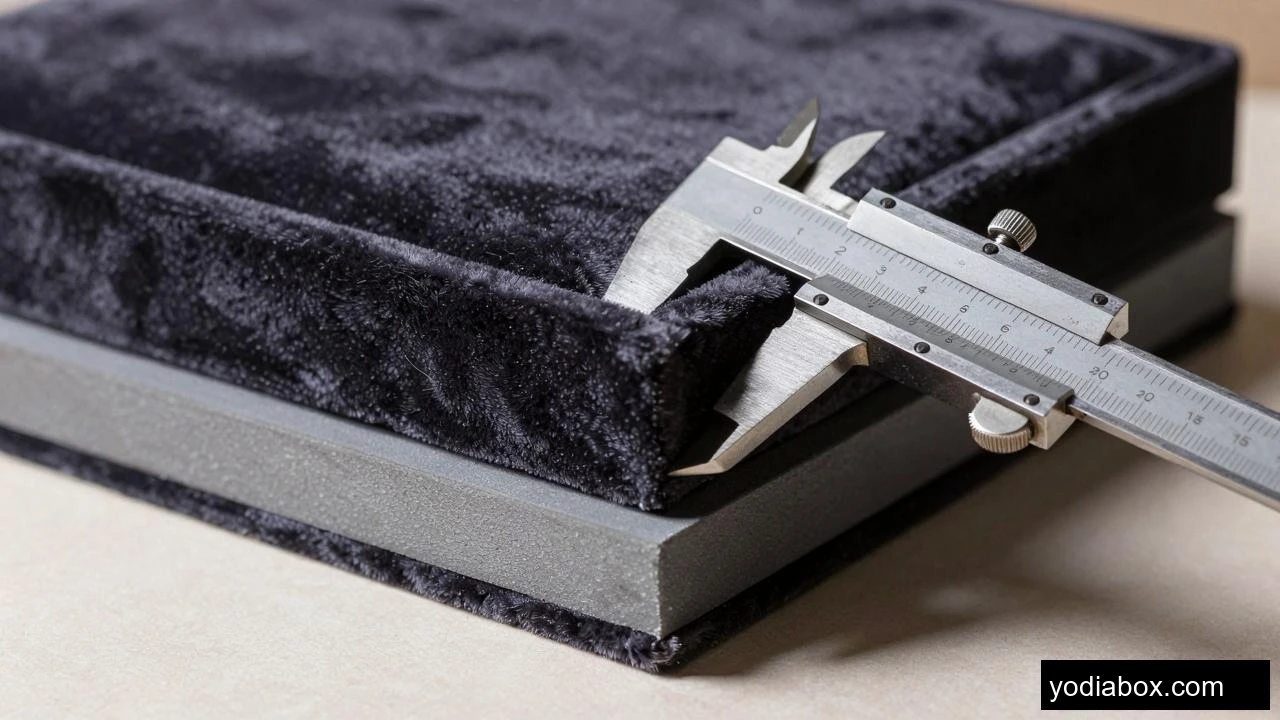
Velvet surface, rigid board thickness, lining quality, and hardware details
The gap between a premium luxury velvet packaging solution and a generic box comes down to materials and assembly details. Small things, honestly. But they add up fast.
2.2mm+ Grayboard | Long-fiber Velvet | L-hinge/Piano Hinge | Odorless Glue
1.2mm Chipboard | Short-fiber Flocking | Paper Hinge | High-VOC Glue
- Velvet Quality: Cheap boxes use short-fiber nylon flocking sprayed onto paper, which feels scratchy and sheds fibers over time. Premium boxes use woven cotton or high-grade polyester velvet with a dense, long-fiber pile that offers a soft, rich hand-feel and resists crushing.
- Rigid Board Thickness: A large box needs a thick core to stop warping under the tension of wrapped velvet. Premium boxes use a minimum of 2.0 mm to 2.5 mm grayboard. Generic boxes often use 1.2 mm to 1.5 mm chipboard, which bends easily when stacked.
- Lining Quality: The interior lining should be glued down cleanly, with no bubbles, wrinkles, or visible adhesive residue. The seams where the velvet meets the inner lining need to look sharp and straight.
- Hardware Details: High-end boxes use metal L-hinges, piano hinges, or custom magnetic closures that give a satisfying “snap” when closed. Generic boxes usually rely on paper or fabric hinges that tear after repeated use.
Branding impact in luxury velvet packaging and custom logo jewelry box execution
Putting a custom logo jewelry box design onto velvet takes the right branding method. Since velvet has a textured, uneven surface, standard offset printing won’t work.
- Hot Foil Stamping: This is the most common method. A heated metal die presses a metallic foil (gold, silver, rose gold, or black) into the velvet. The key here is temperature control. Too hot, and synthetic velvet fibers melt. Too cool, and the foil won’t bond cleanly, leaving jagged edges.
- Debossing: This creates a subtle recessed logo without foil. It works best on high-pile velvet and leaves a clean, dark impression of the brand name.
- Metal Logo Plates: For a more elevated presentation, a custom-engraved metal plate can be recessed into the lid or the interior lining.
For more on branding methods, see our custom logo packaging options and download our rigid box quality control checklist.
Quality control checks that help distinguish premium from generic
If you want consistent supplier quality, you need clear QC protocols. Premium manufacturers usually follow international testing standards, including those defined by the International Organization for Standardization (ISO).
- The Friction Test (Crockmeter Test): Rub a white cotton cloth against the velvet surface 50 times under a standard weight. If dye transfers to the cloth, the velvet was poorly dyed and may stain customers’ hands or jewelry.
- The Hinge Cycle Test: Open and close the box lid 1,000 times. The hinge should stay tight, and the lid should still align perfectly with the base without shifting.
- The Odor Test: Velvet boxes are often assembled with hot-melt or water-based glues. If the glue hasn’t cured properly, the box can give off a strong chemical odor (high VOCs) that tarnishes jewelry and ruins the unboxing experience.
Customization Options, MOQ & Lead Times — What Wholesale Buyers Must Confirm Before Committing
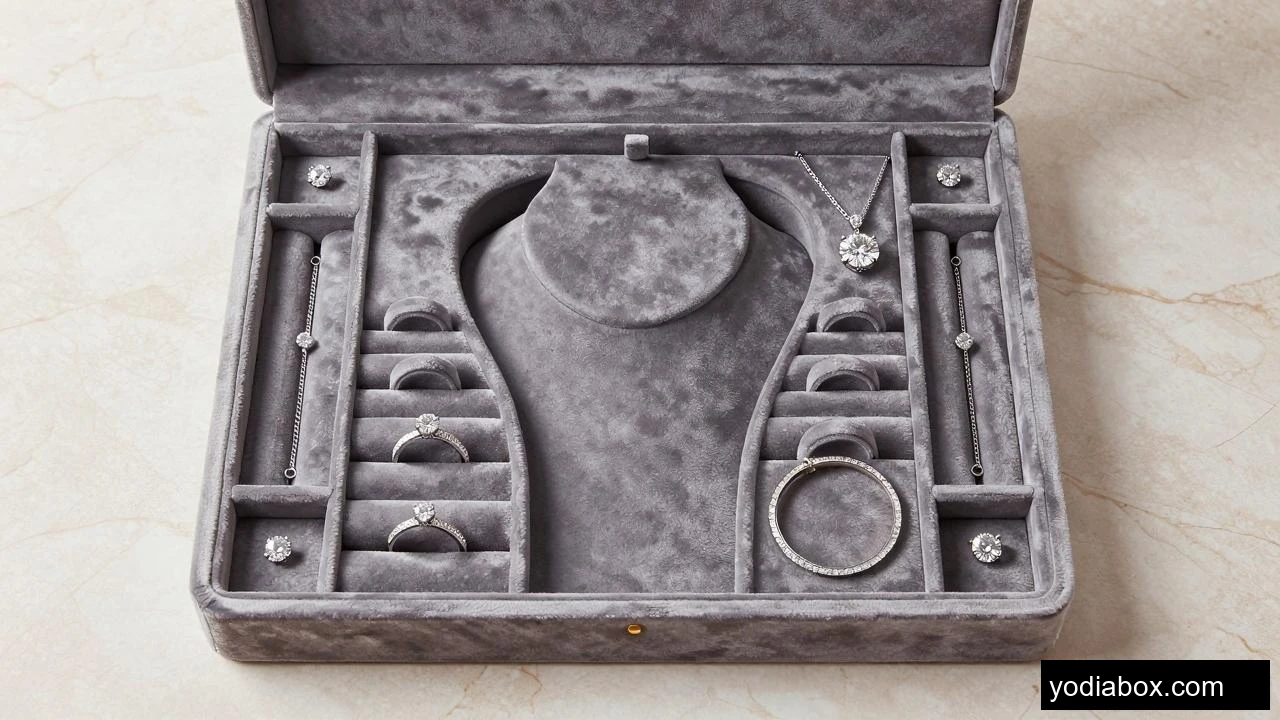
What custom velvet jewelry boxes bulk usually includes
When you order custom velvet jewelry boxes bulk, you’re not stuck with stock designs. A capable manufacturer should let you customize nearly every part of the box:
- Custom Dimensions: Tailored to your specific product dimensions.
- Custom Colors: Dye-to-match services based on Pantone matching system (PMS) numbers.
- Custom Inserts: Molded compartments designed to fit your exact jewelry pieces.
- Custom Hardware: Branded metal clasps, hinges, and corner protectors.
Logo methods, color matching, and insert customization
Customization opens up a lot of possibilities, but it also creates technical issues buyers need to manage with suppliers.
- Color Matching: Dyeing velvet is an organic process. There will always be slight color variation (typically ΔE < 1.5) between production batches. Always request a physical “lab dip” (dyed fabric sample) for approval before mass production.
- Insert Customization: If you’re using EVA foam inserts, the manufacturer needs to create a custom die-cut mold. This usually involves a one-time tooling fee ranging from $150 to $500 depending on compartment complexity.
MOQ, sampling, production timing, and approval checkpoints
Understanding the timeline is essential for inventory planning, especially for seasonal launches like Valentine’s Day or the holiday shopping season.
→
Approval Checkpoint
→
Mass Production: 25-35 Days
→
QC & Shipping: 15-40 Days
- MOQ (Minimum Order Quantity): For a custom large velvet jewelry box wholesale order, MOQs usually range from 500 to 1,000 units. Higher MOQs (2,000+ units) are required if you want a custom-dyed velvet color instead of a stock color.
- Sampling: Expect 7 to 10 days for a structural sample (without logo) and 12 to 15 days for a pre-production sample (with custom logo and color).
- Production Lead Time: After sample approval, mass production typically takes 25 to 35 days.
- Approval Checkpoints: Establish three critical checkpoints:
- Material approval (velvet dye and board thickness).
- Pre-production sample approval (final look and feel).
- Pre-shipment inspection (random sampling from the final production run).
For a closer look at how order volume affects schedules, check our MOQ guide for custom packaging and our logo printing and stamping options.
Total Landed Cost Breakdown — How to Compare Large Velvet Jewelry Box Wholesale Pricing Fairly
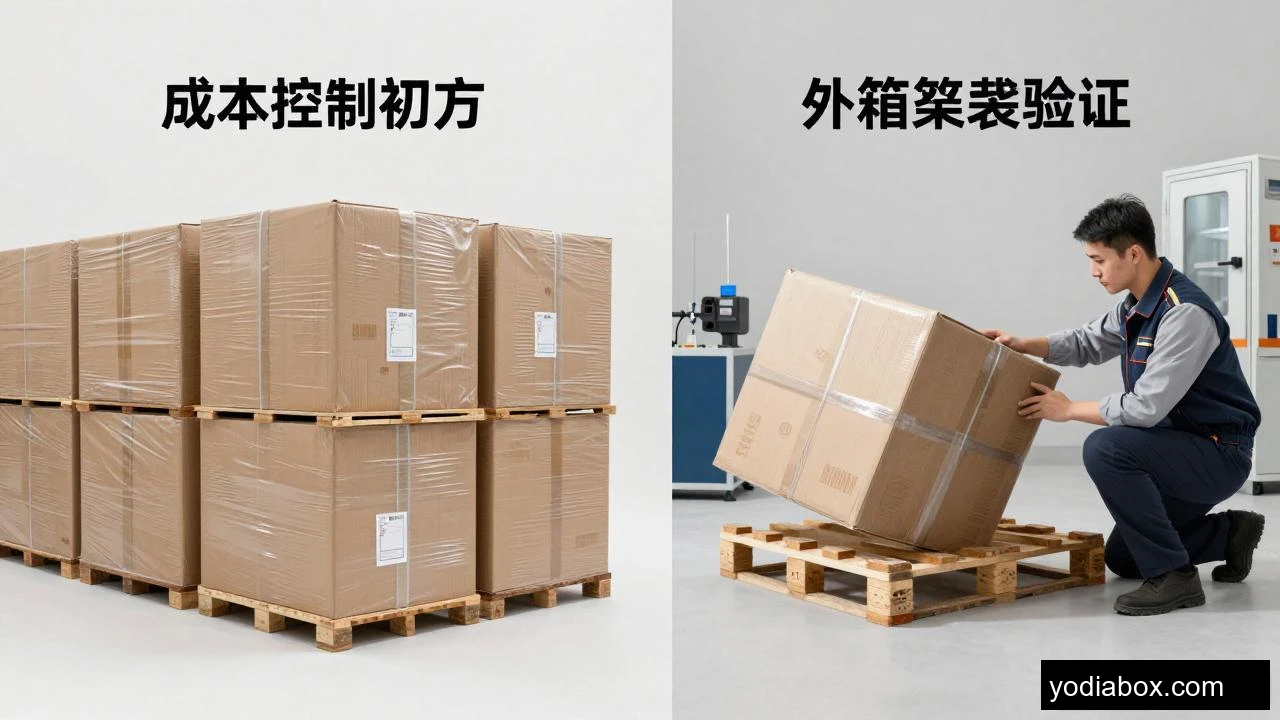
Unit price vs tooling, sampling, packaging, and freight
A lot of B2B buyers make the same mistake: they compare quotes only by FOB unit price. That low unit price can disappear pretty quickly once tooling fees, sampling charges, and poor shipping efficiency get added back in.
When you’re reviewing quotes for a large velvet jewelry box wholesale order, ask for a fully itemized breakdown that includes:
- Unit Price: The cost of the box itself.
- Tooling Fees: The cost of the die-cut molds for the inserts and the hot-stamping plates.
- Sampling Fees: The cost of producing and shipping physical samples.
- Master Packaging: The cost of protective polybags, inner cartons, and heavy-duty outer cartons.
- Freight: The cost of shipping the goods from the factory to your warehouse.
Why bulk velvet boxes can look cheaper but cost more after packing and shipping
Large velvet boxes are rigid, so they can’t be flat-packed. That means they contain a lot of empty space, which makes them vulnerable to high volumetric shipping rates.
For example, if you order 2,000 bulk velvet boxes, the actual shipment weight might be 1,500 kg, but the volumetric weight (calculated as Volume in CBM × 167 for air freight) could be 3,500 kg. That’s the number you’ll be billed on.
How do you reduce that? Usually by working with your supplier on master carton layout. In some cases, nesting smaller boxes inside larger ones during transit can sharply reduce total shipping volume.
A fair comparison model for jewelry display box wholesale quotes
To compare supplier quotes on equal footing, use the standardized cost model below based on a typical order of 1,000 custom large velvet boxes (size 250 x 200 x 60 mm):
| Cost Component | Supplier A (Low Unit Price) | Supplier B (Premium Quality) | Impact on Total Landed Cost |
|---|---|---|---|
| FOB Unit Price | $2.50 | $3.20 | Supplier A appears $700 cheaper initially. |
| Tooling & Setup | $150.00 | $200.00 | Minimal difference. |
| Sampling & Air Courier | $120.00 | Included | Supplier B offsets some costs. |
| Master Carton Specs | Single-wall (thin) | Double-wall (heavy-duty) | Supplier A’s boxes risk crushing during transit. |
| Volumetric Efficiency | 4.2 CBM (poor packing) | 3.5 CBM (optimized nesting) | Supplier B saves on ocean freight. |
| Estimated Sea Freight | $1,260.00 | $1,050.00 | Supplier B’s optimized packaging reduces shipping cost. |
| Defect Rate (Est.) | 4% (due to poor QC) | <0.5% | Supplier A costs an extra $100 in write-offs. |
| Total Landed Cost | $6,630.00 | $4,450.00 | Supplier B is more cost-effective overall. |
Before you lock in shipping terms, review the official Incoterms rules so both you and your supplier agree on who carries the cost and risk at each stage of transit. For a step-by-step approach, see our packaging cost breakdown guide and our article on shipping terms explained for wholesale buyers.
Supplier Vetting Checklist — Reducing Risk on Your First Order and Every Repeat Order After
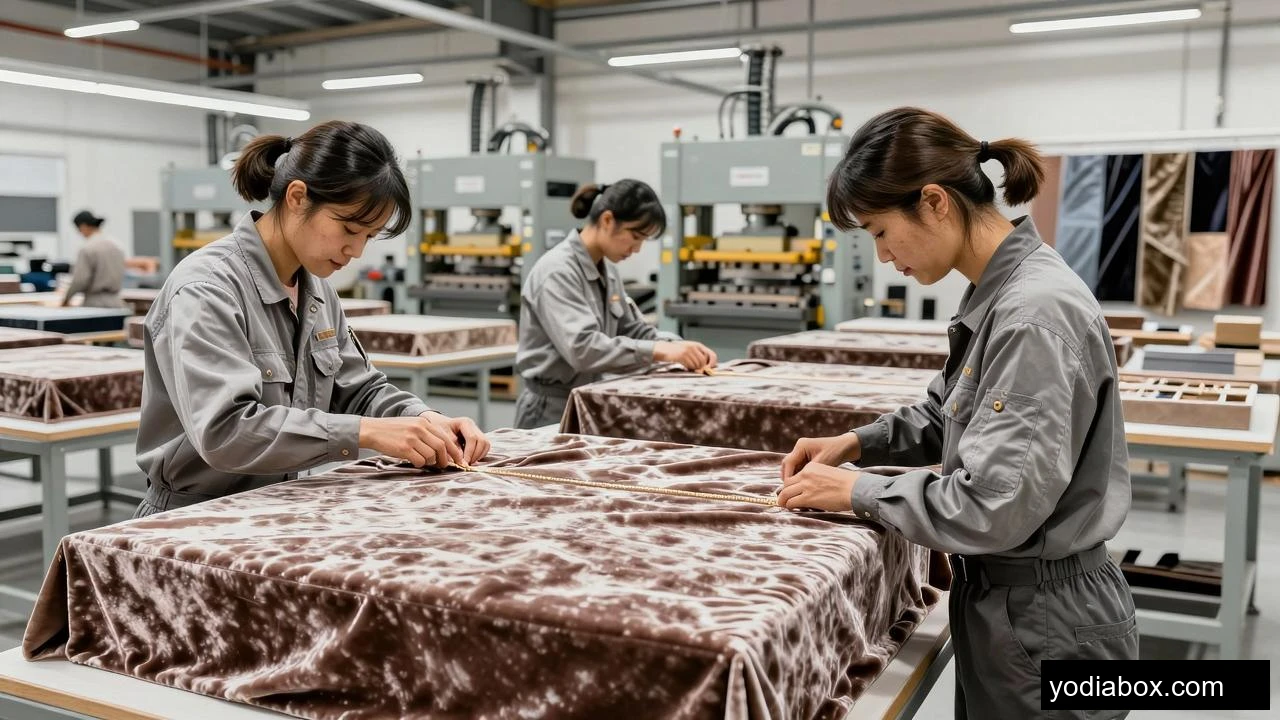
Factory capability, QC checkpoints, and communication standards
Choosing the right manufacturing partner is probably the most important step in the sourcing process. You need a supplier that can produce high-quality velvet gift box packaging and also understands the strict standards international luxury brands expect.
When vetting factories, look for certifications like ISO 9001 (Quality Management) and FSC (Forest Stewardship Council, which confirms sustainable wood and paper sourcing). Communication matters too. A solid supplier should answer inquiries within 24 hours and provide detailed technical drawings (dielines) before sampling starts.
Sample approval, repeat-order consistency, and defect handling
One project still stands out to me. It involved a mid-size international jewelry brand getting ready for a holiday launch across 12 retail markets. They needed a large velvet jewelry box for premium necklace-and-bracelet sets, and their requirements were tight: the box had to secure a 3-piece set, fit inside an existing gift sleeve, pass a 1.2-meter drop test, and keep a deep emerald velvet finish that matched the seasonal campaign.
I coordinated the project from sourcing through delivery. During sampling, the first prototype failed the drop test because the internal board was too thin (1.5 mm), and the heavy brass necklace broke through the insert. We quickly upgraded the board to 2.2 mm and changed the insert core from standard cardboard to high-density EVA foam.
Then another issue popped up. The emerald velvet from the supplier’s standard fabric catalog shifted color under warm LED retail lighting, reading more olive than emerald. So we worked with a specialized dye house to create a custom-dyed polyester velvet with high color fastness under retail lighting. The launch ended up being a success, with zero transit damages reported across all 12 markets. That’s why rigorous pre-production testing matters so much for large-scale rollouts.
What to ask before placing a large velvet jewelry box wholesale order
To protect your investment, use this step-by-step vetting process before signing a contract or sending a deposit:
→
Step 2: Order Physical Sample
→
Step 3: Conduct Drop & Rub Tests
→
Step 4: Sign Quality Agreement
- Step 1: Ask the supplier for their ISO 9001 certification and recent factory audit reports. You can verify these documents through international inspection agencies like SGS.
- Step 2: Request a structural sample using the exact board thickness and velvet quality they propose for mass production.
- Step 3: Perform a drop test on the sample: place a dummy weight inside the box, seal it, and drop it from a height of 1.2 meters onto a hard surface. The box should not open, and the internal insert should not crack or dislodge.
- Step 4: Draft a Quality Level Agreement (QLA) that defines acceptable defect limits (e.g., Acceptable Quality Limit – AQL 1.5 for major defects, AQL 4.0 for minor defects). This agreement should specify that the supplier will replace or refund any units that fail to meet these standards.
To make the process easier, download our supplier audit checklist and read our detailed guide on the packaging QC process.
Differentiation Opportunity: The Physics of Velvet Alignment and Hinge Tension
When manufacturing a large velvet jewelry box, two engineering details often get missed by standard packaging suppliers: velvet pile alignment and hinge tension dynamics.
Velvet Pile Alignment (Nap Direction)
Velvet is a tufted fabric with a clear directional pile, or “nap.” Run your hand along it and you’ll feel the difference immediately—smooth one way, rough the other. More importantly, nap direction changes how the fabric reflects light.
If a factory cuts velvet panels for one box from different angles of the fabric roll, the lid can look like a different color from the base under retail spotlighting, even if both pieces came from the exact same roll.
Better manufacturers prevent this with a strict cutting protocol. All parts of a single box—lid, base, and interior inserts—are cut with the nap running in the same direction, usually back to front. That’s what keeps the color visually consistent across the whole box.
Nap runs Back-to-Front on Lid, Base, and Insert (Uniform Color)
Nap runs Left-to-Right on Lid, Back-to-Front on Base (Mismatched Color)
Hinge Tension Dynamics
A large velvet box lid is heavy, especially when it’s wrapped in thick velvet and lined with dense board. If standard metal hinges are used without calculating the right torque, one of two things usually happens:
- Lid Slamming: The lid drops shut with too much force, making a loud noise and risking pinched fingers.
- Lid Sagging: The lid won’t stay open at the standard 90° or 95° display angle. Instead, it slowly drifts closed and blocks the jewelry from view on the counter.
The fix is to use custom-calibrated spring hinges or friction hinges. Hinge torque needs to match lid weight:
Calculate that correctly, and the lid opens smoothly, holds position at a 95° angle for display, and closes with gentle, controlled resistance.
Differentiation Opportunity: Sleeve-Fit Calculations and Tolerance Management for Retail Shelves
For high-end retail launches, a large velvet jewelry box is rarely sold by itself. It’s usually paired with a protective paperboard outer sleeve or a rigid gift box. Getting those two parts to fit together properly is a common bottleneck in B2B packaging projects.
← Clearance Gap (1.0mm – 1.5mm) →
Large Velvet Box
Velvet is compressible. When the box is brand new, the pile is fuller and stands at its maximum height. Over time—or when pressed inside a tight sleeve—the fibers flatten. If the outer sleeve is designed using compressed box measurements, it’ll be too tight when the product first arrives in store. Sales staff may struggle to slide the box out without scuffing the velvet or tearing the sleeve.
If the sleeve is too loose, though, the heavy velvet box can slide out under its own weight and fall, damaging the jewelry inside. Not ideal.
To get that smooth “pneumatic glide” effect—where the box slides out with slight air resistance—packaging engineers use a specific tolerance formula:
For a standard 2.2 mm rigid board box wrapped in 0.8 mm pile velvet, the clearance gap should be precisely 1.2 mm to 1.5 mm depending on humidity in the target market (since paperboard expands in humid environments). Less than that causes friction scuffing. More than that, and the box slides out too easily.
FAQ
What is the practical difference between a large and an extra large velvet jewelry box — and when does the upgrade actually matter?
The difference comes down to dimensional capacity and structural reinforcement. A large velvet box typically measures around 200 x 150 x 55 mm and is designed for standard multi-piece sets (e.g., a necklace and matching earrings). An extra-large box (often exceeding 300 x 220 x 75 mm) is needed for heavy statement necklaces, bridal tiaras, or multi-layered collector organizers.
The move to an extra-large size matters when the jewelry has a rigid structure that can’t be bent or folded, such as a solid gold collar necklace. Extra-large boxes also need thicker board—at least 2.5 mm—and dual metal hinges to support the heavier lid over time without warping.
Can a single large velvet jewelry box design work for both bracelets and necklaces, or do I need separate SKUs?
Yes, one box design can work if you use a modular insert system. Instead of gluing velvet inserts directly into the box base, create a universal outer shell with interchangeable inserts.
For example, one insert mold can have a long recessed channel for necklaces, while another uses a central C-ring pillow for bracelets. Both inserts should share the exact same outer dimensions so they can drop into the same outer box shell. This reduces tooling costs and helps you meet the MOQ for one outer box style while still offering multiple configurations.
What is a realistic MOQ when sourcing large velvet jewelry boxes wholesale, and how does it affect unit price?
For custom large velvet jewelry boxes, a realistic MOQ is 1,000 units per design. At that volume, factories can optimize automated board-cutting and wrapping equipment.
If you order below 1,000 units—say 500—the setup waste and labor cost are spread across fewer boxes, which can raise unit price by 30% to 50%.
If you go above 3,000 units, you’ll usually get meaningful economies of scale. Raw materials such as custom-dyed velvet rolls can be purchased in bulk, cutting the unit price by 15% to 20% compared with the 1,000-unit price point.
Can large velvet jewelry boxes be customized with a brand logo, specific color, or custom insert layout at wholesale scale?
Yes. At wholesale scale, customization is standard. You can match box color using Pantone references, though minor dye lot variation should still be expected. Logos can be applied through hot foil stamping, debossing, or recessed metal plates.
Custom inserts can be molded from EVA foam, plastic, or cardboard and wrapped in matching velvet. If you’re requesting a custom layout, provide the supplier with 3D CAD files or physical jewelry samples so the fit is accurate.
How do I evaluate whether a velvet jewelry box provides adequate protection for retail display AND shipping in the same unit?
To evaluate dual-purpose protection, the box should pass two specific tests: the drop test and the vibration test. The insert has to hold the jewelry tightly enough that it doesn’t shift loose during international shipping vibrations.
But for retail display, the insert can’t be so tight that staff have to force the jewelry out in front of a customer. The ideal setup is a dual-density insert: a firm EVA foam base for transit support, topped with a soft, flexible PU foam layer wrapped in velvet for easier removal during retail presentation.
What is the difference between a large velvet jewelry box organizer and a standard presentation box — which should a B2B buyer stock?
A presentation box is built for single-use gifting and display. It usually has one main compartment and is optimized for visual impact the moment it opens. An organizer box is made for long-term storage, with multiple small compartments, ring rolls, and sometimes drawers or removable trays.
B2B buyers should stock presentation boxes if their main customers are jewelry brands and retailers that need packaging for sales. Organizer boxes make more sense if they’re selling directly to consumer retail stores, department stores, or home decor boutiques where shoppers buy the boxes for personal organization.
Forest Stewardship Council (FSC)
SGS inspection standards
Packaging Digest industry report
Écrit par : Sarah Jenkins
Spécialiste senior en contenu
Rédacteur spécialisé dans le secteur, fort de 5 ans d'expérience, qui se consacre à la rédaction de rapports techniques et de marché approfondis.
Révisé par : Dr Eric Shao
Directeur technique en chef
Fort de 12 ans d'expérience dans le domaine de la science des matériaux et de la fabrication sur mesure, il garantit l'exactitude scientifique et la conformité technique de l'ensemble des contenus publiés.
Recommended Reads
Emballage cadeau
10 Produits
Présentoir à bijoux
12 Produits
Range-bijoux
12 Produits
Pochette à bijoux
7 Produits
Valise à bijoux
6 Produits
Boîte à bijoux en cuir
13 Produits
Boîte à bijoux à LED
8 Produits
Boîte à bijoux en papier
10 Produits
Boîte à bijoux en velours
11 Produits
Boîte à montres
7 Produits
Boîte à bijoux en bois
6 Produits
Le meilleur remontoir pour Rolex : ce que les acheteurs au détail et les marques de distributeur doivent rechercher
If you are sourcing the best watch winder for Rolex for retail shelves, ecommerce bundles, [...]
Juin
Marques de coffrets pour montres de luxe : le guide d'un ingénieur OEM sur les matériaux, la fabrication et ce qui compte vraiment
Most buyers searching for luxury watch box brands are asking the wrong question. Brand names [...]
Juin
Boîte à remontoirs simple ou multiple : quelle configuration convient le mieux à votre marque ?
If you are sourcing a multi watch winder box line, the first decision is not [...]
Juin
Relever les défis liés à l'approvisionnement des marques de bijoux grâce à des coffrets en bois sur mesure destinés à la vente en gros
Étude de cas Yodiabox : relever les défis d'approvisionnement des marques de bijoux grâce à des coffrets en bois sur mesure destinés à la vente en gros. Comment [...]
Juil
Grande boîte à bijoux en velours : le guide complet d'approvisionnement et de sélection B2B
Large Velvet Jewelry Box: The Complete B2B Sourcing & Selection Guide Sourcing a large velvet [...]
Emballage des boucles d'oreilles créoles : le guide complet d'approvisionnement et de sélection B2B
Emballage des boucles d'oreilles créoles : le guide complet d'approvisionnement et de sélection B2B. Choisir la bonne boîte [...]