
Box Hoop Earrings Packaging: The Complete B2B Sourcing & Selection Guide
Choosing the right box hoop earrings packaging means balancing earring diameter, thickness, and closure clearance with the protective and visual needs of your sales channel. Get the inner box dimensions right for your hoop sizes, then match materials to your brand’s price point, and you’ll improve both product safety and the customer unboxing experience. This guide gives B2B jewelry buyers, brand managers, and procurement specialists a practical framework for sourcing high-quality, compliant packaging.
Key Takeaways
Always match the hoop’s outer diameter plus closure clearance to the box’s inner dimensions to prevent movement or damage.
Balance velvet’s luxury feel against rigid paper’s structural integrity and eco-friendliness.
Optimize for drop-test compliance in e-commerce or high-impact visual presentation in retail.
Ensure materials meet international standards like FSC, PEFC, OEKO-TEX, and Prop 65.
Leverage tiered pricing and custom sampling to control costs while maintaining quality.
Finding the right jewelry packaging for hoop earrings is a key step for jewelry brands, retailers, and e-commerce businesses that want to protect their products and strengthen brand value. Unlike stud earrings, which sit flat, hoop earrings create their own packaging headaches because of their circular shape, changing diameters, and delicate clasps. Investing in tailored custom jewelry packaging solutions helps keep hoop earrings secure in transit, presentable on retail shelves, and memorable when customers open the box. This guide covers what B2B buyers need to know to source the right box hoop earrings packaging.
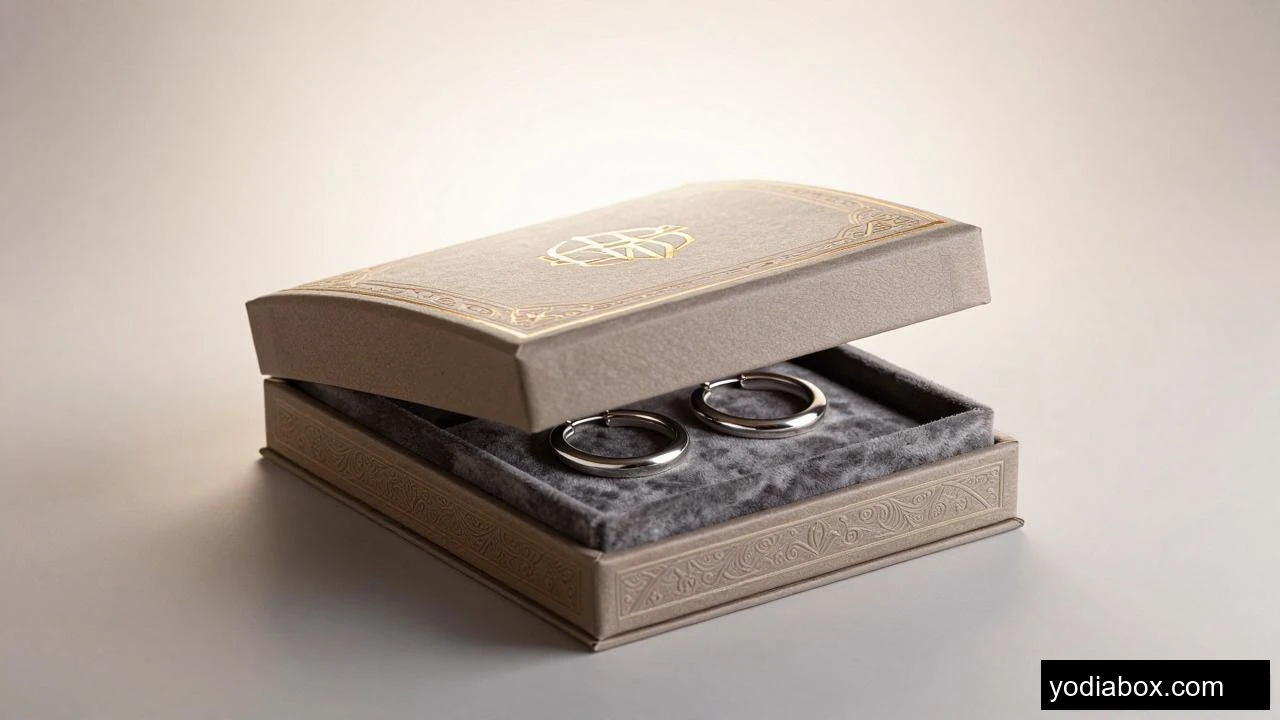
Is Box Hoop Earrings Packaging Right for Your Channel, Customer, and Price Point?
Choosing jewelry packaging for hoop earrings isn’t a one-size-fits-all call. The right structure needs to match your sales channels, customer demographics, and the price point of your collections. Different channels create different physical and visual demands, so it’s smart to look at your distribution strategy before locking in box designs.
Channel Fit: Retail, Marketplace, Boutique, and DTC Fulfillment
For brands selling in physical retail settings, such as boutiques or department stores, a retail gift box for hoop earrings should focus on shelf presence, tactile appeal, and easy inspection. It needs to look good in a display case. It also needs to feel substantial in the customer’s hand.
By contrast, ecommerce packaging for hoop earrings should prioritize structural durability, low weight to keep shipping costs down, and product security during transit. Direct-to-consumer (DTC) brands need packaging that can handle the rougher parts of postal sorting while still giving customers a premium unboxing moment. Selling through online marketplaces? Then your packaging also has to work like protective shipping armor, helping cut return rates caused by transit damage. Knowing these differences early makes it much easier to choose the right structure from the start, as covered in our guide on jewelry packaging by sales channel.
Customer Expectation by Price Band and Perceived Packaging Value
Customer expectations around packaging rise with the price of the jewelry. A premium hoop earring gift box with custom hoop earring packaging details can shift how customers see the product and support a higher retail price.
Buyers expect clean, functional packaging. Lightweight folding paperboard boxes or simple cardstock envelopes with custom printing are cost-effective choices that keep shipping costs low while maintaining brand identity.
Customers want a complete unboxing experience. Rigid paper drawer boxes or magnetic flap boxes with high-density foam inserts are the industry standard here. The packaging should feel sturdy, and the opening action should feel smooth and intentional.
At this level, packaging becomes an extension of the jewelry itself. High-end velvet boxes, lacquered wood, or premium leatherette boxes with plush microfiber inserts are expected. The box should feel weighty, luxurious, and durable enough for long-term storage.
Box Hoop Earring Size Fit Guide: Matching Earring Diameter to Box Inner Dimensions
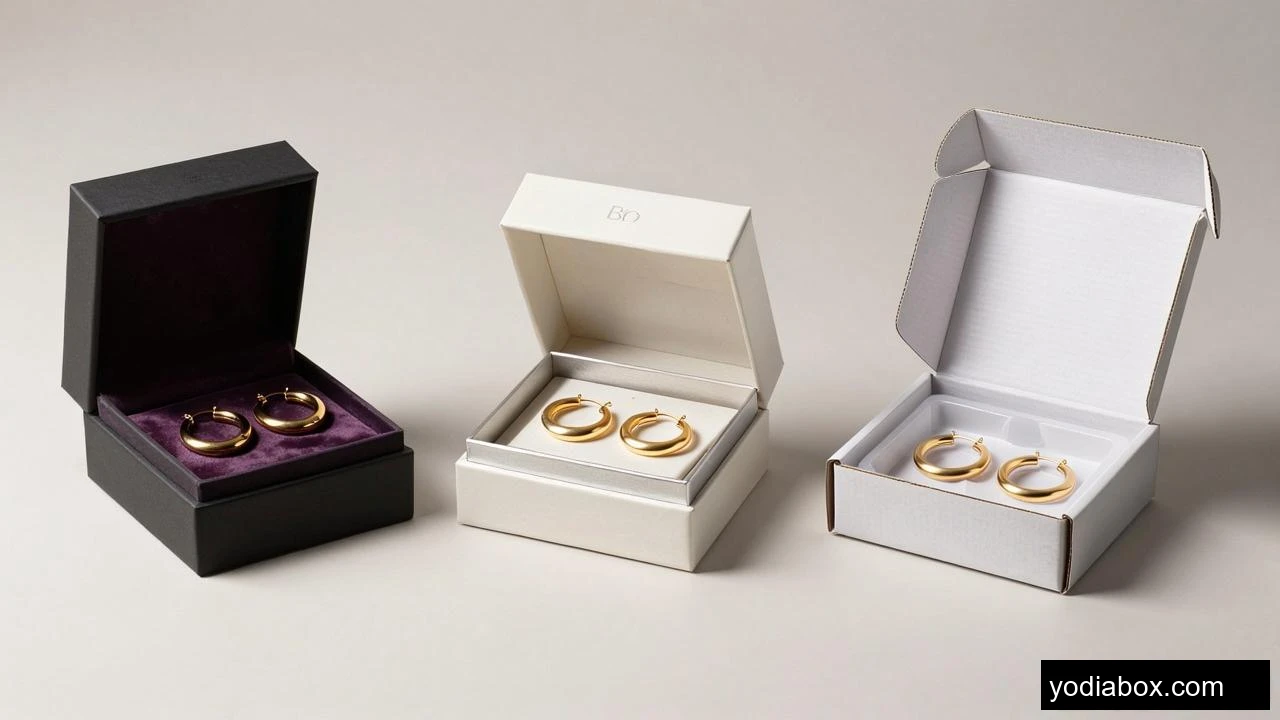
One of the most common sourcing mistakes is choosing a box based only on external dimensions. For hoop earrings, inner clearance is what counts. If the box is too small, the earrings can press against the walls, which risks bent posts or scratched finishes. Too large, and the earrings may shift in transit and get damaged anyway. For a full overview of standard sizes, see our jewelry box size guide.
How to Measure Hoop Diameter, Thickness, and Closure Clearance
To figure out the right hoop earring box size, measure these three dimensions:
- Outer Diameter (OD): Measure the widest distance from one outer edge of the hoop to the other.
- Earring Thickness/Width: Measure the thickness of the tube or wire, along with any decorative elements (such as gemstones or charms) attached to the hoop.
- Closure Clearance: Measure the extra space needed for the clasp, post, or hinge. For example, a huggie hoop with a clicker closure needs less clearance than a large hoop with a long wire post.
Add a minimum safety buffer of 5 mm to the outer diameter and 3 mm to the thickness to calculate the minimum required inner dimensions of your box insert.
Recommended Inner Box Dimensions by Hoop Size Range
| Hoop Outer Diameter (mm) | Hoop Thickness/Width (mm) | Recommended Box Inner Dimensions (L x W x H mm) | Recommended Insert Type |
|---|---|---|---|
| 10 mm – 20 mm (Huggies/Mini Hoops) | 1.5 mm – 3 mm | 50 x 50 x 25 mm | High-density foam with dual vertical slits |
| 21 mm – 35 mm (Medium Hoops) | 2 mm – 4 mm | 70 x 70 x 30 mm | Flocked vacuum tray or foam with ribbon pull tabs |
| 36 mm – 50 mm (Large Hoops) | 2 mm – 5 mm | 90 x 90 x 35 mm | Rigid card insert with custom elastic bands |
| 51 mm – 75 mm (Extra Large Hoops) | 3 mm – 8 mm | 110 x 110 x 40 mm | Recessed EVA foam with custom-molded cutouts |
Sampling and Fit-Testing Checkpoints Before Mass Production
Before you approve a mass production run, do physical fit tests using actual product samples. It sounds obvious, but this step saves a lot of trouble later. Use these checkpoints:
- The Shake Test: Place the hoop earrings inside the sample box, close it, and shake it vigorously in all directions. The earrings should not shift out of their designated slots or make contact with each other.
- The Compression Test: Apply moderate pressure to the top of the closed box. Make sure the lid does not compress far enough to touch or place pressure on the earrings inside.
- Insert Tolerance Check: Measure the tolerance of the insert cutouts. If the slits are too wide, thin wire hoops will fall out. If they are too tight, thick hoops will deform the insert.
Material & Structure Comparison: Velvet, Paper, Magnetic, Drawer-Style, and More
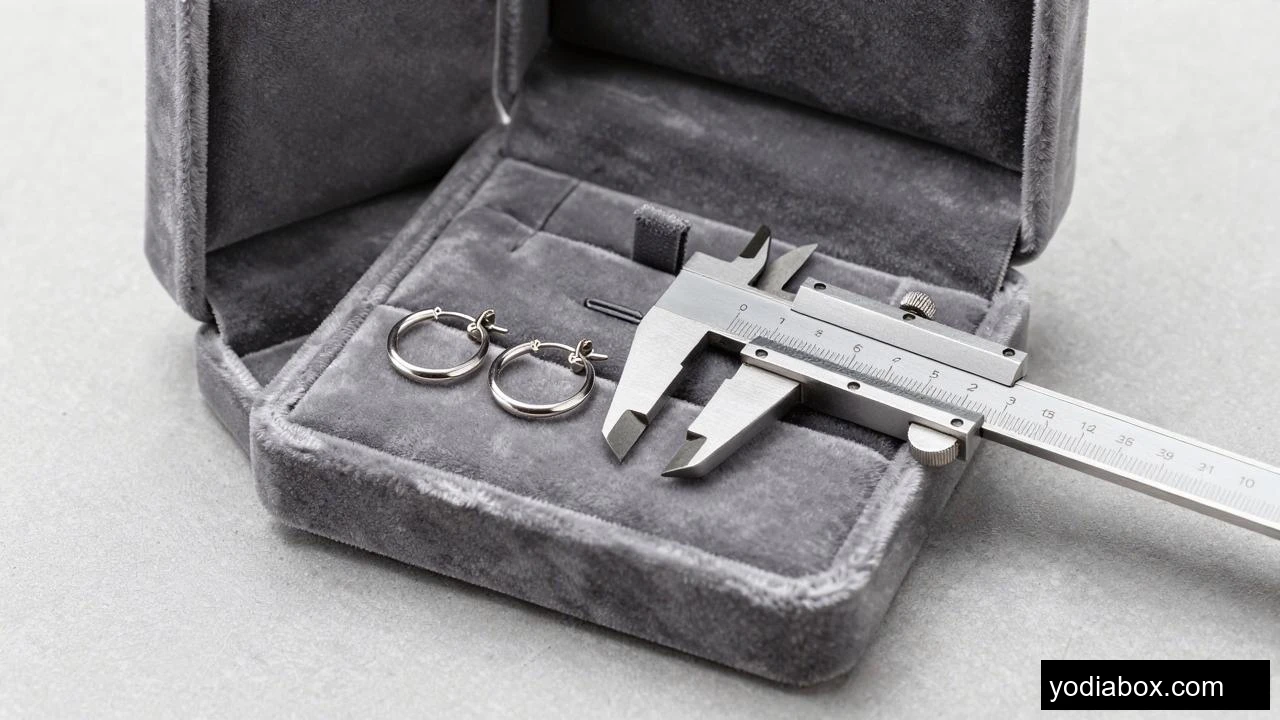
The materials and box structure you choose affect durability, unit cost, and brand positioning. If you’re sourcing from a custom jewelry box wholesale supplier, knowing the technical differences between materials helps you negotiate better specs and avoid quality issues later. For a closer look at paperboard and rigid box construction, check our rigid box materials guide.
Velvet vs. Rigid Paper: Tactile Value, Cost, and Brand Positioning
Velvet and rigid paper represent two very different approaches to custom hoop earring packaging.
Velvet Boxes (Traditional Luxury) Pros: High weight, classic appeal, excellent scratch protection Cons: Higher unit cost, larger shipping volume, prone to dust attraction Rigid Paper Boxes (Modern Premium) Pros: Limitless print finishes, eco-friendly options, crisp edges Cons: Susceptible to moisture damage if not stored properly
Velvet boxes give you a classic high-end appearance and a soft feel that signals luxury right away. The downside? They usually cost more to make and more to ship. Rigid paper boxes, built from thick greyboard wrapped in specialty paper, offer cleaner lines, a more modern look, and a broader range of custom finishes (foil stamping, embossing, textured papers, and more) at a lower average unit cost.
Magnetic vs. Drawer-Style: Structure, Protection, and Packing Efficiency
The way a box opens affects the customer experience, but it also affects packing speed and freight efficiency.
- Magnetic Flap Boxes: These boxes feature a hinged lid with integrated magnets that snap shut. They offer strong structural integrity and a satisfying closure. They do, however, need more storage space when shipped flat and usually come with a higher unit cost.
- Drawer-Style (Slide-Out) Boxes: These consist of an outer sleeve and an inner drawer tray. They are highly protective, modern-looking, and space-efficient. They can be shipped partially assembled to reduce freight costs, which is one reason DTC brands like them so much.
Eco and Compliance Considerations for Export-Oriented Buyers
For brands exporting to North America and Europe, environmental compliance isn’t optional anymore. When sourcing packaging materials, confirm that your supplier uses certified sustainable resources.
- Paperboard: Look for paper sourced from responsibly managed forests certified by the Forest Stewardship Council (FSC) or the Programme for the Endorsement of Forest Certification (PEFC).
- Fabrics and Linings: Make sure velvet, microfiber, or cotton linings are free from harmful chemicals and meet OEKO-TEX standards.
- Adhesives: Specify water-based, non-toxic glues to avoid chemical off-gassing, which can tarnish silver and gold jewelry over time.
Application Scenarios: Choosing the Right Box for Retail Gift, Jewelry Display, or E-Commerce Fulfillment
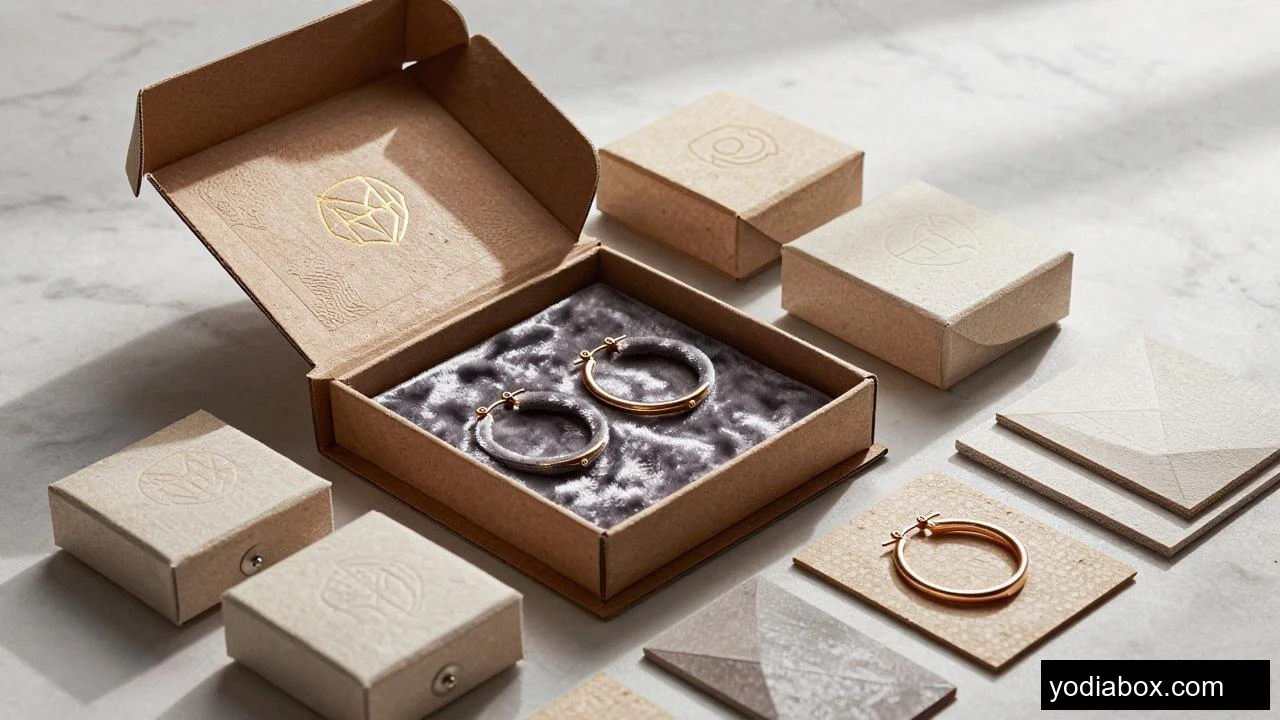
Different business models need different functional designs. A box that looks great on a boutique counter might completely fail in a postal sorting facility. That’s why these use cases matter.
Retail Gifting and In-Store Presentation Priorities
In physical retail, the box is part of the merchandising plan. It should be easy for staff to open and close quickly during a sale, and it should fit neatly into standard shopping bags. For retail jewelry display packaging, the lid should either fold back neatly or come off completely so the box base can double as an in-case display riser, as explained in our guide on retail jewelry display packaging.
Display Stability and Visual Merchandising for Hoop Styles
Hoop earrings are naturally dynamic. They hang, move, and catch the light. Inside a box, they need to be held at an angle that shows off the design. Standard flat inserts often hide the circular shape. A better option is an insert with angled pop-up tabs or custom-molded steps that hold the hoops upright, so customers can see the full diameter and thickness without taking them out.
E-Commerce Fulfillment: Protection, Carton Efficiency, and Unboxing Balance
For online brands, packaging has to survive shipping. Simple enough, right? In practice, that means balancing outer box strength with inner insert security.
We managed a custom box hoop earrings packaging project for a mid-size international jewelry brand launching both men’s and women’s lines across retail stores and e-commerce in 14 countries. The client came to us with very specific requirements: the packaging had to fit three hoop diameters—18 mm, 28 mm, and 42 mm—while maintaining a premium unboxing feel, passing drop-test standards for online fulfillment, and staying within a target unit cost of $0.82 at 30,000 pieces.
The problem showed up during sampling. The client’s core SKU was a 42 mm hoop, but the broader product range actually ran from 18 mm to 55 mm. Their original brief called for a box with a 50 x 50 x 32 mm outer size and a standard slit sponge insert. During fit testing, we found that the 42 mm and 55 mm hoops bent and protruded from the sides, while the small 18 mm hoops slipped out of the slits and rattled inside the box.
To fix it, we redesigned the insert with a multi-functional layout using dual-position slits and adjusted the box dimensions to a balanced 60 x 60 x 35 mm. That single box size accommodated the full product range, which saved the client from paying for multiple tooling molds and made inventory management much simpler.
In another project, a brand needed one cohesive packaging solution for a collection spanning 18 mm to 42 mm hoop diameters. Instead of producing three different box sizes, we developed a modular, high-density EVA foam insert with concentric, pre-cut removable rings.
For the 18 mm hoops, the inner rings stayed in place for a snug fit. For the 42 mm hoops, the outer rings were removed to create a wider recess. This modular design let the brand use one outer box size across the whole collection, cutting tooling costs, streamlining packaging inventory, and making sure all products passed the standard 1.5-meter drop test for DTC shipping.
Gold vs. Silver vs. Custom Finish: How to Align Packaging Color with Your Brand and Buyer Demographics
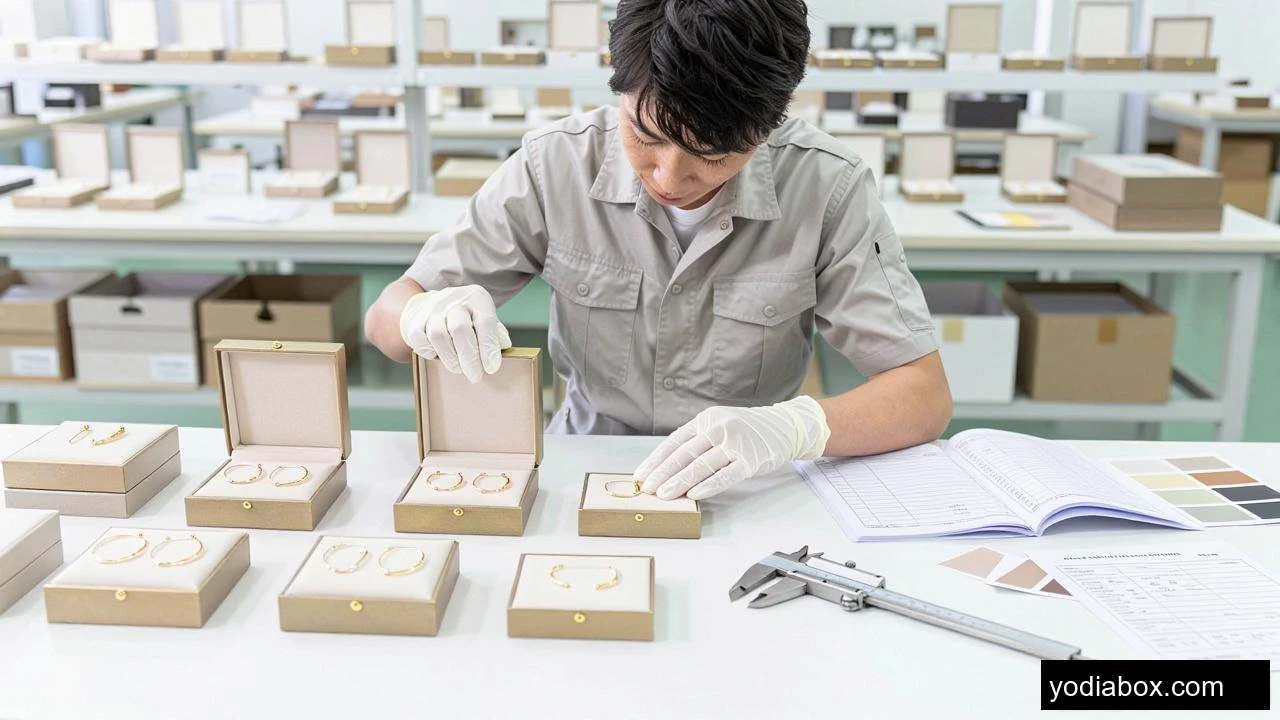
The visual finish of your packaging is the first thing a customer notices. If the color palette and surface finish match your product line and target buyers, your brand feels much more cohesive.
Finish Selection by Brand Tone and Collection Strategy
Your packaging finish should work with the metal tones of your jewelry, not fight them. For a broader review of finishing techniques, see our guide on packaging color finish options.
- Gold Jewelry Collections: Warm tones, cream, ivory, forest green, and deep burgundy packaging materials complement gold jewelry. Gold foil stamping adds a cohesive, luxurious touch.
- Silver and Platinum Collections: Cool tones, slate grey, navy blue, white, and minimalist black packaging work best. Silver foil stamping or blind debossing provides a clean, modern look.
- Mixed-Metal Collections: Neutral tones, such as taupe, charcoal, and warm greys, allow both gold and silver jewelry to stand out without color clashing.
Men’s vs. Women’s Lines: Buyer Preferences and Regional Variation
Buyer demographics play a big role in packaging preferences. In our 18,000-piece dual-market launch across Europe and the Middle East, for instance, we created two distinct finish directions.
The women’s collection utilized a soft, matte ivory paper wrap with a gold foil logo. This finish felt elegant, feminine, and classic, aligning with traditional luxury expectations in both European and Middle Eastern retail markets.
The men’s collection featured a deep charcoal, textured kraft paper wrap with a blind debossed logo. This matte, tactile finish communicated a modern, masculine, and understated aesthetic that performed exceptionally well in urban retail centers.
When to Use Matte, Metallic, Soft-Touch, or Custom Wrapped Finishes
The finish on your paper wrap affects how well the box resists fingerprints, scratches, and everyday wear.
- Matte Finish: Offers a clean, non-reflective look. It feels elegant but can show scuffs and fingerprints easily if a high-quality anti-scratch matte lamination is not applied.
- Soft-Touch Lamination: Gives the paper a velvety, rubberized feel that comes across as premium. It is highly durable and fingerprint-resistant, which makes it excellent for DTC shipping boxes.
- Metallic and Pearlized Papers: These papers have a subtle shimmer that catches the light. They work well for holiday collections or bridal lines, but use them carefully so the design doesn’t start to feel too busy.
Bulk Ordering, MOQ, Tiered Pricing, and Custom Branding: A Step-by-Step Procurement Checklist
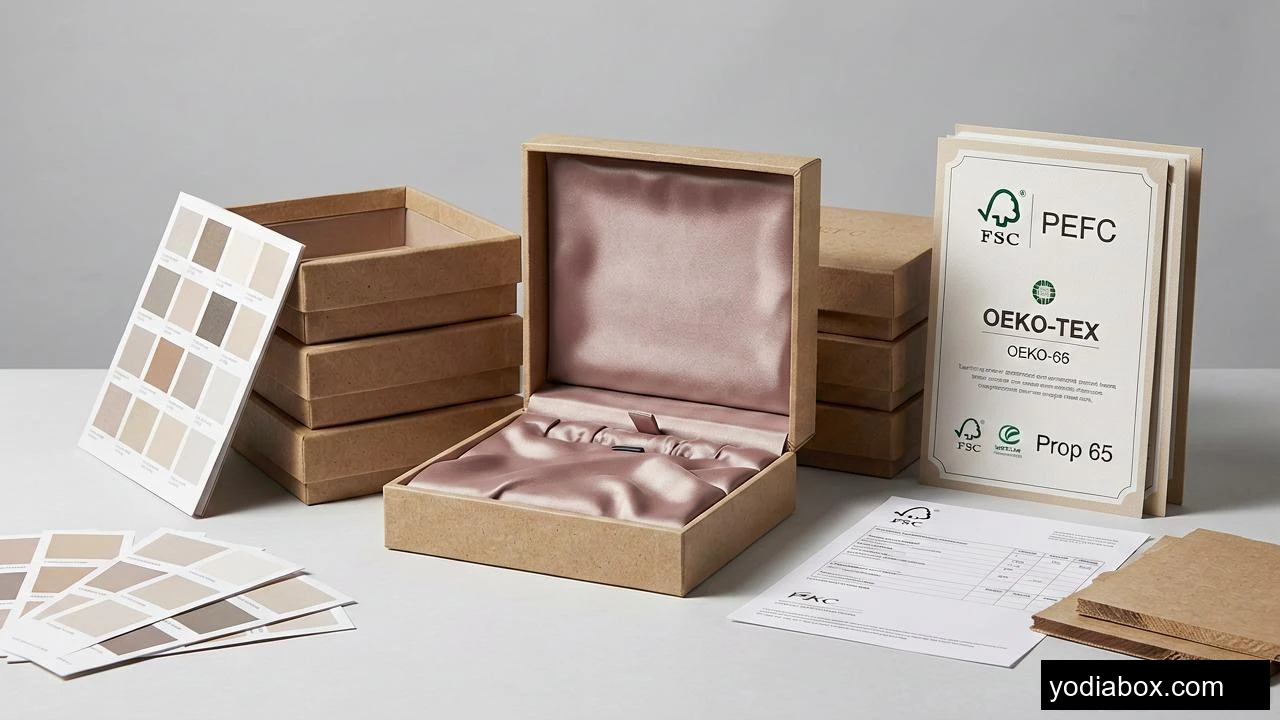
Sourcing custom packaging at scale takes a clear understanding of manufacturing minimums, pricing structures, and compliance requirements. Working with an experienced earring box supplier can make the process much smoother. For more on order minimums, see our custom packaging MOQ guide.
Typical MOQ Ranges by Box Type, Material, and Logo Method
Minimum Order Quantities (MOQs) vary based on box structure complexity and materials.
- Standard Paper Gift Boxes (Stock Colors): Moqs typically start at 500 to 1,000 pieces. These boxes use pre-dyed papers and standard sizes, making them a cost-effective option for startups.
- Custom Rigid Paper Boxes (Custom Sizes/Colors): Moqs generally range from 2,000 to 3,000 pieces due to the setup times required for custom paper-wrapping machines.
- Velvet and Leatherette Boxes: Moqs usually start at 1,000 to 2,000 pieces, as these boxes require more manual assembly and specialized stitching.
- Custom Logo Printing: Hot stamping and screen printing can often be applied to smaller batches (from 500 pieces), whereas custom offset printing or overall embossing typically requires a minimum of 3,000 pieces per run.
How Tiered Pricing Changes with Quantity, Inserts, and Finishes
Knowing how suppliers build their pricing helps you manage your purchasing budget more effectively. Bulk ordering hoop earring boxes can lead to meaningful cost savings.
Unit Cost Breakdown (Example for Rigid Paper Box) 1,000 pcs: $1.50 per unit (High setup cost amortization) 5,000 pcs: $0.95 per unit (Optimized machine run time) 10,000 pcs: $0.72 per unit (Maximum material discount)
Insert material also changes the final cost. Standard die-cut cardboard inserts are the most economical option. High-density EVA foam wrapped in microfiber or custom-molded plastic trays will raise the unit cost, but they offer better protection and presentation.
Branding Files, Sampling Workflow, and Approval Checkpoints
To make sure your logo and branding are executed correctly, follow this workflow:
- Step 1: Design Submission: Provide your supplier with vector files of your artwork (AI, PDF, or EPS format) with all fonts outlined. Specify Pantone color codes for exact color matching.
- Step 2: Digital Proofing: The supplier will provide a 2D or 3D digital proof showing the placement, size, and alignment of your logo on the box. Check the margins and alignment carefully.
- Step 3: Physical Sampling: Always request a physical pre-production sample. This lets you verify the paper texture, color accuracy, logo print quality, and insert fit.
- Step 4: Mass Production Sign-off: Once the sample is approved, sign and date it. This sample serves as the quality standard for the entire production run.
Compliance Documents and Market-Specific Requirements to Request
If you’re importing packaging into international markets, you need to verify that all materials comply with local environmental and safety regulations. Ask your supplier for the following documents:
- REACH Compliance: For European markets, ensure that all plastics, glues, and dyes comply with REACH regulations managed by the European Chemicals Agency (ECHA).
- California Proposition 65: For the US market, confirm that materials are free from heavy metals, phthalates, and other chemicals restricted under California Prop 65.
- FSC Chain of Custody: If you claim your packaging is eco-friendly, request the supplier’s FSC certificate number to verify the chain of custody of the paper materials.
Supplier Communication Checklist Before PO Confirmation
Before issuing a Purchase Order (PO) and sending your deposit, confirm these details in writing:
- Exact Inner and Outer Dimensions: Verify that the tolerances are within +/- 1 mm.
- Material Specifications: Document the paper weight (in GSM), greyboard thickness, and insert material density.
- Logo Printing Method and Placement: Confirm the foil color, print method, and exact coordinates of the logo.
- Packaging and Shipping Method: Specify how the boxes will be packed (e.g., individual polybags, master cartons with moisture-absorbing silica gel packs) to prevent damage during transit.
- Lead Times and Delivery Terms: Clearly define the production lead time, shipping method (FOB, CIF, or DDP), and agreed-upon payment terms.
FAQ
What size box do I need for large hoop earrings — and how do I measure inner diameter compatibility?
To find the correct box size for large hoop earrings (typically 40 mm to 70 mm in diameter), measure the outer diameter of the hoop and add at least 5 mm of clearance. Measure the thickness of the hoop at its widest point and add 3 mm. The resulting dimensions represent the minimum inner width and height required for your box insert. For example, a 42 mm hoop earring with a 3 mm thickness requires a box with minimum inner dimensions of 47 x 47 x 6 mm. A standard 70 x 70 x 30 mm box is generally recommended for this size range.
What is the difference between a square earring box and a round earring box for hoop styles?
Square boxes are the industry standard because they are easier to manufacture, store, and ship. They provide flat edges that simplify custom printing and foil stamping, and they stack efficiently in shipping cartons. Round boxes create a distinctive premium look that echoes the circular shape of hoop earrings. But they cost more to produce, often need manual assembly, and take up more storage space because they cannot be shipped flat, which increases shipping costs.
How do I choose between gold and silver packaging finishes for men’s vs. women’s box hoop earrings?
Choose your packaging finish based on the metal tones of your jewelry and your target demographics. For women’s collections, warm finishes like matte ivory paper with gold foil stamping complement gold jewelry and convey classic elegance. For men’s collections, cool finishes like textured charcoal paper with silver foil or blind debossing complement silver and titanium jewelry, offering a modern, minimalist look.
What is the typical MOQ for custom-logo box hoop earring packaging, and how does tiered pricing work?
The typical MOQ for custom-logo rigid paper boxes is 2,000 to 3,000 pieces, while standard paper boxes in stock colors may have MOQs as low as 500 to 1,000 pieces. Tiered pricing offers significant discounts at higher quantities. For example, a custom rigid box might cost $1.50 per unit at a 1,000-piece order due to setup costs, but drop to $0.72 per unit for a 10,000-piece order as setup expenses are amortized over a larger run.
Which packaging material — velvet, rigid paper, or magnetic closure — offers the best perceived value for mid-to-high price-point hoop earrings?
For mid-to-high price-point hoop earrings, rigid paper boxes with magnetic closures usually offer the best balance of modern design, customization, and perceived value. They give a satisfying snap when closed, protect the jewelry well, and support a wide range of custom branding options. Velvet boxes are still a strong option for traditional fine jewelry, but rigid paper tends to appeal more to modern, design-led brands.
Are there FSC-certified or eco-friendly options for box hoop earring packaging that meet retail compliance requirements?
Yes. You can source box hoop earring packaging made from FSC-certified paperboard, which means the wood fibers come from responsibly managed forests. You can also specify water-based glues, soy-based inks, and biodegradable inserts (such as molded pulp or FSC-certified cardstock) to help your packaging meet international retail compliance standards and appeal to eco-conscious consumers.
Forest Stewardship Council (FSC)
PEFC certification
EU REACH compliance
OEKO-TEX standard
California Proposition 65
Written by: Sarah Jenkins
Senior Content Specialist
Seasoned Industry Editor with 5 years of experience, dedicated to delivering in-depth technical and market reports.
Reviewed by: Dr. Eric Shao
Chief Technical Director
With 12 years of experience in material science and custom manufacturing, ensures the scientific accuracy and technical compliance of all published content.
Recommended Reads
Gift packaging
10 产品
Jewelry display
12 产品
Jewelry Organizer
12 产品
Jewelry pouch
7 产品
Jewelry suitcase
6 产品
Leather jewelry box
13 产品
LED Jewelry box
8 产品
Paper jewelry box
10 产品
Velvet Jewelry box
11 产品
Watch box
7 产品
Wood jewelry box
6 产品
Watch Box OEM/ODM Buyer Guide: Materials, Customization, MOQ, Pricing & Supplier Selection
A good watch box protects the product, supports brand positioning, and reduces returns before the [...]
Jun
Watch Winder Box: The Complete OEM Buyer’s Guide to Automatic Watch Winder Manufacturing
If you are sourcing a watch winder box for your brand, the short answer is [...]
Jun
Automatic Watch Winder Box: Features, Materials, and OEM Customization Options
If you are developing an automatic watch winder box for your brand, the hard part [...]
Jun
The Complete Watch Box Guide: How to Store, Display & Protect Your Collection
We build watch boxes for retailers, microbrands, gift programs, and private-label buyers, and we keep [...]
Jun
Custom Watch Box MOQ, Pricing, and Lead Time FAQ for Wholesale Buyers
If you are sourcing a custom watch box for retail, gifting, or OEM packaging, the [...]
Jun
Single vs Multi Watch Winder Box: Which Configuration Is Best for Your Brand?
If you are sourcing a multi watch winder box line, the first decision is not [...]
Jun