
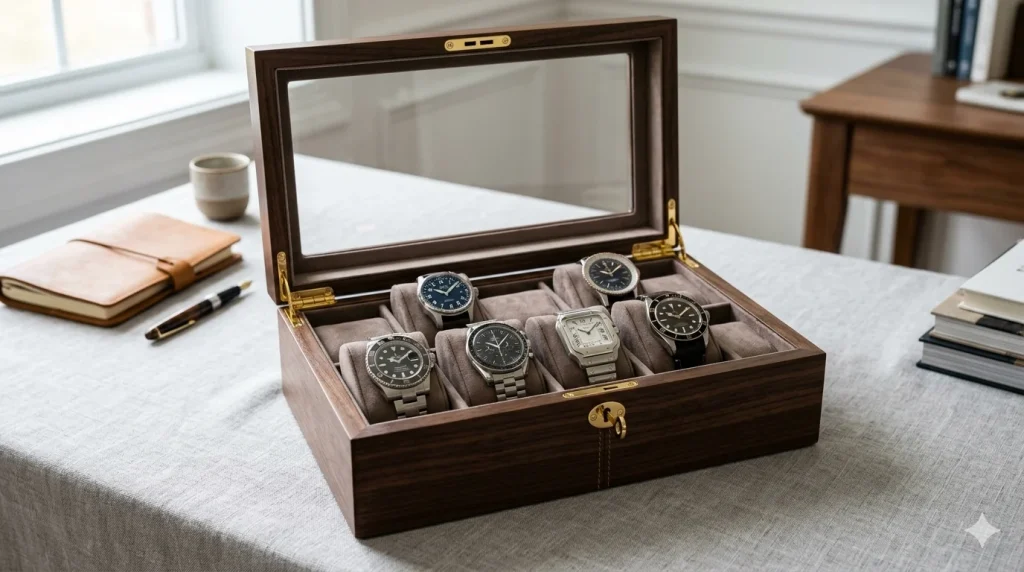
The Complete Watch Box Guide: How to Store, Display & Protect Your Collection
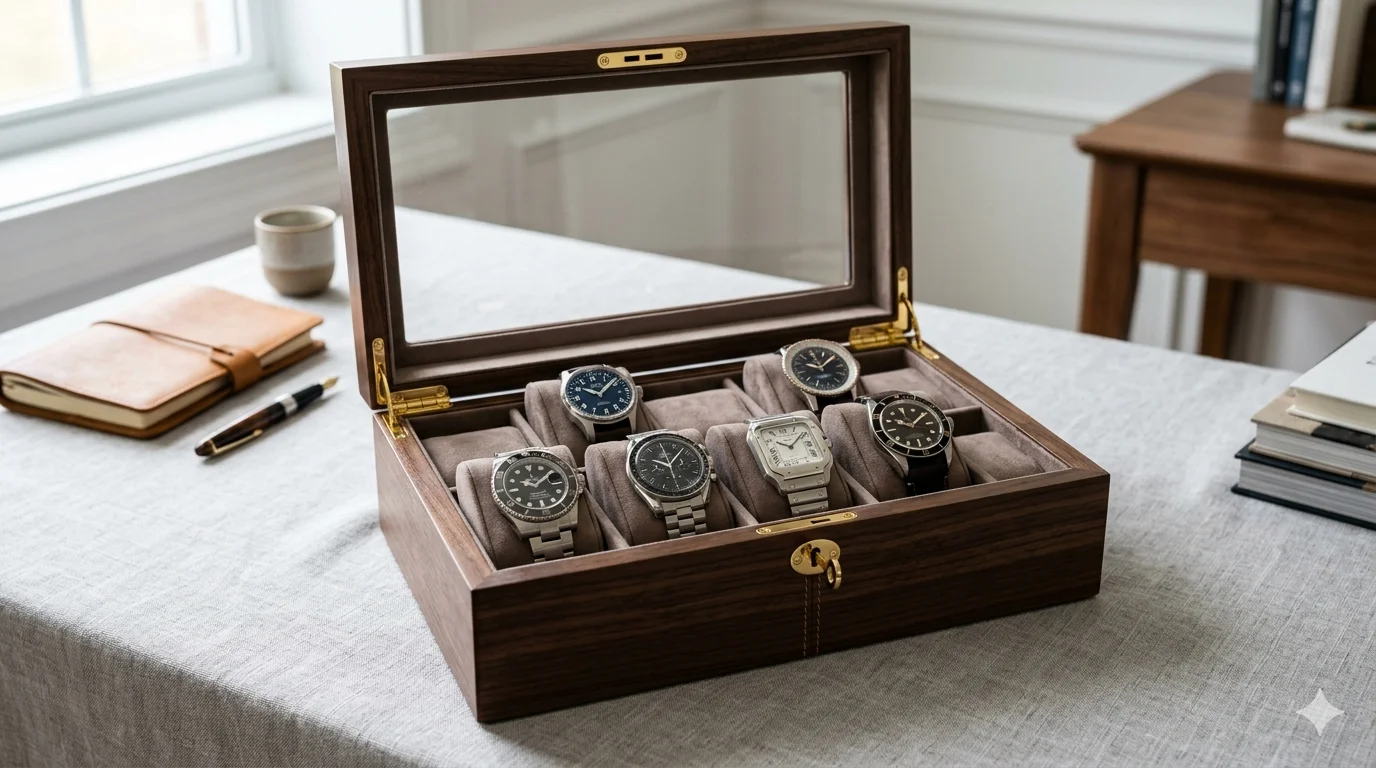
We build watch boxes for retailers, microbrands, gift programs, and private-label buyers, and we keep seeing the same thing: people spend $500, $5,000, or $50,000 on watches, then store them in packaging that was never designed for long-term protection. The original brand box may look great, sure, but a lot of them are oversized, lightly padded, and awkward for everyday access. A proper watch box handles three jobs at once: it protects against dust and scratches, helps straps and bracelets keep their shape, and lets you actually enjoy the collection instead of hiding it away.
Whether you own three watches or thirty, the right box has less to do with luxury wording and more to do with build details: pillow width, lid clearance, lining chemistry, hinge lifespan, and whether the inside dimensions actually fit your case sizes. We’ve had buyers send over gorgeous reference photos that would probably fail in production within six months. We’ve also seen very simple MDF boxes with a PU exterior and a solid microsuede lining last for years, just because the specs were right.
If you’re shopping for your first watch box, replacing original boxes, buying a gift, or building packaging for your own brand, this guide should help you choose with fewer mistakes.
Quick jumps:
– [What a good watch box actually does](#what-a-good-watch-box-actually-does)
– [Materials and construction that matter](#materials-and-construction-that-matter)
– [How to choose the right size and layout](#how-to-choose-the-right-size-and-layout)
– [Storage, display, and care best practices](#storage-display-and-care-best-practices)
– [Recommendations by reader type](#how-to-choose-by-reader-type-collector-gift-giver-brand-founder)
– [FAQ](#faq)
What a good watch box actually does
A good watch box should do four things well:
1. Prevent watch-to-watch contact
2. Support the bracelet or strap without over-compressing it
3. Reduce dust, light exposure, and casual handling damage
4. Make the collection easy to access
Sounds basic, right? But this is exactly where a lot of low-cost boxes go wrong. We regularly inspect samples where the slot pitch is simply too tight. A brand may request a “12-slot box” in a footprint that really only makes sense for 8 or 10 watches. Then the problems start: 42 mm dive watches rub against each other, crowns snag neighboring cushions, and bracelets sit half-open because the pillow is too thick.
In our factory, a practical watch slot for mixed collections usually needs:
– Interior slot width: 52-60 mm
– Pillow circumference: about 170-190 mm for metal bracelets, 160-180 mm for leather straps
– Lid interior clearance: at least 20-25 mm above the tallest watch profile
– Divider height: enough to stop case contact, usually 35-45 mm depending on the watch size
If your collection includes larger sports watches, chronographs, or watches on deployant clasps, those numbers matter more than whatever finish is on the outside.
> Pro Tip
> Measure your largest watch including crown guards and bracelet closure before you buy a box. A 44 mm case with a thick cushion can need 58-62 mm of usable slot width, not the 50 mm many budget boxes provide.
A good watch box is also not the same thing as a travel case. Desktop storage can focus on visibility and a hinged presentation. Travel storage should focus on compression resistance, corner protection, and secure individual compartments. If you need both, get both. Trying to force one product to do everything usually ends in compromise.
Materials and construction that matter
This is the point where a watch box either becomes a real long-term storage piece or just a decorative object.
Exterior shell: MDF, solid wood, acrylic, or leather-wrapped board
For most consumer watch boxes, the shell falls into one of these categories:
– MDF with veneer or PU wrap: the most common, and usually the best value
– Solid wood: attractive, heavier, more expensive, more sensitive to humidity movement
– Acrylic: modern-looking, highly visible, scratches easily
– Rigid board wrapped in paper or faux leather: fine for lighter gift boxes, less durable for everyday use
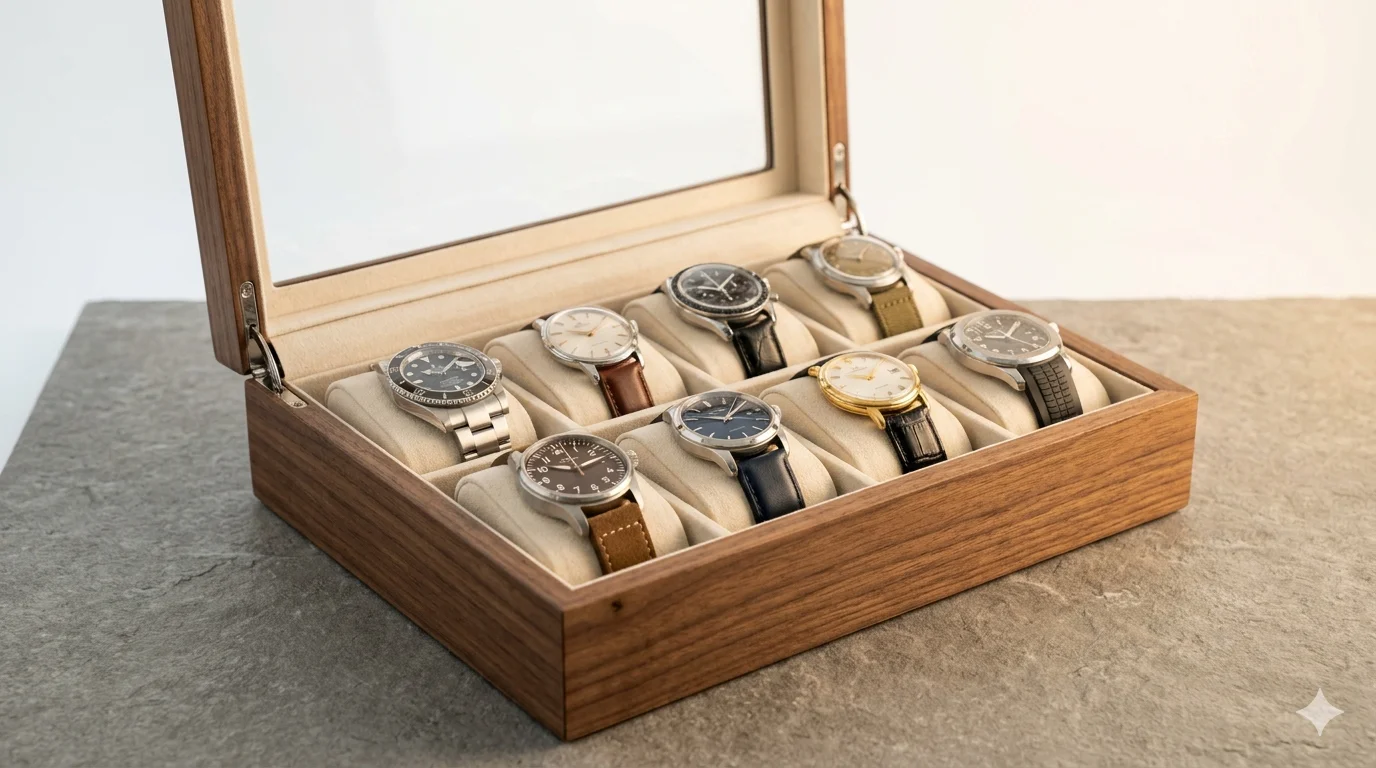
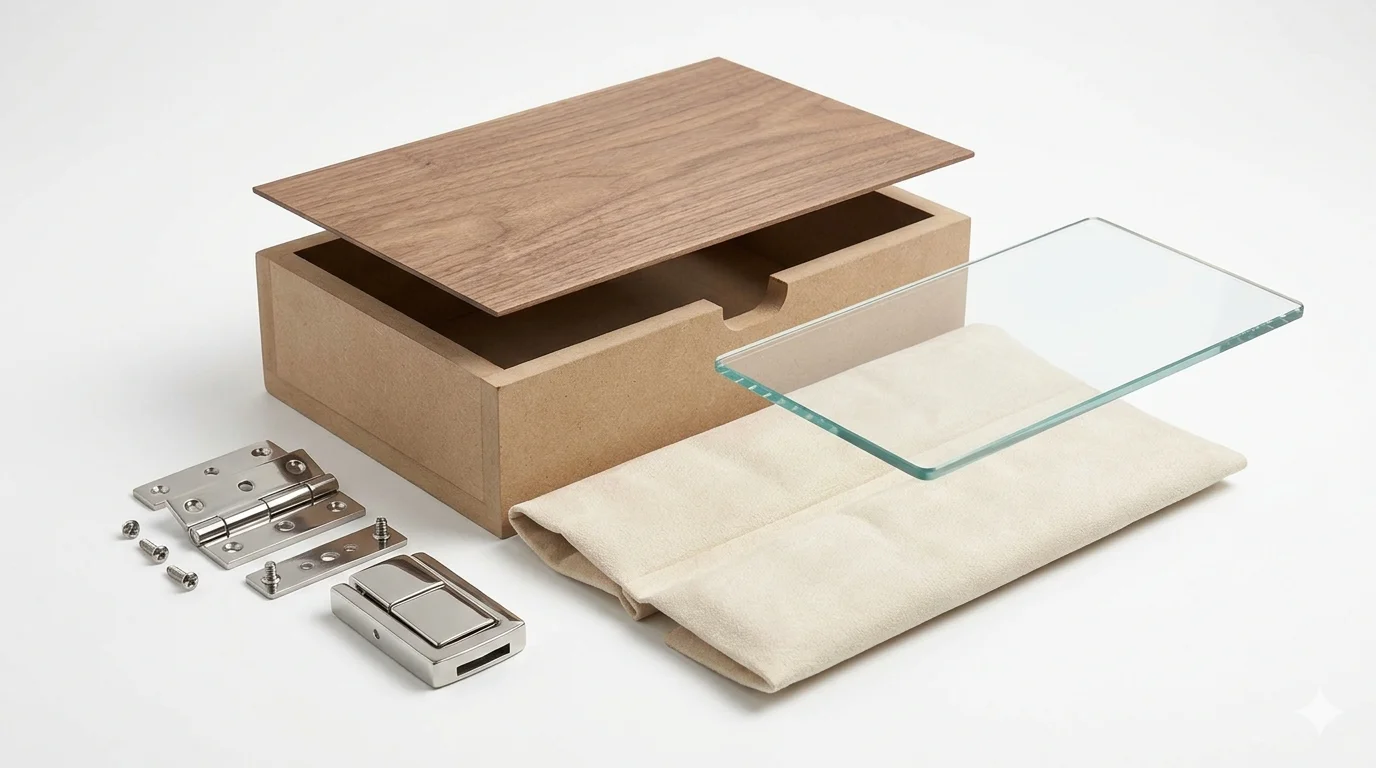
In our production runs, 9-12 mm MDF is usually the most stable option for a hinged desktop watch box. It machines cleanly, holds hardware screws better than thin board, and keeps cost under control. A well-made MDF box with walnut veneer can absolutely outperform a cheap “solid wood” box if the joinery and finishing are better.
Interior lining: don’t ignore chemical stability
The lining is what touches the watch most often. We usually recommend:
– Microsuede
– Velvet with low fiber shedding
– PU leather only in limited-contact areas
– Soft woven polyester for budget boxes
Collectors sometimes ask for real leather interiors. It can look premium, yes, but it also drives cost up quickly and isn’t automatically safer. The bigger question is whether the material is colorfast, low-odor, and bonded cleanly. We’ve seen dark linings transfer dye to light straps in humid storage conditions.
For material definitions and care principles around gemstones, metals, and jewelry surfaces, GIA’s gem encyclopedia and GIA jewelry care guidance are solid starting points. A watch box isn’t a jewelry cleaning tool, obviously, but the same storage logic still applies: reduce abrasion, avoid chemical exposure, and separate pieces that can scratch each other.
Lid type: solid lid vs glass top
Glass-top boxes tend to sell better because they show off the collection. That part is true. But we’re pretty direct with customers about this: glass is for display, not for maximum protection. A solid lid blocks light better and usually gives slightly better impact tolerance in normal household use.
If you choose glass, ask what kind:
– Mineral glass: common and cost-effective
– Tempered glass: better for safety and break pattern
– Acrylic window: lighter, easier to scratch
For an 8-slot box, upgrading from standard glass to tempered glass often adds only $1.50-$4.00 at factory level, depending on size and MOQ.
Hardware: hinges, stays, locks
Cheap hardware is usually the first thing to fail. The most common issues we see:
– Lid opening too far because there is no stay
– Misaligned hinges causing rubbing at the back edge
– Decorative locks that stop lining up after humidity changes
– Screws stripping because the substrate is too thin
For a box used daily, we prefer:
– Dual rear hinges
– A soft-stop ribbon or metal stay
– Magnetic closure or precisely aligned clasp
– Lock only if it is functional, not decorative
A fake luxury lock is worse than no lock at all. It creates tolerance headaches and gives people a false sense of security.
What different constructions typically cost
Below is a realistic consumer-level comparison for common types. Prices vary by market, finish, and brand markup, but these ranges are close to what we see.
| Watch box type | Typical capacity | Common materials | Typical retail price |
|---|---|---|---|
| Entry-level display box | 6 slots | MDF + PU wrap + glass lid | $25-$60 |
| Mid-range collector box | 8-12 slots | MDF + wood veneer + microsuede | $70-$180 |
| Premium presentation box | 10-12 slots | solid wood/veneer + better hardware + suede/leather lining | $180-$450 |
| Travel watch case | 1-3 watches | EVA/leather shell + padded interior | $20-$120 |
A quick reality check from our side: if you see a “solid wood luxury 12-slot watch box” at $39 retail, something has been cut somewhere—usually wood thickness, lining quality, hardware, or finishing labor time.
> Engineering Note
> In our QC process, hinge alignment and lid-drop consistency are checked alongside cosmetic inspection. For bulk production, many factories use sampling principles aligned with ISO 2859 to decide inspection levels and acceptable defect rates. That matters because a watch box can look perfect in one sample and still have hardware consistency problems across a 1,000-piece run.
Safety and coating considerations
If a watch box is likely to be handled by children as a gift item or sold into markets with strict chemical compliance requirements, coating and substrate safety may matter. For painted parts and surface-contact materials, buyers sometimes reference broader standards catalogues such as the ISO standards catalogue and, where applicable for consumer-contact safety discussions, frameworks like EN71-3 under the EU toy safety directive. A standard watch box is not a toy, so exact test requirements depend on market and use case.
> Common Mistake
> Choosing a box based only on exterior photos. We’ve had customers approve a glossy piano-black finish online, then get frustrated when fingerprints, dust, and hairline scratches show up after one week. High gloss photographs beautifully, but it needs more upkeep than matte veneer or textured PU.
How to choose the right size and layout
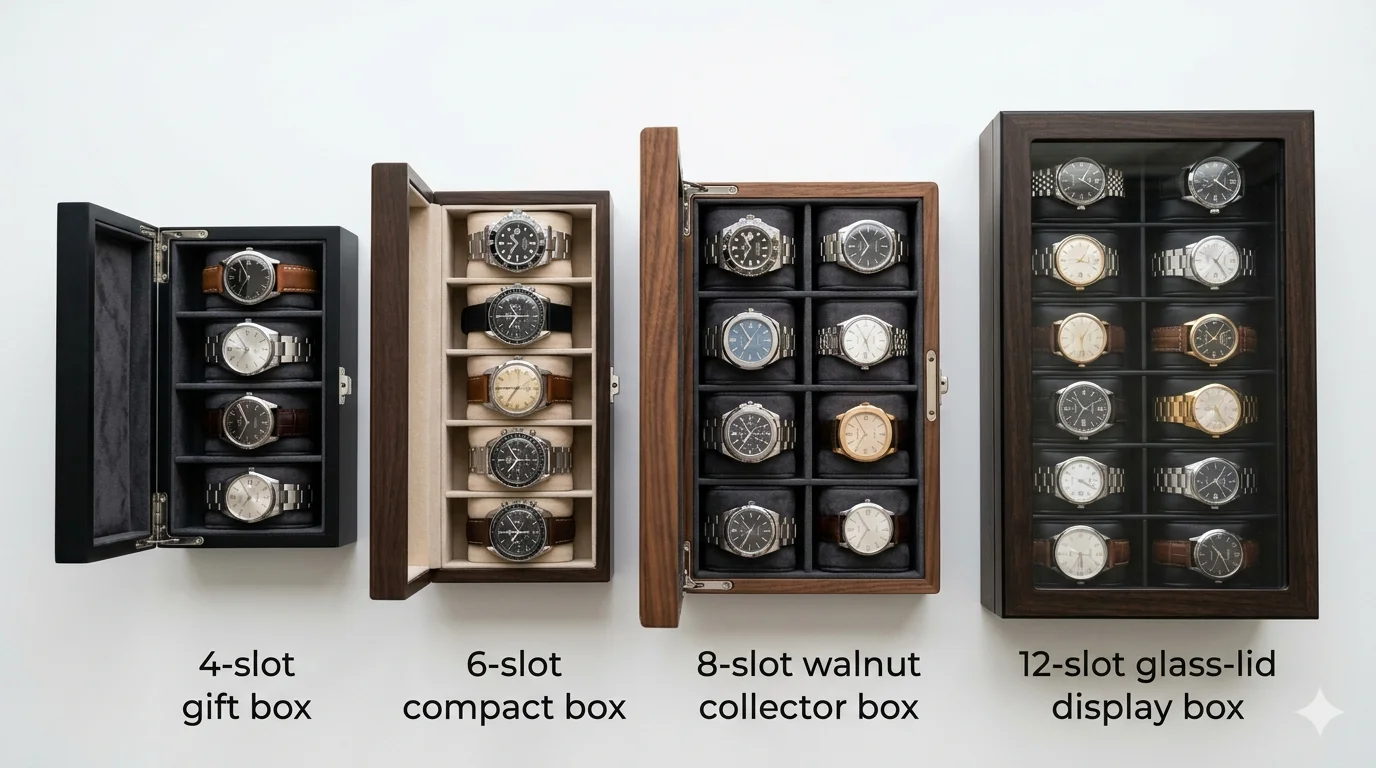
This is where most buying mistakes happen. Capacity is marketing. Usable fit is real life.
Start with your watch count, then add 20-30%
If you own 6 watches, we usually suggest an 8-slot box. If you own 10, start looking at 12 slots. Collections grow. And honestly, a box with a little breathing room is much easier to live with than one packed edge to edge.
A practical rule:
– 3 watches owned: buy 5 or 6 slots
– 6 watches owned: buy 8 slots
– 8-10 watches owned: buy 12 slots
– 12+ watches owned: consider two 8-slot boxes or one drawer-style cabinet
Why not just buy one huge box? Because once the footprint gets beyond roughly 360-420 mm wide, desktop use becomes less convenient. Large lids are heavier, alignment tolerances start to matter more, and the whole box is harder to move safely.
Match the box to your watch sizes
Different categories need different spacing:
– Dress watches, 36-40 mm: easier fit, slimmer profile
– Dive watches, 40-44 mm: need more slot width and lid clearance
– Pilot/chronograph watches, 43-46 mm: often thick, especially with pushers
– Smartwatches: usually fine dimensionally, but charger storage may matter more than display
If your watches are mostly on metal bracelets, pillow compression matters a lot. Too large a pillow puts stress on the bracelet clasp over time. Too small a pillow leaves the watch loose and leaning around.
Slot width matters more than overall box length
A 10-slot box can still be badly designed if each watch only gets 48-50 mm. In our experience:
– 50 mm slots: suitable only for smaller watches
– 52-55 mm slots: workable for mixed collections
– 56-60 mm slots: best for larger sports watches
Don’t forget watch thickness
A lot of buyers check case diameter and forget height. We’ve seen problems with watches 14-17 mm thick touching the lid glass because the pillow lifts them too high. This happens a lot in budget boxes with overstuffed cushions.
Recommended formats by use case
| Use case | Best capacity | Ideal slot width | Best for | Typical retail price |
|---|---|---|---|---|
| Small personal collection | 6 slots | 52-55 mm | 3-5 watches with room to grow | $35-$90 |
| Mixed enthusiast collection | 8 slots | 55-58 mm | dress + dive watch mix | $70-$160 |
| Larger collection display | 12 slots | 55-60 mm | 8-12 watches, desktop display | $110-$250 |
| Gift or first box | 4-6 slots | 50-54 mm | entry-level ownership | $25-$80 |
Here’s a quick self-check: if your largest watch on bracelet can close around the pillow without forcing the clasp and still sits centered, the pillow is probably about right.
Glass top or drawer style?
Collectors ask this all the time. The answer depends on where the box will live.
– Glass-top lid box: best for dresser, office shelf, daily enjoyment
– Drawer-style watch chest: better for larger collections and lower dust exposure
– Stackable trays: better if you want modular expansion
– Single-watch case: best for rotation and travel
If your collection includes both watches and cufflinks, rings, or straps, a mixed-format organizer can work really well. We’ve developed plenty of combo boxes using removable trays inspired by jewelry organizers, similar to layouts discussed in our guide to a custom jewelry box.
Storage, display, and care best practices
Buying the right watch box helps. Using it properly matters just as much.
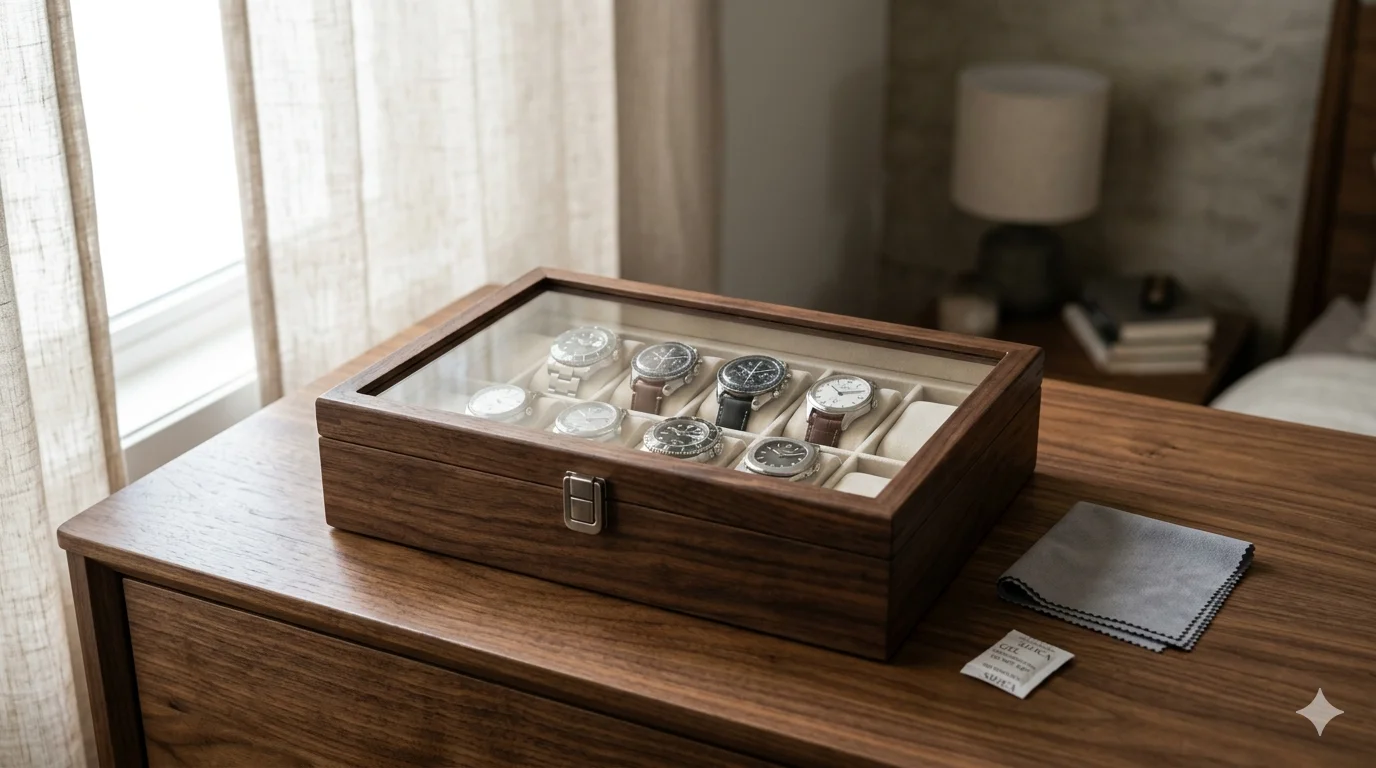
Keep the box in a stable environment
The ideal storage environment is pretty boring:
– Temperature: around 15-25°C
– Relative humidity: roughly 40-55%
– Light: low direct sunlight
– Placement: away from bathroom steam, HVAC vents, and windowsills
Original watch packaging often ends up in closets or cabinets for a reason. Display boxes—especially glass-top ones—should still stay out of direct sun. UV and heat can dry out leather straps, fade linings, and speed up adhesive aging.
Separate metals and abrasive surfaces
Watches can scratch each other through crowns, bracelets, buckles, and protruding case shapes. That’s one big reason divided compartments matter. The same principle shows up in jewelry care too: keep items separate to reduce surface abrasion, especially polished metals and gemstone-set pieces. GIA’s care guidance supports this basic approach for delicate wearables.
Use the box for clean storage, not dirty storage
A watch box is not the place for muddy field watches right after wear. Wipe down:
– bracelet sweat and salt
– moisture on caseback
– dust around lugs
– leather strap surface if needed
Then put the watch back in the box. Trapped moisture is one of those quiet problems people miss. Even if the watch itself is fine, lining odor and adhesive performance can get worse over time.
Add silica gel if your climate is humid
In tropical or coastal environments, we often recommend a small 5-10 g silica gel packet placed discreetly in a corner or accessory compartment, not directly rubbing against the watches. Replace it every 2-3 months or use a rechargeable desiccant.
This is especially useful if your collection includes leather straps or silver accessories. Tarnish and oxidation are strongly tied to environmental exposure; for background on that process, Wikipedia’s tarnish overview is a simple reference.
Should you keep watches in original brand boxes?
Yes, sometimes—but usually not for daily use.
Original boxes are useful for:
– resale completeness
– long-term archive storage
– warranty card organization
– gifting or collection provenance
They are not always ideal for:
– efficient storage
– compact footprint
– daily access
– storing multiple watches together
What we usually tell collectors is simple: keep the original box in a cupboard, and keep a proper watch box on your dresser.
When a watch box is not enough
If your watches are high-value mechanical pieces and security is a serious concern, a watch box is only one layer. You may also want:
– home safe storage
– insurance documentation
– humidity monitoring
– separate travel case for transport
A watch box protects surfaces and helps with organization. It is not a safe.
> Pro Tip
> If you rotate watches weekly, keep one empty slot. It makes it much easier to put a watch back without juggling lids, clasps, and neighboring pieces. Little usability details like that are what make people actually use the box.
A note on cleaning the box itself
For most finishes:
– Glass: microfiber cloth, light glass cleaner applied to cloth, not directly sprayed
– Wood veneer: dry or slightly damp microfiber only
– PU exterior: soft cloth, mild soap solution if needed
– Microsuede interior: lint roller or very soft brush
Do not soak the lining. And don’t use alcohol-based cleaners on coated PU unless the supplier confirms compatibility.
If you’re comparing wood, leather-look, and other premium presentation styles, our breakdown of jewelry box materials covers a lot of the same wear and finish trade-offs that apply to watch storage too.
How to choose by reader type: collector, gift giver, brand founder
Different buyers really shouldn’t shop the same way. We see that all the time in product development calls.
For the collector
If you’re a collector, function comes first.
Prioritize:
– slot width over slot count
– soft non-shedding lining
– lid clearance for thicker watches
– stable hinges and clean opening angle
– a footprint that fits where you actually get dressed or store watches
A good collector setup is often:
– 8 slots
– 55-58 mm slot width
– wood veneer or matte PU exterior
– microsuede interior
– tempered glass lid if display matters
– budget: $80-$180
If your watches range from vintage 36 mm pieces to modern 44 mm divers, choose a box that fits the largest watch. Smaller pieces can sit comfortably in a larger slot; the reverse doesn’t work.
Collectors with mixed accessories should also think about combo storage. A watch box with a lower drawer for straps, spring bars, and cufflinks can cut down clutter. If that sounds useful, our guide on luxury jewelry packaging covers layered presentation formats and premium insert logic that often carry over well to collector storage.
For the gift giver
Gift buyers often focus too much on appearance. Presentation matters, of course, but fit still matters.
A safe gifting formula:
– 4 or 6 slots
– neutral interior color like beige, grey, or black
– glass top if you want a “wow” moment
– exterior in black PU, walnut veneer, or dark green leather-look
– gift budget: $35-$120
If you know the recipient wears larger watches, skip the slim compact boxes. If you don’t know their taste, keep the hardware simple and avoid flashy gold-tone locks unless their style is clearly formal.
One more thing from experience: if the watch box is the gift—not the watch inside it—people remember the unboxing. A better carton, tissue wrap, and protective bag can raise perceived value a lot, often for only $1.20-$3.50 extra at packaging level.
For the brand founder
If you’re developing a branded watch box for your company, your priorities shift again. Now you’re balancing brand image, landed cost, logistics, and production reliability.
The first questions we ask are:
– Is this a retail packaging box, VIP gift box, or aftermarket accessory?
– What is the target FOB cost?
– What is the MOQ?
– Does it need to survive e-commerce shipping?
– Are you packing one watch or selling the box separately?
Realistic starting points for custom production:
– Custom 1-watch rigid gift box: MOQ 500-1,000 pcs
– Custom 4-6 slot watch box: MOQ 300-500 pcs
– Custom wood veneer collector box: MOQ 200-300 pcs if hardware and finish are standard
– Sampling lead time: usually 7-15 days
– Bulk lead time: often 30-45 days
Factory-level FOB pricing varies a lot by structure, but as a rough guide:
– rigid paper watch gift box: $3.50-$9.00
– PU-wrapped 6-slot display box: $8.00-$18.00
– veneer 8-slot collector box: $16.00-$38.00
– premium solid wood style: $35.00-$90.00+
The biggest cost drivers are:
– material thickness
– veneer or paint finish
– glass type
– logo process
– lining material
– hardware quality
– protective packaging
– order volume
This is also where a lot of founders underestimate transit protection. A beautiful watch box that arrives with chipped corners or shattered glass does not feel premium. If your product ships DTC, develop the outer carton and drop protection together with the box—not as an afterthought. Our custom packaging manufacturer guide explains how we usually align MOQ, testing, and packaging specs early so expensive revisions don’t show up later.
Video: what to inspect before buying a watch box
“`html
“`
If you make or source gift packaging across categories, some of the same insert, wrap, and display decisions also show up in our article on bracelet box options, especially around fit and presentation density.
Are expensive watch boxes actually better?
Sometimes yes, sometimes no. Price alone doesn’t guarantee a better box.
In our experience, spending more usually gets you:
– better exterior finishing
– better interior hand feel
– cleaner lid alignment
– heavier and more stable hardware
– lower odor materials
– stronger packaging for shipping
But there is a ceiling. A $120 watch box can be excellent. A $400 box may be beautiful, but not four times more protective. A lot of the extra money often goes toward brand markup, hardwood aesthetics, or furniture-grade finishing.
For most collectors, the value sweet spot is around $70-$180:
– good shell rigidity
– decent hardware
– soft lining
– acceptable dimensions for mixed watches
– polished presentation without extreme markup
The best test is boring, but it works:
– Open and close the lid 10 times
– Press lightly on the pillow
– Check if the watch sits centered
– Look at hinge screws and rear edge gaps
– Smell the interior
– Inspect the divider tops for symmetry
A watch box should feel calm and precise. If it creaks, twists, sheds lint, or smells strongly of solvent, skip it.
FAQ
What is a good watch box?
A good watch box has enough slot width for your largest watch, soft non-abrasive lining, stable hinges, and enough lid clearance so thick cases do not touch the top. For most collectors, 8 slots with 55-58 mm spacing, MDF or wood veneer construction, and microsuede lining is a strong setup.
Can I buy a Rolex box?
You can sometimes buy genuine Rolex presentation boxes on the secondary market, but they’re usually sold as replacement or collectible packaging, not as the most practical daily storage. Authenticity, condition, and completeness vary a lot. For daily use, many collectors keep the original Rolex box stored separately and use a purpose-built watch box instead.
Are watch boxes worth it?
Yes, especially if you own more than one watch or rotate regularly. A watch box cuts down on dust, prevents watch-to-watch contact, keeps bracelets and straps better organized, and makes daily access easier. Even a decent $40-$90 box can prevent scratches and clutter better than leaving watches loose in drawers or stacked in original packaging.
Is WatchBox a reputable company?
WatchBox is known in the pre-owned luxury watch market and is generally recognized by many consumers as a major dealer platform. That said, this article is about watch boxes as products, not that company specifically. If you’re evaluating any seller, check recent reviews, return policy, authentication process, and warranty terms before buying.
Final buying checklist
Before you buy, confirm these five things:
1. Capacity: enough slots for your current collection plus 20-30%
2. Fit: slot width and pillow size suited to your largest watch
3. Interior: soft, low-shed, low-odor lining
4. Construction: stable hinges, proper lid support, clean alignment
5. Use case: display, storage, travel, gift, or brand presentation
If we had to give one simple recommendation for most collectors, it would be this: buy an 8-slot watch box with 55-58 mm compartments, microsuede lining, and a wood veneer or matte PU exterior in the $80-$150 range. That combination works for the widest range of real-world collections without overspending.
A watch box should make you use and enjoy your collection more often. If it looks good but annoys you every morning, it’s the wrong box.
References & Sources
1. GIA Gem Encyclopedia — Gemological Institute of America
2. GIA Jewelry Care & Cleaning — Gemological Institute of America
3. ISO 2859 Sampling — ISO
4. ISO Standards Catalogue — ISO
5. EUR-Lex Toy Safety EN71-3 — European Commission
6. Wikipedia: Tarnish — Wikipedia
 English
Written by: Sarah Jenkins
Senior Content Specialist
Seasoned Industry Editor with 5 years of experience, dedicated to delivering in-depth technical and market reports.
Reviewed by: Dr. Eric Shao
Chief Technical Director
With 12 years of experience in material science and custom manufacturing, ensures the scientific accuracy and technical compliance of all published content.