
Boîte pour bracelet en argent : solutions d'emballage sur mesure pour les marques de bijoux
Custom silver bracelet boxes are specialized, high-quality packaging solutions built to secure, present, and elevate silver jewelry for retail and e-commerce. With structural inserts, FSC-certified rigid paperboard, and tailored finishes, jewelry brands can significantly reduce transit damage while increasing perceived value and checkout conversion rates.
Different bracelet styles (tennis, bangle, box chain) need specific insert designs to prevent tangling and create a premium flat reveal.
Using FSC-certified paperboard and soy-based inks helps brands align with global eco-friendly regulations and buyer preferences.
A unified box design with modular inserts can support multiple product lines, reducing tooling costs and inventory complexity.
Premium finishes like hot foil stamping, debossing, and soft-touch lamination encourage social sharing and strengthen brand loyalty.
Working with a manufacturer that handles everything—from CAD prototyping to customs clearance—helps ensure reliable Q4 delivery.
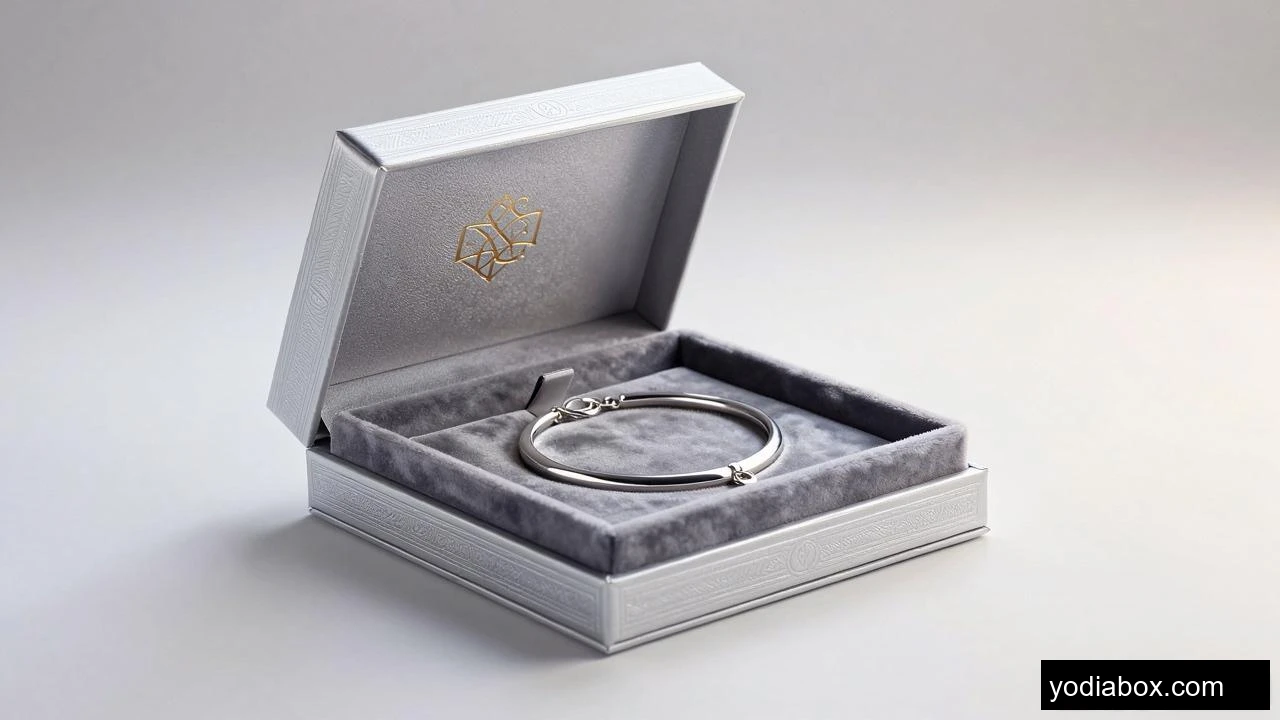
The Strategic Value of Custom Silver Bracelet Packaging in Modern Jewelry Retail
In the global jewelry market, packaging isn’t just there to protect the product anymore. It’s one of the clearest expressions of a brand, and it plays a real role in customer retention. For silver jewelry brands, the box is the first physical proof of the craftsmanship inside. Silver is beautiful, but it’s also delicate. It can oxidize, scratch, and tarnish when exposed to air, moisture, and friction. So a custom silver bracelet box has to do two things well: look great and protect the piece properly.
From a B2B standpoint, packaging affects both retail performance and e-commerce metrics. Industry data shows that premium packaging can raise the perceived value of a product by up to 45%, giving brands room to support higher margins. And now that social media shapes so much of the buying cycle, unboxing has become its own form of marketing.
Marketing matters, sure, but structure matters just as much. E-commerce logistics put packages through real stress: drops, vibration, and temperature swings. Packaging that meets international benchmarks, such as International Safe Transit Association (ISTA) or ASTM D4169 standards for shipping containers, helps ensure the jewelry arrives in pristine condition. If a silver tennis bracelet or a delicate box chain shifts during transit, it can tangle, scratch, or even lose stones. Custom-engineered inserts keep the product firmly in place, which helps reduce return rates and customer service costs.
And then there’s sustainability. It’s no longer a niche concern. It’s a regulatory issue and a consumer expectation. Brands exporting to Europe and North America have to work within strict packaging waste rules. Using FSC-certified (Forest Stewardship Council) paperboard, biodegradable adhesives, and water-based inks helps ensure compliance with environmental directives while also appealing to eco-conscious buyers. Put simply, sustainable custom packaging protects long-term brand equity and lowers the risk of compliance-related supply chain disruptions.
Material Selection Guide: Matching Box Structure to Bracelet Type
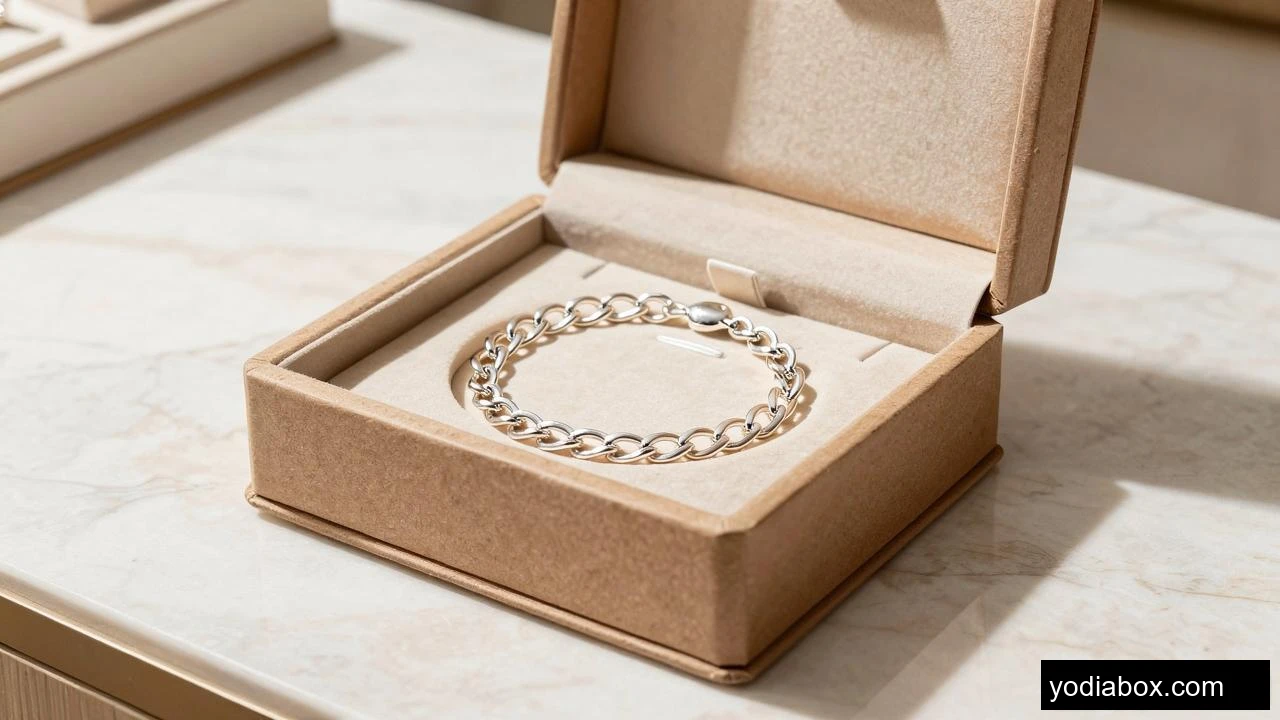
Choosing the right packaging materials and structure is a critical decision, and it depends heavily on the exact type of silver bracelet being packed. If the box structure doesn’t match the jewelry style, the result can be poor presentation, product damage, or unnecessarily high shipping costs.
Box chains, cable chains, or wheat chains tangle easily. If they’re placed in a box without a proper securing mechanism, they can knot up during transit, creating a frustrating start to the unboxing experience.
These styles need a box with enough depth and a central support system to hold their shape and prevent crushing during shipping and handling.
To help B2B buyers and packaging designers make the right call, the comparison table below outlines the best packaging specifications for several silver bracelet categories:
| Bracelet Type | Recommended Box Structure | Key Material Specifications | Insert Type & Material | Target MOQ (Units) | Primary Protection Goal |
|---|---|---|---|---|---|
| Tennis Bracelet | Long, shallow rigid box (slid-out or lid-and-base) | 1200gsm greyboard + 157gsm art paper | High-density EVA foam wrapped in anti-tarnish microfiber | 3,000 | Preventing stone scratching and ensuring a flat, premium reveal |
| Box/Link Chain | Square, medium-depth lid-and-base box | 1000gsm greyboard + 120gsm specialty textured paper | Cardboard insert with back-pocket and elastic secure tabs | 5,000 | Preventing chain tangling and knotting during transit |
| Rigid Bangle | Deep square box or drawer box | 1400gsm greyboard + soft-touch laminated paper | Circular cut-out foam insert or central velvet pillow | 3,000 | Maintaining shape, preventing crushing under vertical pressure |
| Men’s Silver Cuff | Heavy-duty, minimalist drawer box | 1500gsm greyboard + uncoated kraft paper | High-density black EVA foam with wide, deep-cut channels | 5,000 | Supporting heavier product weight and presenting a rugged aesthetic |
When selecting paperboard, weight—measured in grams per square meter, or gsm—determines how rigid the box will be. For premium jewelry packaging, 1000gsm greyboard is generally the minimum recommendation if you want to avoid warping or bending. The outer wrap paper can be anything from standard art paper with custom printing to more premium specialty papers with textures like linen, leatherette, or metallic finishes.
The insert material matters just as much. Low-grade foams can release volatile organic compounds (VOCs), and those can speed up silver tarnishing. That’s why it’s important to specify acid-free, sulfur-free insert materials along with anti-tarnish fabrics, so sterling silver keeps its bright finish during storage and transit.
Case Study: How Arden & Co. Streamlined Packaging and Boosted Q4 Conversion
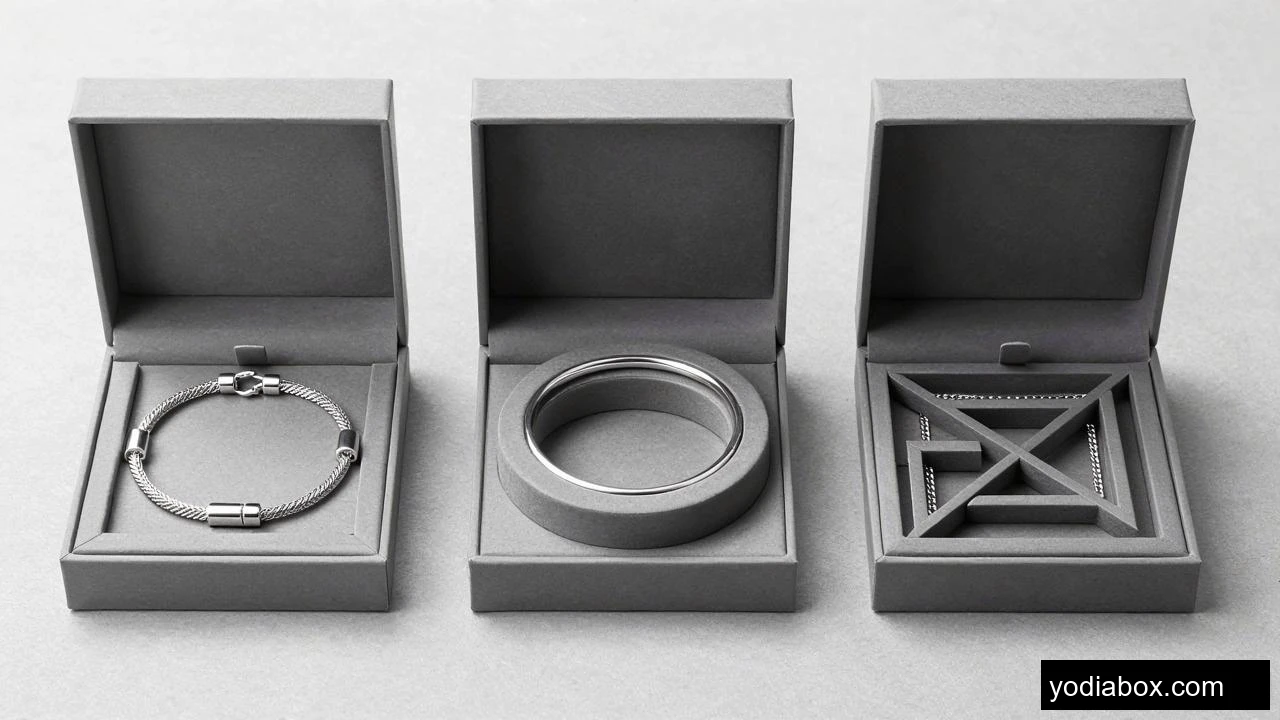
While leading a custom silver bracelet box project for a mid-size international jewelry brand, Arden & Co., the brief was unusually specific. They needed one cohesive B2B packaging solution that could present delicate box chain bracelets, premium tennis styles, slim bangles, and a new men’s silver bracelet line—without making the collections feel mismatched at retail.
The brand had a serious problem. Ahead of their Q4 gifting launch, they were seeing a high rate of shopping cart abandonment at the “gift add-on” stage. Their existing packaging, a generic velvet pouch, didn’t communicate the premium value of their $150 to $300 sterling silver line. On top of that, they were dealing with a 4.2% return rate caused by tangled chains and scratched finishes on tennis bracelets during e-commerce shipping.
We had only 9 weeks from approved artwork to first shipment, a target MOQ of 5,000 units, and strict FSC-certified paper requirements. The engineering challenge really began with the tennis bracelet. Tennis styles need a flatter reveal; if the bracelet is coiled or bunched, the continuous line of stones loses much of its visual impact. But using a long, traditional tennis bracelet box across the full collection wasn’t financially or logistically practical for their retail displays.
Our solution was a modular, square rigid box measuring 95mm x 95mm x 40mm, built from 1200gsm FSC-certified greyboard. To handle the flat reveal requirement for the tennis bracelet within a square footprint, we engineered a diagonal insert. By positioning the tennis bracelet diagonally across the insert, we maximized the usable length and allowed the 7.2-inch bracelet to appear almost fully extended. The insert itself was made from high-density, sulfur-free EVA foam wrapped in a custom-dyed, anti-tarnish cream microfiber.
For the delicate box chains, we designed an insert variation with two hidden slits at the top and a recessed pocket on the back. The chain could be threaded through the slits and tucked into the back pocket, keeping it taut and fully tangle-free. For the men’s line, we kept the same outer box dimensions but replaced the cream microfiber insert with a charcoal-grey, textured cardstock insert featuring a wider, reinforced channel to support the heavier men’s silver cuffs.
| Arden & Co. Case Study | |
|---|---|
| Challenge: |
|
| Solution: |
|
| Results: |
|
By standardizing the outer box dimensions and only customizing the internal inserts, Arden & Co. saved about 35% in tooling and storage costs. The project was delivered within the 9-week window, just in time for the Q4 marketing push. The results came quickly: Arden & Co. reported a 22% increase in checkout gift add-on conversions, and the product return rate tied to transit damage dropped from 4.2% to less than 0.3%. It’s a good example of how solid structural engineering can solve retail, aesthetic, and logistics problems all at once.
Designing for Demographics: The Rise of Men’s Silver Bracelet Packaging
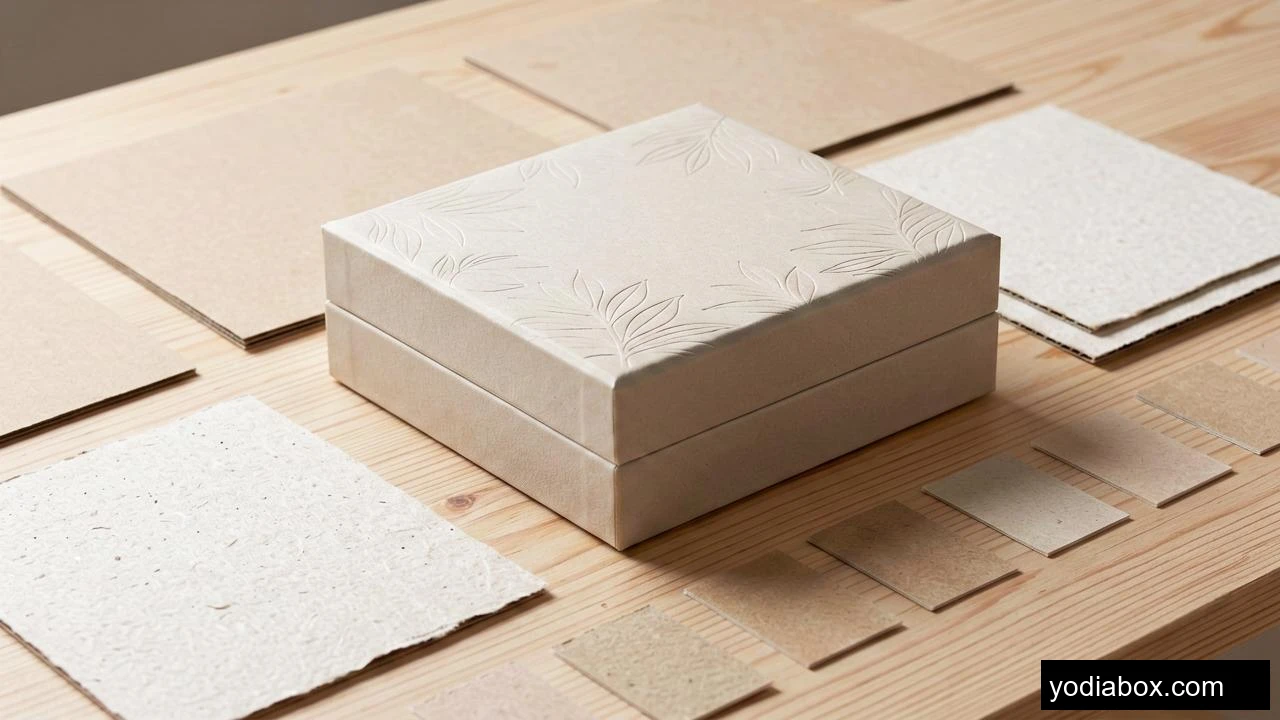
The global market for men’s jewelry has grown rapidly over the past five years, driven by changing fashion norms and the popularity of sterling silver cuffs, chain links, and beaded bracelets. Even so, many jewelry brands still make the same mistake: they use the same delicate, feminine packaging for their men’s collections. If a brand wants to connect with this audience, the packaging needs to reflect a different set of aesthetic and structural expectations.
Men’s silver bracelets—heavy Cuban links, curb chains, and solid silver cuffs, for instance—are usually heavier and chunkier than women’s jewelry. That physical difference calls for sturdier packaging materials. A box meant for a men’s silver line should use thicker greyboard, typically 1200gsm to 1500gsm, to communicate weight and substance. The inserts also need wider channels and stronger retention features so heavier silver pieces don’t break loose and rattle around inside the box.
On the visual side, men’s packaging tends to lean more minimalist, structured, and tactile. Instead of glossy finishes, pastel colors, and delicate ribbons, these boxes often use matte finishes, deep earth tones, charcoal greys, forest greens, and rich navy blues. Uncoated textured papers—like kraft paper or embossed linen paper—work especially well here because they create a tactile, premium feel that resonates with male consumers.
- Matte, dark color palettes (charcoal, navy, forest green)
- Heavy-duty 1200gsm-1500gsm greyboard construction
- Debossed or blind-stamped geometric logos (no shiny gold foil)
- Rigid drawer (slide-out) box structures
- High-density black EVA foam inserts with wide channels
The opening mechanism also shapes how the product feels. Drawer boxes (slide-out styles) and magnetic flap boxes are especially popular for men’s lines because they offer a clean, mechanical, satisfying opening experience. Branding is usually more restrained too, often relying on blind debossing or matte black foil stamping instead of metallic golds or silvers. Create a distinct masculine packaging experience, and brands can position their men’s silver collections more effectively as premium self-purchase items or high-value gifts.
Occasion-Based Customization: Holiday, Corporate, and Wedding Gift Packaging
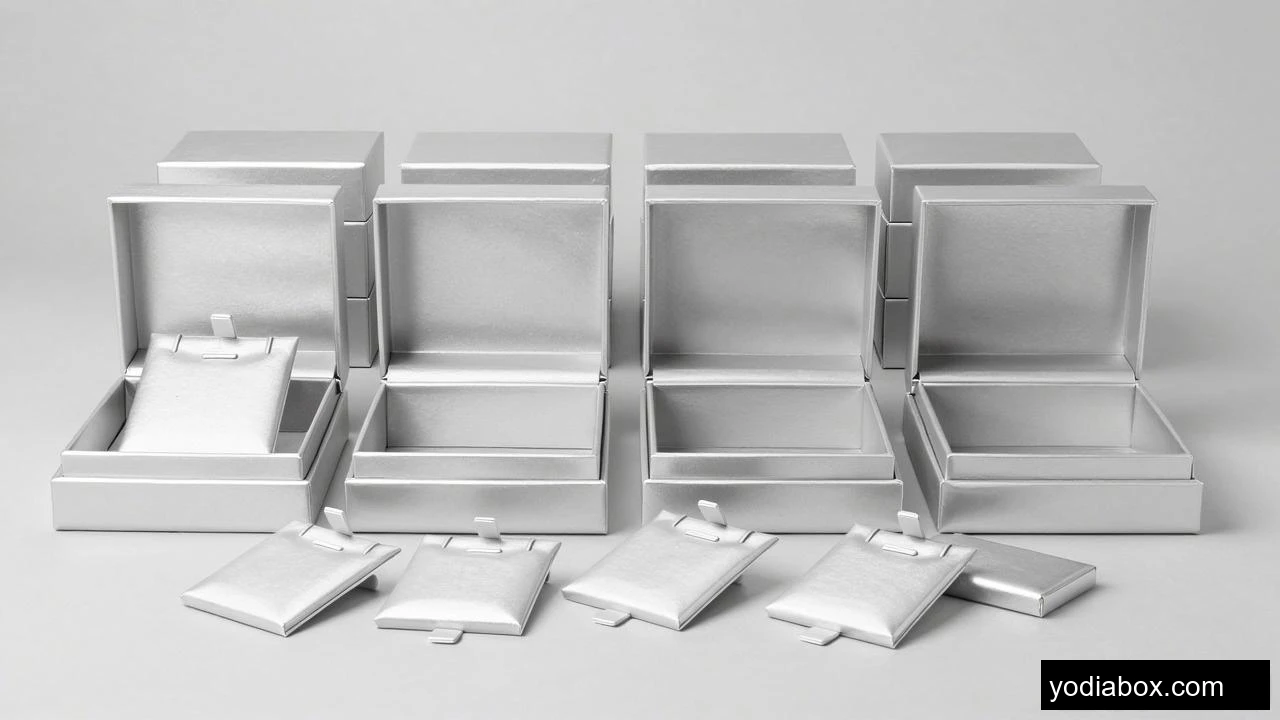
Jewelry is emotional. People buy it to mark milestones, holidays, and major life events. Because of that, the packaging has to shift depending on the buying occasion. By offering custom packaging options tailored to specific gifting scenarios, B2B jewelry brands can help retail partners increase sales and capture seasonal demand.
Holiday Gifting and Q4 Campaigns
The fourth quarter is the busiest sales period for the jewelry industry, fueled by Thanksgiving, Christmas, and Hanukkah. During this season, packaging needs to feel festive and premium. But producing entirely new boxes for a short holiday window can get expensive fast.
One practical solution is the use of custom packaging sleeves, sometimes called belly bands. Brands can keep their standard, high-quality silver bracelet boxes and wrap them with a digitally printed holiday-themed sleeve featuring metallic foil accents or seasonal artwork. That gives retailers a limited-edition holiday presentation without leaving them with piles of holiday-specific box inventory once the season ends.
Corporate Gifting and Brand Collaborations
Corporate gifting calls for a mix of polished branding and premium presentation. When companies give silver bracelets to employees or high-value clients, the packaging has to reflect the corporate identity without drifting into cheap promotional territory.
In these cases, custom silver bracelet boxes should use clean, minimalist exterior branding, often with a subtle spot UV logo or debossing. Inside, a custom-printed insert card made from heavy cardstock (300gsm+) can include a personalized printed message from the corporation, which adds a more personal feel to the gift.
Wedding and Bridal Party Favors
The wedding market creates steady, year-round demand for silver bracelets, especially for bridesmaids and brides. Packaging in this segment leans into elegance, romance, and keepsake value. Soft pastel color palettes, textured paper wraps, and ribbon closures—such as silk or grosgrain ribbons—remain highly sought after.
It also helps to offer personalization, such as hot stamping on the inside lid with messages like “Thank you for standing by my side.” Small touch, big impact. It adds real value for the consumer and turns the packaging itself into a keepsake from the wedding day.
Step-by-Step Customization and Manufacturing Process for B2B Buyers
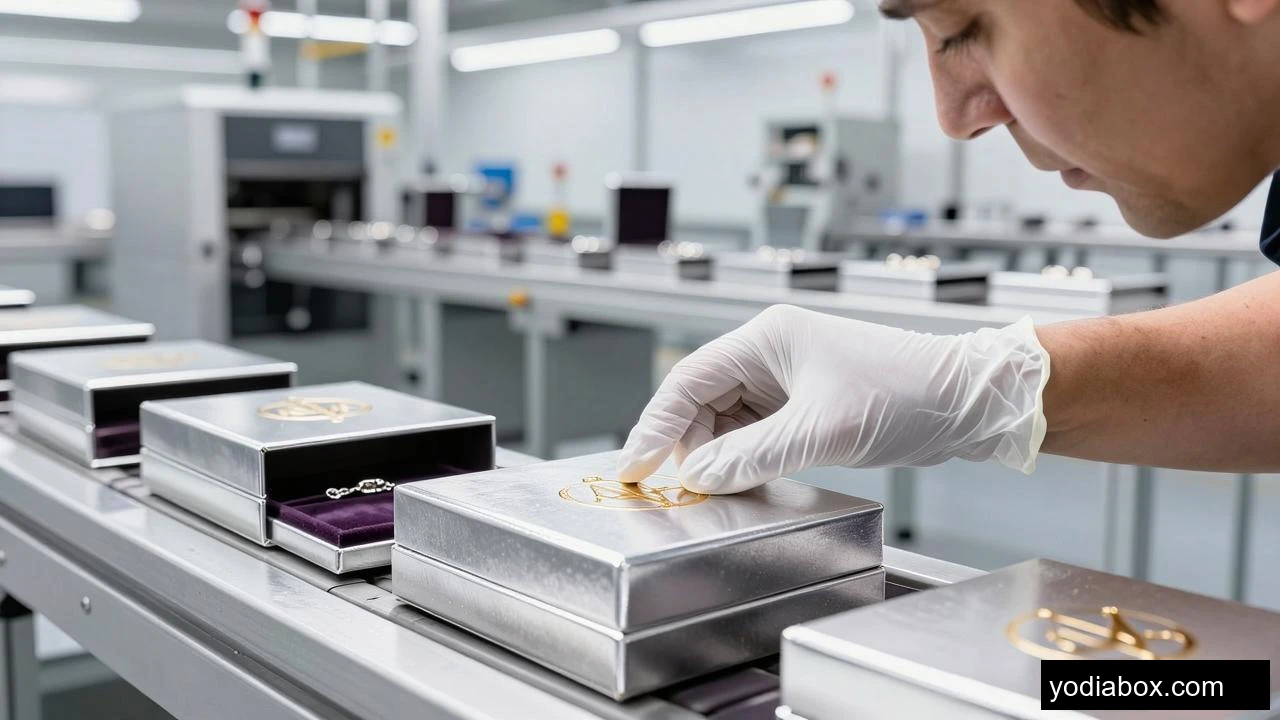
The manufacturing process for custom packaging can feel complicated, especially for overseas B2B buyers who need tight quality control and on-time delivery. Knowing the standard workflow makes the whole project easier to manage, from initial concept to final shipment.
Step 1: Design Consultation and Technical Briefing
The process starts with a detailed consultation to define the project parameters. The buyer provides the jewelry dimensions, weight, target demographics, brand guidelines, and budget constraints. At this stage, the manufacturer advises on material options, box structures, and realistic printing techniques based on the target MOQ.
Step 2: 3D CAD Modeling and Dieline Creation
Once the structural direction is approved, the packaging engineer creates a 3D CAD model of the box and insert. From that model, a flat 2D dieline is generated and sent to the buyer’s design team. The buyer’s designers then place artwork, logos, and color specifications directly onto the dieline template.
Step 3: Physical Prototyping and Structural Testing
Before mass production starts, a physical prototype—often called a dummy or white sample—is made. This sample is essential for checking the fit of the silver bracelet. It then goes through transit simulation testing, including drop tests (in accordance with ASTM standards), to confirm that the insert holds the jewelry securely. Once the structure is approved, a digital color proof or a fully finished pre-production sample is produced to finalize color accuracy and foil stamping quality.
Step 4: Mass Production and Printing
With the pre-production sample approved, mass production begins. This stage includes several automated and semi-automated steps:
- Printing: The outer wrap paper is printed using offset printing (CMYK or Pantone matching).
- Finishing: Surface finishes such as matte lamination, spot UV, or hot foil stamping are applied.
- Die-cutting: The printed paper and the greyboard are die-cut to their precise shapes.
- Box Assembly: The greyboard is folded and glued, and the outer wrap paper is wrapped and adhered to the board.
- Insert Insertion: The custom-cut EVA foam or cardboard inserts are placed inside the boxes.
Step 5: Quality Control and Compliance Inspection
A dedicated QC team inspects the production run. Key checkpoints include color consistency (measured against Pantone standards), glue adhesion strength, foil stamping alignment, and the absence of scratches or dust on the inserts. Random samples are also tested for environmental compliance (such as FSC tracking) and chemical safety, including lead-free and sulfur-free material requirements.
Step 6: Global Logistics and Customs Clearance
The finished boxes are packed into heavy-duty corrugated master cartons, palletized, and prepared for shipping. Depending on timing and budget, shipping can go by air freight (5-7 days) or ocean freight (3-5 weeks). The manufacturer provides all required documentation, including the Bill of Lading, Commercial Invoice, Packing List, and Certificates of Origin, to support smooth customs clearance and compliance with local import duties.
Navigating Logistics, Compliance, and Quality Standards in Global Sourcing
For global jewelry brands, sourcing packaging internationally means paying close attention to regulatory compliance, quality standards, and logistics. If those details are missed, the consequences can be expensive: customs delays, heavy fines, or even entire shipments being rejected.
Environmental Certifications and Compliance
When importing packaging into North America and Europe, environmental compliance is a serious requirement. The Forest Stewardship Council (FSC) certification is widely recognized as the benchmark for paper products, confirming that the wood pulp used for the paperboard comes from responsibly managed forests.
Packaging materials also need to comply with the European Union’s REACH regulation (Registration, Evaluation, Authorisation and Restriction of Chemicals) and the United States’ CPSIA (Consumer Product Safety Improvement Act). These regulations restrict harmful substances such as heavy metals, phthalates, and toxic adhesives. Working with an ISO 9001:2015 certified manufacturer helps ensure that quality management and compliance standards are maintained consistently.
| Standard | Description |
|---|---|
| FSC (Forest Stewardship Council) | Ensures responsibly sourced paper fibers. |
| ISO 9001:2015 | Standardizes quality management systems in manufacturing. |
| REACH / RoHS | Restricts toxic chemicals in adhesives, inks, and plastics. |
| ISTA 1A / ASTM D4169 | Standardized testing protocols for shipping and drop resistance. |
Transit Durability and Testing Standards
To reduce product damage during global shipping, packaging has to go through rigorous testing. ASTM D4169 provides laboratory guidelines for testing shipping containers under conditions that simulate real distribution hazards.
For jewelry packaging, that includes drop testing—dropping the packaged product from a specified height onto a hard surface—as well as vibration testing. If a custom silver bracelet box passes these tests, brands can be more confident it will stand up to the rough handling common across major courier networks like FedEx, DHL, and UPS.
Customs Duties and HS Code Classification
Customs duties are a big part of accurate cost planning. Paper packaging boxes are typically classified under the Harmonized System (HS) code 4819.10 (Cartons, boxes and cases, of corrugated paper or paperboard) or 4819.20 (Folding cartons, boxes and cases, of non-corrugated paper or paperboard).
Import tariffs can vary a lot depending on both the country of origin and the destination country. B2B buyers should work with a licensed customs broker to see whether they qualify for duty exemptions or preferential tariff rates under specific free trade agreements. It’s one of those small planning steps that can make a supply chain much more transparent and cost-efficient.
FAQ
How do you protect silver bracelets from tarnishing inside the packaging?
Sterling silver tarnishes when it reacts with sulfur compounds in the air. Many standard packaging materials—especially low-grade papers, glues, and foams—contain sulfur and acidic compounds that speed up this process. To prevent tarnishing, we use acid-free and sulfur-free paperboard and wrap inserts in anti-tarnish microfiber or velvet fabrics. We can also treat interior materials with specialized anti-tarnish coatings that absorb atmospheric gases, helping keep the silver bright and polished during long-term storage.
What payment protection terms do you offer for high-volume B2B orders?
For high-volume B2B orders, we offer standard commercial payment terms designed to protect both sides. Typically, that means a 30% deposit upon order confirmation and sample approval, with the remaining 70% balance due against the Bill of Lading (B/L) or after a third-party quality inspection before shipment. For established clients with a strong transaction history, we also support Letter of Credit (L/C) payment terms and open account terms, such as Net 30 or Net 60 days, to help with cash flow management.
Can we obtain customs and duty exemptions for FSC-certified packaging imports?
FSC certification by itself does not automatically grant duty exemptions. Still, importing eco-friendly and sustainable packaging may qualify for lower tariff rates or green incentives in certain jurisdictions. More importantly, using the correct HS classifications—such as HS Code 4819.20 for non-corrugated paperboard boxes—and providing a Certificate of Origin under active bilateral trade agreements can significantly reduce or even eliminate import duties. We provide the required compliance documentation to help your customs broker minimize import costs.
What is the typical lead time for custom-printed bracelet boxes during peak seasons?
During off-peak periods, our standard production lead time is 20 to 25 days after sample approval. During the peak Q3 and Q4 gifting preparation seasons (July through November), lead times can extend to 35 to 45 days because of higher demand. We strongly recommend that jewelry brands place holiday packaging orders by June or July to ensure timely delivery, allow for ocean transit times—which can add another 20 to 40 days depending on the destination port—and avoid expensive air freight charges.
Do you provide structural design and technical support if we only have a 2D logo?
Yes, we provide full structural design and technical support. If you only have a 2D logo and brand colors, our in-house packaging engineers can design the physical box structure, recommend suitable materials, and create a 3D digital rendering of your custom silver bracelet box. Once the structural design is approved, we’ll provide a flat dieline template, making it easy for your graphic designer to place the logo and artwork in the correct positions for printing.
Écrit par : Sarah Jenkins
Spécialiste senior en contenu
Rédacteur spécialisé dans le secteur, fort de 5 ans d'expérience, qui se consacre à la rédaction de rapports techniques et de marché approfondis.
Révisé par : Dr Eric Shao
Directeur technique en chef
Fort de 12 ans d'expérience dans le domaine de la science des matériaux et de la fabrication sur mesure, il garantit l'exactitude scientifique et la conformité technique de l'ensemble des contenus publiés.
Recommended Reads
Emballage cadeau
10 Produits
Présentoir à bijoux
12 Produits
Range-bijoux
12 Produits
Pochette à bijoux
7 Produits
Valise à bijoux
6 Produits
Boîte à bijoux en cuir
13 Produits
Boîte à bijoux à LED
8 Produits
Boîte à bijoux en papier
10 Produits
Boîte à bijoux en velours
11 Produits
Boîte à montres
7 Produits
Boîte à bijoux en bois
6 Produits
Tranches de prix des boîtes à montres : guide des tarifs OEM rédigé par un ingénieur d'usine
Every week, buyers send us inquiry emails that start the same way: "Can you give [...]
Juin
Le meilleur remontoir pour Rolex : ce que les acheteurs au détail et les marques de distributeur doivent rechercher
If you are sourcing the best watch winder for Rolex for retail shelves, ecommerce bundles, [...]
Juin
Boîte de remontoir simple : normes de conception, public cible et considérations relatives à la production OEM
Si vous développez un modèle unique de boîte à remontoir pour montres, la partie la plus difficile consiste généralement à [...]
Juin
Boîte pour bracelet en argent : solutions d'emballage sur mesure pour les marques de bijoux
Boîte pour bracelet en argent : solutions d'emballage sur mesure pour les marques de bijoux. Les boîtes sur mesure pour bracelets en argent sont des produits spécialisés, [...]
Boîte de remontoir automatique pour montres : caractéristiques, matériaux et options de personnalisation OEM
If you are developing an automatic watch winder box for your brand, the hard part [...]
Juin
Le meilleur coffret de remontoirs pour les marques en marque blanche : comment évaluer la qualité, le niveau sonore, les moteurs et la finition
Si vous êtes à la recherche du meilleur coffret remontoir pour une gamme en marque de distributeur, nous [...]
Juin